
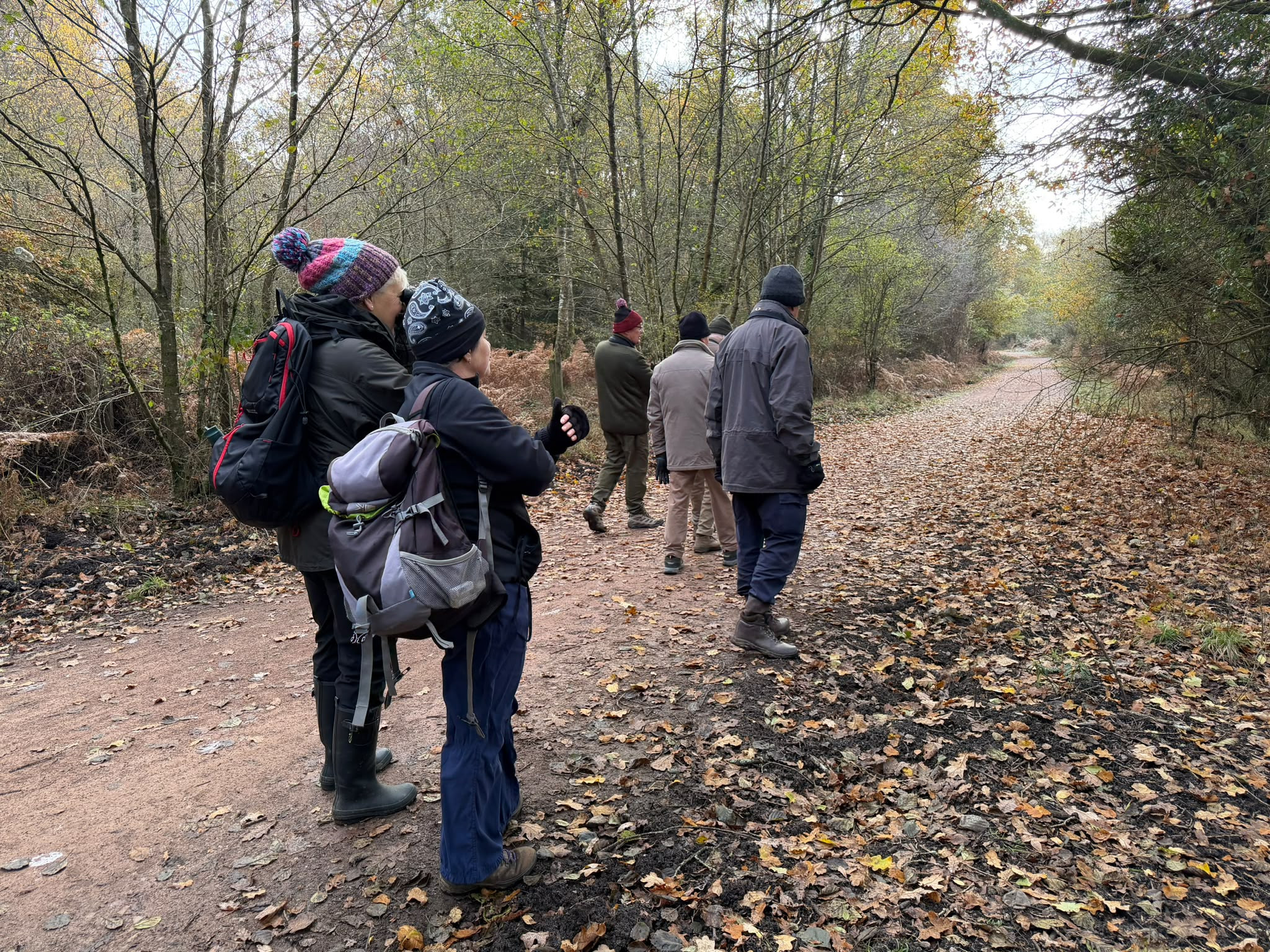
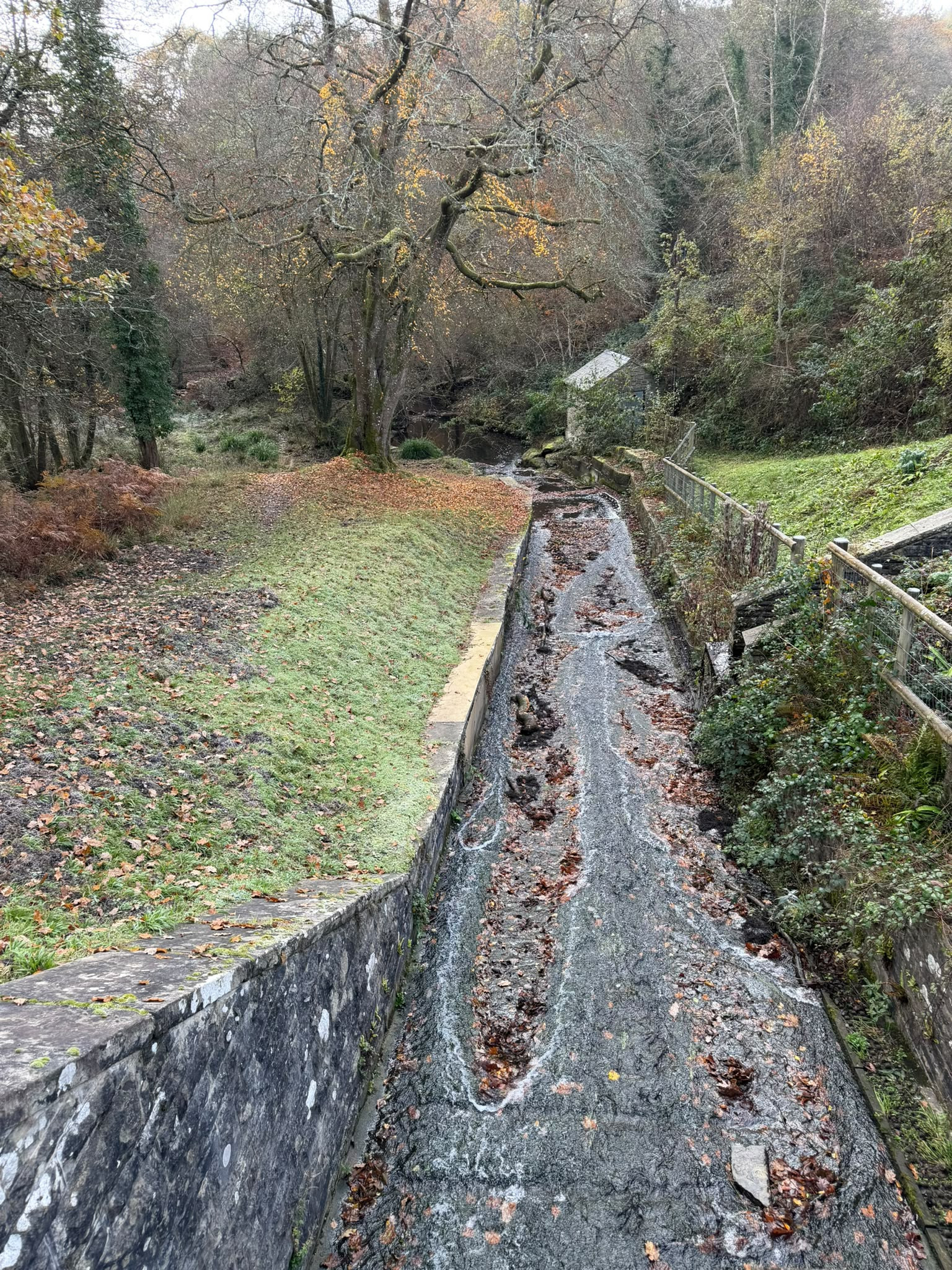
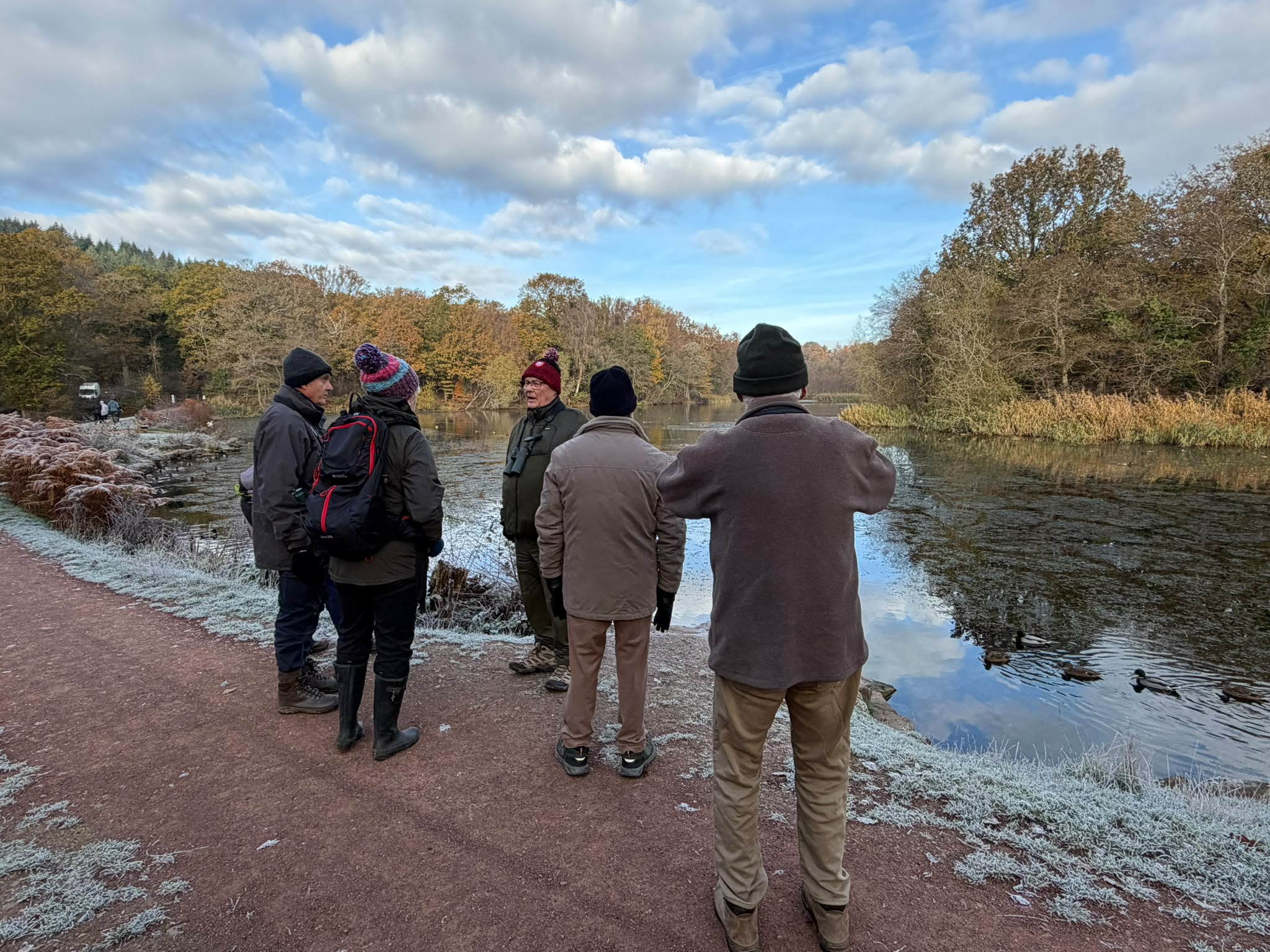
Six members joined Andrew Bluett on a clear but frosty and chilly morning for a visit to Cannop Ponds in the Forest of Dean. The group firstly reviewed and discussed the proposed changes to the ponds and the dams that were built to create the ponds as reservoirs for the Parkend Iron Works in the early 19th Century. The dams and spillways are in an unsatisfactory condition after some 200 years and if either was to fail, the outflow of water down the Cannop Brook which is a tributary of The Lyd, could potentially lead to flooding in Parkend, Whitecroft and as far downstream as Lydney. Since the ponds are not natural, they fall under the Reservoirs Act which places a legal duty on Forestry England to maintain them and ensure that the dams and spillways are fit for purpose.
Whilst the proposed works are still in the consultation phase, they have aroused opposition from anglers and the locals in general, firstly because of the proposed changes to layout and water levels and secondly because access to the ponds and surroundings will be restricted for up to 3 years whilst the works are carried out. It is envisaged that Cannop Upper Pond will be reduced in depth and extent with the top end becoming a larger marsh & wetland habitat than the current Cannop Bridge Marsh (which is a Gloucestershire Wildlife Trust Reserve). It is also proposed that access and walking trails around the pond will be improved and floating islands will be introduced to provide additional habitat for waterfowl. Cannop Lower Pond will remain largely the same with some improvement to access and walking trails, but both ponds will have larger and improved outflow spillways with new bridges over both.
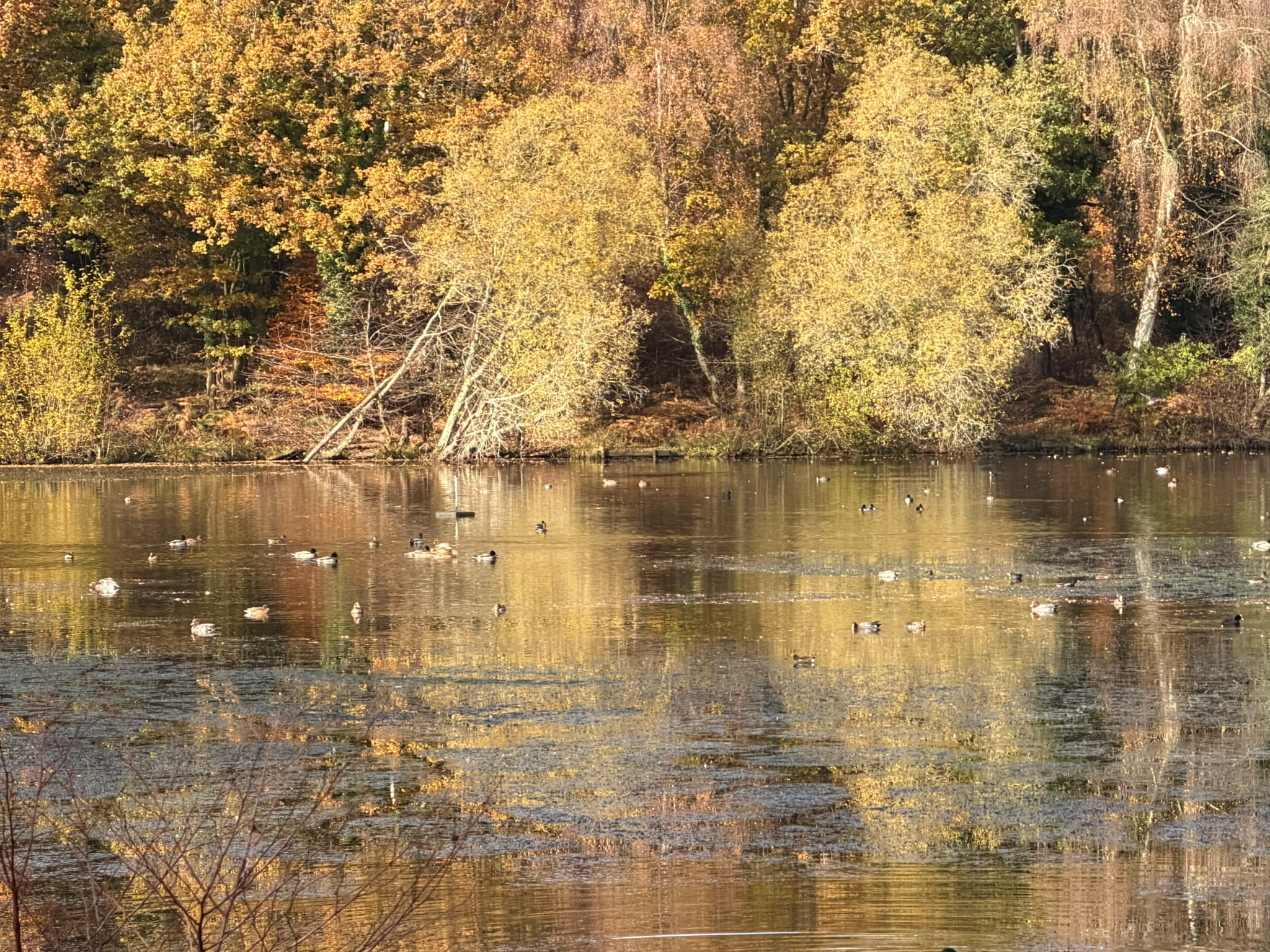
On the Cannop Upper Pond there was a good showing of winter waterfowl, Mute Swan (Cygnus olor), Wigeon (Anas penelope), Teal (Anas crecca), Mallard (Anas platyrhynchos), Tufted Duck (Aythya fuligula), Mandarin Duck (Aix galericulata), Cormorant (Phalacracorax carbo), Coot (Fulica atra), Moorhen (Gallinula chloropus) and Little Grebe (Tachybaptus ruficollis). Jays (Garrulus glandarius) and flocks of Wood Pigeon (Columba palumbus) were overhead, Ravens (Corvus corax) were present along with Robins (Erithracus rubecula) and Grey Wagtail (Motacilla cinerea). Walking down the old railway track, now a cycle trail, and at Cannop Lower Pond birdlife included Tree Creeper (Certhia familiaris), Blackbird (Turdus merula), Nuthatch (Sitta europea), Song Thrush (Turdus philomelos), Carrion Crow (Corvus corone), Dunnock (Prunella modularis), more Mandarin and Tufted Duck and a very obliging Kingfisher (Alcedo atthis) that perched for some minutes in a tree overhanging the small pool at the bottom of the outflow spillway. Siskins (Spinus spinus) were heard and around the feeders at the Stoneworks were Blue & Great Tits (Cyanistes caeruleas & Parus major) and Chaffinches (Fringilla coelebs).
Andrew Bluett