Cotswold Water Park, 9 December 2012

Ken Cservenka led a walk round some of the lakes in the Cotswold Water Park, starting from the car park at Lower Mill estate.  It was bright, but with a biting cold wind. The main focus of the walk was waterfowl. Special birds seen included about a dozen Goosander, and 3 female Smew, but the most spectacular sight was a raft of 70 Red-crested Pochard. These can turn up as genuine wild vagrants, though the Water Park birds are probably the results of an original introduction or escapees. Remarkably, given the time of year and the cold wind, a butterfly was seen, flying too fast for certain identification but most likely a Red Admiral.

Bird watching at Lower Mill

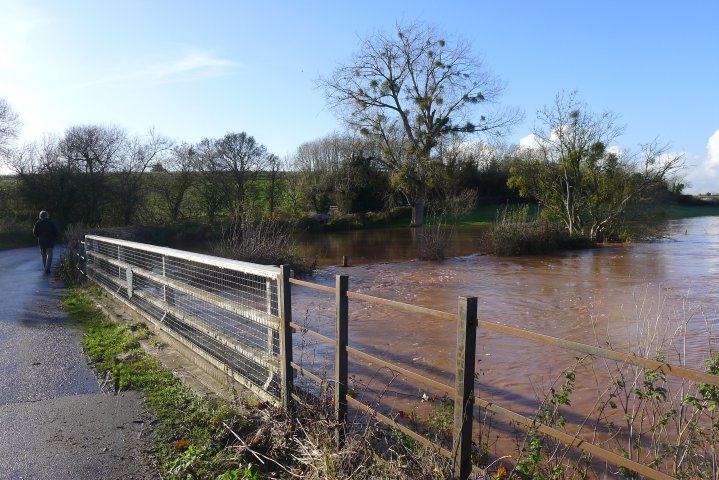
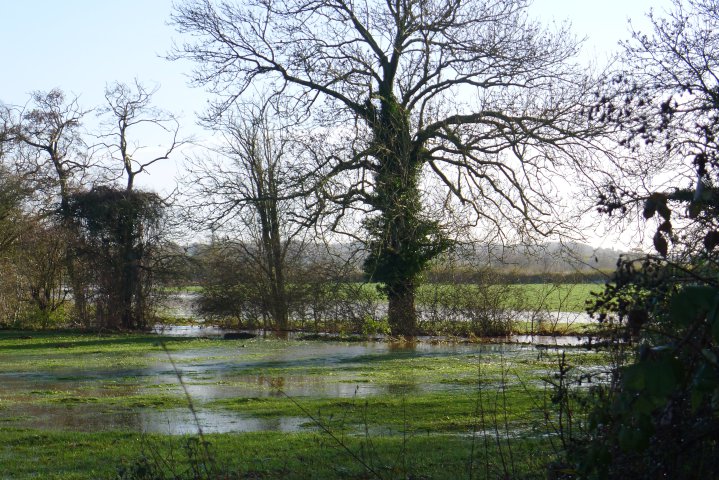
More flood scenes 1st December

Views of Ashleworth/Hasfield Ham (1st photo) and Coombe Hill Meadows (2nd) from Sandhurst Hill. Just the top few inches of the Coombe Hill Grundon Hide was visible in the distance, so it would have been completely submerged a few days ago.

Ashleworth/Hasfield Ham from Sandhurst Hill
Coombe Hill Meadows from Sandhurst Hill

Birds on puddles, 26 November 2012

The standing water in the fields has either drowned out a lot of worms, or at least brought them to the surface.  I have watched gulls and corvids feeding on them in a seedling oil-seed rape field in Standish. At Brand Green a big puddle on permanent pasture attracted a Buzzard which was lolloping round and feeding in the shallow water.  My mother tells me there was a Heron feeding there today.

Surprises on the Severn Hams

Lovely clear autumn day on Tuesday 30 October, just a little mist early on, but no wind, and sharp clear visibility showing the colours in the trees and grassland.  Water levels continuing to drop, at Coombe Hill, Cobney Meadows and Ashleworth, as the Severn drops, allowing remaining floodwater to flow off the meadows.

At Coombe Hill, an unusual sighting, probably a first for the reserve: an immature Long-tailed Duck,  a maritime species more often seen in Scotland or the North Sea; well seen diving in the ditch in front of the Grundon Hide, then waddling across the bank to the main scrape, which proved too shallow for its liking (it bumped its head when it tried to dive, so returned to the ditch).  Presumably a straggler, blown in during the cold conditions with strong northerly winds at the end of last week?  Phot below by Will Allen.


Then an object lesson in the difficulty of identifying birds of prey: a brown bird of prey seen in the top of a tree.  Head on, it looked quite large and puffed up; at first sight it might have been a Buzzard, then the eye-stripe suggested a Sparrowhawk; but when it flew it was obviously a falcon (because of the long pointed wings) and was thought to be a Kestrel chasing a corvid; until it landed at the top of another tree, giving beautiful views from side on, and was obviously a female Merlin.

Otherwise 220 Teal, 55 Wigeon, 35 Shoveler, 3 Little Egrets, 2 Dabchicks, 80 Lapwings, 5 Snipe, 200+ Fieldfares, 50+ Redwings.

At Ashleworth one Green Sandpiper, 200+ Fieldfares.

At Cobney Meadows two  Green Sandpipers, two Little Egrets (maybe the Coombe Hill birds).

Note on the Whooper Swan:  The lone adult first seen at Coombe Hill on 13 October, which seems to have been roosting there and feeding by day on Cobney Meadows, was last seen at Coombe Hill on Friday 26 October, and was not found at Coombe Hill or Cobney Meadows either on Saturday 27 October or today.  Wonder where it’s gone?

Autumn spiders on grassland in the Severn Vale

I was at Ashleworth early on the morning of 20 October and noticed that, on a coldish morning with a hint of frost, there was a huge quantity of spiders’ webs, all looking white and liquid, and showing up well in the cold air; at the top of the vertical stems of docks and bullpate (Deschampsia), and also in horizontal carpets on the grass.  I don’t remember seeing quite so many before, but it may be that I just didn’t notice beforehand.  It was a very attractive sight: pity I didn’t have a camera with me!

The hay had not been cut this year on some of the reserve hayfields, nor on the fields in the SSSI beyond.  I wondered if the fact that the hay hadn’t been cut might have allowed more spiders to survive.

I asked the Gloucestershire Naturalists’ Society’s Spider Recorder, David Haigh for his comments, and his answer is reproduced below.


Certainly Mike, undisturbed grassland provides a greater opportunity to exploit the increased vertical structure to attach webs. I am sure your conclusion was correct, re absence of a hay cut.  The taller plant stems are used as scaffolding to support webs of a greater variety of spider species compared with a mown sward.  These silvery sheets of silken web are generally called gossamer and most often seen on autumn mornings when dew condenses  on the threads.

The majority of spiders’ webs you have been observing come from the family Linyphiidae (Money Spiders).   ‘The World of Spiders’ by W.S. Bristowe (Collins New Naturalist, 1958) quotes the following species responsible for gossamer on an undisturbed field in Surrey: Dicymbium nigrum, Oedothorax fuscus, Savignia frontata, Erigone dentipalpis, Erigone atra, Bathyphantes gracilis and Lepthyphantes tenuis.  Such are the numbers of these spiders that Bristowe calculated densities of over a million Linyphiidae per acre from August to December in Surrey.

Previous pit-fall trapping programmes at Ashleworth, 2008, recorded all the above and additional Linyphiids.  Webs at the top of docks and Deschampsia will probably belong to the family Dictynidae (Lace-Web spiders), genus Dictyna. These spiders produce a veil of silk at the tops of old flower stems, the web only being easily visible on dew laden mornings.  These spiders would not normally be recorded from pit-fall traps.

Gossamer has exercised poets, e.g.

Chaucer: ‘Sore wondren some on cause of thonder, on ebb and flow, on gossamer, and on mist.’
Thomson spoke of gossamer as ‘filmy threads of dew evaporate’
Qharles: ‘and now autumnal dews are seen to cobweb every green’.

Definitely Autumn in Standish!

As a further comment on Robert Homan’s post of 18 September about the start of autumn, there were Chiffchaff’s singing in my garden this morning (they’ve been quite noisy again for several weeks now)and Redwings flying overhead (the first I’ve seen or heard in Gloucestershire this season). So it has to be the changeover time when there are still the summer migrants present, yet the winter visitors are beginning to arrive.

The start of autumn?

When autumn starts depends on where your interests lie. If it birds then it could be when the first non-breeding waders return on their passage south; for me it when the first of the typically autumn moth species starts to fly. The picture shows one of the most common species – the Lunar Underwing. The name refers to a feature that is not usually visible – a small dark cresent on the underwing.

Lunar Underwing, Cheltenham, 16 September 2012

Another Hawthorn Gall

Following on from the recent post about Phyllocoptes goniothorax galls on the leaf edges of hawthorn, here is another gall on the plant.  Familiar enough to have a common name (Hawthorn Button-top Gall), the gall consists of a thickened terminal bud with a cluster of distorted leaves. Known more formally as Dasineura crataegi, the gall former is a midge and inside the gall are orange larvae.


Skip to content