
Please note that the walk that was due to take place on Sunday 16th February has been cancelled due to safety concerns as a result of Storm Dennis. Strong winds and heavy rain are forecast for that morning.

 Ben Locke
Please note that the walk that was due to take place on Sunday 16th February has been cancelled due to safety concerns as a result of Storm Dennis. Strong winds and heavy rain are forecast for that morning.

Andrew Bluett had the following sighting of the Peregrines at Gloucester Cathedral on Friday. The male came in from the north over the roof (2025a) then headed for a perch on the highest south-east pinnacle (2031x); he then collected Prey from somewhere out of sight behind the tower (2039x – small and unidentifiable) and passed it to the female on the west face of the tower with some brief calling. The male has a metal BTO ring on the right leg, Orange Darvic ring “PAC” on the left leg. This bird fledged from Cheltenham in 2017. Also present was the Black Redstart which has been there for a while now.

As part David Priddis’s annual bird box check, he found some honey bee ‘squatters’ in the Little Owl box.
There is some nice natural wax comb, it looks as if they have had all the stores of honey from the right combs and are clustered around those on the left, which hopefully still have some honey left for them.
He managed to replace and screw the front back on without being stung!

The Wetland Bird Survey (WeBS) is a nationwide survey, administered by the British Trust for Ornithology (BTO), which aims to make monthly counts of water birds at as many wetlands as possible, in order to assess numbers of birds, and to pinpoint the principal sites important for them. (Similar surveys are carried out all over Europe and Africa, so this is part of an international effort).
Many Gloucestershire sites are already covered – on the Severn estuary, in the Severn and Avon Vales, at pools and reservoirs, along Cotswold rivers and at the Cotswold Water Park. The counts are carried out by a large group of volunteer observers, many of then GNS members, whose results contribute to the national picture, with an annual report produced by BTO; (new volunteers always welcome!).
The latest addition to the county list of WeBS sites is Alney Island, an area of low floodable meadow alongside the Severn, very close to the centre of Gloucester, part of which is a reserve managed by Gloucester City Council. In times like the present, with extensive flooding, the site holds a variety of surface-feeding ducks such as Teal, Wigeon and Shoveler, as well as birds that frequent thicker vegetation like Water Rail and Coot; in addition the site is a winter home to Reed Buntings which roost in the Typha bed at Port Ham, and rarer birds like Yellow-browed Warbler or Siberian Chiffchaff.

Ripple Lakes are two former sand and gravel pits in the floodplain of the Severn in south Worcestershire, very close to the Gloucestershire boundary, one on each side of the M50, on the left (east) bank. These new lakes, where extraction has only just been completed, hold fairly deep water throughout the year, in particular in late summer and early autumn when other natural wetlands in north Gloucestershire and south Worcestershire (such as Coombe Hill, Ashleworth/Hasfield Ham or Longdon Marsh) often dry out (though not in autumn 2019!). As such they represent a new wetland for the area, and are attracting water birds, both diving ducks which seek deeper water, and surface-feeding ducks and geese which can graze around the grassy edges. Clearly a topic worthy of further investigation by a recording society like Gloucestershire Naturalists’ Society: a field meeting had been scheduled in early December, but had to be postponed because the whole of the floodplain was deeply flooded. Nothing daunted, a doughty band of GNS members (with some guests from the Cheltenham Bird Club) gathered on 19 January, in bright frosty conditions with brilliant light, to investigate the birds present.
As expected, numbers and variety of diving water birds were greater than in shallower Gloucestershire sites: 35 Pochard, 65 Tufted Ducks and a Goldeneye, plus ten Great Crested Grebes. Numbers of geese and surface feeding ducks proved disappointing – just 100 Greylags and 60 Canadas (some of which may already have returned to nesting sites further north) and only 4 Wigeon and 2 Shoveler (perhaps the bigger numbers of these surface-feeding ducks were still back in shallow floodwater at Coombe Hill and Ashleworth). Another bird of interest was a Great White Egret, a still rare Mediterranean heron which has only recently begun to occur, like its smaller cousin the Little Egret, in southern England. Finally an interesting series of waders was noted: a Green Sandpiper and three Snipe would have been winter visitors. as was a most unexpected Common Sandpiper (which normally winters south of the Sahara). On the other hand two Oystercatchers on the island in the south lake were no doubt early returning birds, just arrived to assert their territorial rights on this island which holds a variety of nesting waders; spring must be just around the corner!
A quick reminder that on Friday 13 April David Simcox will be talking about ‘The History of the Large Blue in the Cotswolds and the Re-introduction’ at Watermoor Church Hall, Cirencester, GL7 1JR – 7pm for 7.30pm start. This event is free to all members.

 The 2013 Gloucestershire Bird Report is now available. This is the 51st edition of this annual publication. Copies have already been posted to GNS members who opted to receive it. Further copies are now available to purchase for £9.50 including postage, via our Publications page.
Curlews, with Mary Colwell, 7.30 Wednesday 23rd November, Gala Club, Fairmile Gdns, Gloucester, GL2 9EB. Free – no booking necessary, donations welcome on the evening.
Mary works with BBC Wildlife in Bristol, and has been deeply concerned at the decline of the Curlew, not only in UK, but in Ireland, where the decline has been even more dramatic. To draw attention to this issue she undertook a 500 mile walk in May, beginning in Ireland and ending in Lincolnshire. Details of her walk and of many other Curlew projects are presented on her website www.curlewmedia.com. She is currently active in promoting actions to conserve Curlews, and in raising funds for this purpose. She is organising (in cooperation with the Irish official conservation authorities) a conference on Curlews at Tullamore, County Offaly, in early November, is holding a series of public Curlew evenings to publicise Curlew issues, and is a key figure in planning the major workshop planned for Slimbridge on February 2nd.
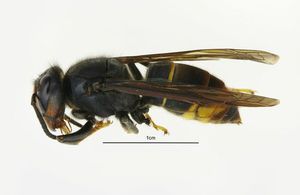 The National Bee Unit has confirmed a sighting of the Asian hornet in the Tetbury area of Gloucestershire – the first time the hornet has been discovered in the UK. The Asian hornet is smaller than our native hornet and poses no greater risk to human health than a bee. However, they do pose a risk to honey bees. The hornet found in Tetbury is currently undergoing DNA testing at the National Bee Unit in North Yorkshire to help establish how it arrived in the UK. The hornet arrived in France in 2004 and is now common across large areas of Europe. It was discovered for the first time in Jersey and Alderney this summer. It is believed the species will not be able survive in the north of the UK due to colder winters.
Defra press release:
https://www.gov.uk/government/news/asian-hornet-identified-in-gloucestershire
Links to the ID guide:
http://www.nonnativespecies.org/alerts/index.cfm?id=4
Online recording page:
http://www.brc.ac.uk/risc/alert.php?species=asian_hornet
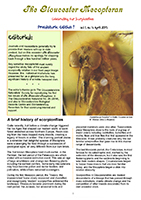 The publications page has been further extended, and now includes back issues of ‘The Gloucester Mecopteran’ – the newsletter devoted to the winged scorpionflies of Gloucestershire.