Sightings – September 2007

The Mythe, Tewkesbury (30 September, contributed by Robert Homan)

Further evidence of the effects of the floods on the timing of the flowering of plants – the lower branches of a Guelder-rose (Viburnum opulus) which had been submerged in the summer floods, were in full flower today, contrasting with the upper branches which had many large clusters of bright red berries.

Hasfield Ham (27 September, contributed by Gordon Avery and Mike Smart)

A female Stonechat and a Wheatear were present early morning.

Coombe Hill (26 September, contributed by Mike Smart)

1 Greenshank still present and a continuing steady passage of Swallows and House Martins (several hundred of each) all day, with a few Meadow Pipits. Please note: the Long Pool Hide is now open again, as the floor which had floated up during the floods is now back in place.

Coombe Hill (25 September, contributed by Les Brown, Mervyn Greening, Mike Smart)

The geese are still roosting – 130 Canada Geese flew off to the south west and 90 Greylags separately to north east; 4 Little Grebes, 50 Shoveler, 30 Teal, 1 Pochard, a male Peregrine perched on a tree, 1 Water Rail at close range from the Grundon Hide, 10 Snipe and 1 Greenshank. There was a constant southwest passage all morning of Meadow Pipits and Swallows (probably a couple of hundred of each) with much smaller numbers of Skylarks; three Chiffchaffs singing, and a few Reed Buntings.

GWT volunteers are clearing dead vegetation along the towpath and pioneer willows from the islands in the scrapes, repairing the Long Pool hide and cutting vegetation in front of Grundon Hide to improve the views from the hide.

Severn Hams (24 September, contributed by Mervyn Greening, David Anderson and Mike Smart)

Ashleworth: for the last week Meadow Pipit passage has been very heavy, and good numbers have been caught for ringing, using a recorded song tape to attract them to the nets. On 17 September 60 were caught (and at least 200 were estimated present) and on 22 September another 58 were caught, out of several hundred passing through. Of the nearly 200 pipits caught so far every single one has been a juvenile (eggs laid this year), presumably on their way to wintering grounds in Iberia. On 22 September, a male Merlin was chasing the pipits which are frequent prey species for Merlin and nearly entangled itself in the nets. Also caught on 22 September, a late juvenile Redstart and a late juvenile Sedge Warbler, plus about 14 Reed Buntings. This was encouraging, given that this species fared badly in the floods, though these birds had probably come in from outside the immediate area. Also seen: two Wheatears, one Green Sandpiper, 15 Snipe and the two Hobbies, one of them still very noisy.

Coombe Hill: good numbers of geese are roosting but you have to get there very early to see them: on 20 September, 240 Canada Geese, 1 Barnacle and 80 Greylags left before 07.00am; also 50 Shoveler and 50 Teal.

Cheltenham (23 September, contributed by Robert Homan)

A Hobby flew low over Swindon Lane early this morning, trailing a few House Martins flying in a south easterly direction.

Sudmeadow (21 September, contributed by Gordon Avery)

On an otherwise quiet day, a Little Egret was on the marsh at Sudmeadow for 5 minutes just before 2.00pm then flew off towards the river in a westerly direction.

Standish (17 September, contributed by Juliet Bailey)

An albino Swallow flew over my garden at 8.30am, low but purposefully and not the zigzag feeding flight. It was on its own and flying at about 20ft, heading south west. It appeared off-white, maybe white with a hint of magnolia and I saw it for about 20 seconds before it was obscured by hedges.

Sudmeadow (13 September, contributed by Gordon Avery)

A Little Egret was pushed off the river by tide and flew over Sudmeadow towards Castle Meads at about 10.27am

Cheltenham (11 and 12 September, contributed by Robert Homan)

A far from complete survey of the trees along the Honeybourne Cyclepath between Malvern Road and the Prince of Wales Stadium produced counts of 51 adults and 115 larvae and pupae of Harlequin Ladybirds (Harmonia axyridis). In the sunshine on the afternoon of 11th the larvae were very active and all of the insects seen were found mainly on Sycamore leaves, especially where these were coated with honeydew from aphids. There was a wide range of colour forms of this highly variable ladybird present and some of these are shown below. The 18-spot form, shown in the top 2 pictures below, was by far the most common form. Also seen were the mines of Cameraria ohridella, the Horse Chestnut Leafminer, on Sycamore which is a foodplant that has also been recorded in other areas where the moth has reached very high numbers. Finally, a Blackcap was is full song near the Stadium on the 11th, and typically of mid-September, Chiffchaffs were singing on both mornings.

Newly hatched Harlequin Ladybird at 2.00pm (top) and 5.00pm (above), 11 September 2007, Robert Homan

Colour forms of the Harlequin Ladybird, September 2007, Robert Homan

Sudmeadow (11 September, contributed by Gordon Avery)

The Whinchat was still present this afternoon just below the Lower Parting. Also a Kingfisher at Llantony Weir.

Sudmeadow (8 September, contributed by Gordon Avery)

During the afternoon there was a Little Egret along the river. A Whinchat by the Parting and 5 Green Sandpipers on the marsh.

Hempstead (7 September, contributed by Gordon Avery)

A Kingfisher flew low over the garden at high speed this morning.

Sudmeadow (6 September, contributed by Gordon Avery)

2 Green Sandpipers again this morning in the marsh. Among the birds trapped for ringing were a Lesser Whitethroat and a young male Reed Bunting.

Severn Hams (1 September, contributed by Mike Smart and Les Brown)

Coombe Hill this morning: the Spotted Crake was still showing nicely on the bank and swimming but only until about 08:00 after which it went to ground. Also 2 Little Grebes, 1 Pintail, 14 Shoveler, 2 Green Sandpiper, 1 Common Sandpiper, but still no sign of any Skylarks, 5 very definite Pied, not White, Wagtails.

Ashleworth: at least two and probably three Hobbies, still very noisy and very obvious round the pylon at south end of reserve.

Sightings – August 2007

Severn Hams (30 August, contributed by Mike Smart and Juliet Bailey)

We walked from the Wharfe end of the Coombe Hill canal to the Wainlodes end, taking in the surrounding fields then went over to look at parts of Ashleworth and Hasfield Hams. The fields are beginning to green up again after the floods, particularly those where hay had been taken before the floods came. In most places the grass is still lying where it fell, forming a muddy dead crust about 3 inches off the ground though farmers are starting work on some of the fields, cutting or topping the fallen hay and breaking up the crust. The crust itself is dry, but underneath is still very damp. Certain plants seem to be doing absolutely fine. Creeping cinquefoil is sending its spidery rooting stems across the crust. Great burnet is vigorously pushing new leaf through (see photo). A few docks are already sending up leaf from the old stock, and there are masses of dock seedlings (will this be a problem next year?). New grass is now hazing across the brown; sometimes it is the old grass reshooting, elsewhere it is seedlings. The Carex beds are greening up nicely, though the known clumps of Carex vulpina that could be found are showing no signs of life as yet. Some hedgerow shrubs still look very brown and may have died, but others are pushing out fresh growth. On the whole, trees seem to have come through the floods unscathed, though there are fallen dead trees from windthrow earlier in the year. It is too early to say what the botanical outcome of the flooding will be. There will probably be changes, but it may not be an out-and-out disaster. We will have to wait till next year to see.

Great Burnet re-growth, August 2007, Juliet Bailey

Sudmeadow (30 August, contributed by Gordon Avery)

3 Green Sandpipers in the marsh this morning. 1 Yellow Wagtail over and 140 Mallard disturbed off the river by the tide. That is the first Yellow Wagtail that I have had on my patch since May 2002!

Ashleworth and Coombe Hill (28 August, contributed by Mike Smart, David Anderson, Les Brown and John Wiltshire)

At Ashleworth this morning, two Hobbies sitting on one of the pylons or in nearby trees; very vocal with constant calling and appeared to be recently fledged young birds waiting to be fed. One Peregrine, 15 Snipe, 90 Teal. Very few passerines, although we finally found two Reed Buntings after much searching, one burst of Willow Warbler song, a few Chiffchaffs calling, very little else other than Robins.

At Coombe Hill, a Spotted Crake showed itself in thick vegetation right in front of the Grundon Hide; shows it’s worth just sitting and waiting to see what turns up!

Walmore Common (27 August, contributed by Mike Smart)

The area has dried out a bit now, but it is still very soft and spongy underfoot with lots of midges. It has dried out enough for some hay (of poor quality and only usable for bedding) to be cut on western half.

Snipe have decreased but still about 70; 3 Lapwings; 60 Teal, 5 flava Wagtails; a Whinchat on a fence post; lots of Swallows and House Martins hawking for low flying insects.

Coombe Hill (25 August, contributed by Mike Smart and Les Brown)

It is still pretty brown and desolate with no hay cut, but some grass beginning to grow through the mat of dead hay. Some waders on scrapes, all no doubt passing migrants: 25 Snipe, 2 Ruff, one Greenshank, two Green Sandpipers, one Common Sandpiper. About 40 Teal, 7 Shoveler, a Pochard, 12 Tufted Duck. There were bursts of song from Chiffchaff and Willow Warbler. There is a total absence at Coombe Hill and Ashleworth, of Reed Buntings; it looks as though the flooding has caused them to leave early.

Walmore Common (24 August, contributed by Mike Smart)

Walmore too has been affected by the floods, and Andy Jayne has been recording unusual numbers of several species, that have been taking advantage of the conditions.

The Common side is unusually wet for the time of year: the flashes are all full of water, very soggy and uncrossable, and there are no grazing animals. The numbers of midges are of tundra proportions! There is a muddy mat of vegetation, as at Coombe Hill, but it is not as severe, and the clumps of rushes and sedges seem to have come quite well through the flooding and are standing proud. From the bird point of view, there are some ducks (150 Mallard and 25 Teal), but the absolutely extraordinary thing is the number of Snipe: on 19 August, Andy recorded 165, already unprecedented, with 80+ on 22 August, but this evening there were at least 270, flying up on all sides, then circling in little flocks like Dunlin at high tide. I don’t ever remember seeing such concentrations, anywhere. They must be migrants returning from central and northern European breeding grounds (to Ireland?), which would normally have gone straight over the top of us, but have come to earth this year because of the wet conditions after the Severn flooding.

Coombe Hill (23 August, contributed by Robert Homan)

A quieter day than the 21st (see below) with 14 Teal and 2 Tufted Ducks visible from the Grundon Hide and 2 Willow Warblers and a Chiffchaff singing by the canal. The pictures below give an indication of the damage done by the floods. The first shows the hedges along the path from the car park at the Wharf End; the second shows Mute Swans on the canal, but notice the colour of the water; even worse pollution is shown in the third picture taken of the southern end of the ditch at the entrance to the Meadows section of the reserve; fourthly, sections of the hedges and large areas of the fields are covered with this material which has hardened to a crusty brittle layer. Finally, the view across the reserve towards Lower Apperley.

Sudmeadow (23 August, contributed by Gordon Avery)

3 Lesser Whitethroats and 2 Whitethroats were ringed plus 13 Long-tailed Tits. The highlights of the ringing session were 3 new young male Linnets. 3 Willow Warblers were also trapped. A Green Sandpiper was seen over Sudmeadow and a Painted Lady butterfly was about too. 13 Shelduck were seen in a loose flock heading north during the morning.

Walmore Common (22 August, contributed by Andy Jayne)

Seen today were 30 Teal, 150 Mallard, an adult male Goshawk, a Little Ringed Plover, 26 Lapwing, still 80+ Snipe, two Curlew and eight Yellow Wagtails. Also two Brown Hawker dragonflies.

Sudmeadow (22 August, contributed by Gordon Avery)

A Kingfisher flew upriver over Llantony Weir and a Green Sandpiper was seen at Lower Parting.

Coombe Hill (21 August, contributed by Mike Smart and Les Brown)

My (MS) first visit to the area since the second and larger July flood subsided. The Grundon Hide at Coombe Hill is now accessible (with wellingtons), but the whole area is a pretty horrible sight: most of the hedges are dead to a height of five or six feet, the meadows are covered by a brown muddy carpet of dead grass, with the odd dead dock remaining vertical. There is still a fair amount of standing water on the fields, but much of the water in the ditches and water courses is anaerobic and black, and there is a strong smell of decay everywhere.

Birdwise, about 60 Teal, dibbling for seeds round the edge of the scrapes, and three Shoveler. One Ruff, a Greenshank and two Green Sandpipers, all no doubt passing migrants. Lots of Swallows and House Martins flying low in the cold north wind, and being chased by a Hobby. A flock of 15 Pied Wagtails and two Yellow Wagtails, with one Redstart giving alarm calls from the hedges, Lots of Willow/Chiffs in the tops of the hedges, and bursts of song from both Willow Warbler and Chiffchaff. Not a single Reed Bunting all morning; where have they all gone?

Walmore Common (19 August, contributed by Andy Jayne)

I thought my count of 60+ Snipe at Walmore Common on 11th was pretty good, but today I returned to find an incredible total of 165. Also six Swifts, five Sand Martins and about 100 each of Swallows and House Martins, plus eight Yellow Wagtails finding the damp conditions to their liking.

Sudmeadow (16 August, contributed by Gordon Avery)

7 Green Sandpipers feeding in the marsh this morning.

Walmore Common (11 August, contributed by Andy Jayne)

In the morning there was one Little Grebe, a Hobby, 60+ Snipe, a Kingfisher and a moulting adult Whinchat. Obviously the Snipe count is exceptional for the time of year. There could well have been quite a few more, maybe up to 80, but the boggy areas were not completely searched.

Ashleworth Hams (8 August, contributed by Juliet Bailey)

I went out to Ashleworth today, where an extraoridinary scene presents itself where the floods have lain The bottom 8 or 9ft of the hedges is coated in brown with a tuft of green at the top. I crunched through fields where a crop of hay should have been taken, like walking on thin ice. There is a layer of grass set solid at about 3 inches above the soil, with nothing underneath.” The pictures, taken by Juliet, give an indication of the extent of the damage: The pictures, taken by Juliet, give an indication of the extent of the damage:

Grass encrusted with silt deposited by the flood water.

Footprints through the grass crust.

The view from the hide with the “tide mark” along the hedge in the background.

Away from the floods (8 August, contributed by Juliet Bailey)

In contrast to the gloomy news about the flooded areas of the county near the River Severn, the return of higher tremperatures has brought a summery look to many areas. The Crown Vetch on the Fosse Way south of Stow is extraordinary, lining the road with confectioners’ pink and my newly re-excavated pond in Standish is producing all sorts of dragonflies – including this ovipositing Broad-bodied Chaser female.

Broad-bodied Chaser, Standish, August 2007, Juliet Bailey

Coombe Hill (6 August, contributed by Andy Jayne)

I visited Coombe Hill Meadows late this afternoon, walking from the Wainlode end. It was not a particularly pleasant experience. As Mike Smart has already observed, the state of the water is quite disgusting, hopefully just a result of the rotting vegetation rather than anything else. The water is black,oily and foul-smelling. The whole area looks as if it has been immersed in acid rather than water!

A lot of the vegetation looks quite dead up to height of 6 or 8 feet in places and there is little sign of it starting to recover yet. Along the towpath I found three fish (Rudd?), an eel and a Mallard all dead. The Grundon hide is easily accessible with waders and it may be possible to get there with wellies in a few more days. The hide was obviously completely submerged at the height of the floods and the log-book is lying ruined on the floor. There were also around 20 leeches crawling around the floor. Yuck! There is no obvious damage to the hide or the boardwalk however.

Despite all this I was quite surprised to find quite a number of birds tolerating the conditions. A few Mute Swans present and about 120 Canada Geese towards the west end were all noticeably brown stained. From the hide I noted two Gadwall, three Teal, 20+ Shoveler, a pair of Garganey (presumably the pair present during the spring), five Pochard, 10+ Tufted Duck and three Great Crested Grebes. Two Little Grebes and two Water Rails were heard calling and there was also a Little Egret and at least eight Grey Herons. An adult Peregrine flew over and a male Sparrowhawk was bringing prey to two juveniles that were hanging about near the hide. Apart from 34 Lapwing there was no sign of any waders. There were very few small birds about and not a single Swallow or martin over the floodwater.

So, still quite a bit of interest here, but certainly not a nice place to visit just now. It will be interesting to see how long it is before the area recovers. I suspect it will be several months at least.

Sightings – July 2007

Sudmeadow (23 July, contributed by Gordon Avery)

A Kingfisher landed for a few seconds on the washing line in my floooded back garden.

Severn Hams (20 July, contributed by Mike Smart )

The Severn level began to drop on Wednesday, and there was some outflow of water trapped on the meadows, but it’s very slow and the water is of an appalling quality: black in colour (the Chelt and the Deerhurst Parish both leave a black plume as they flow into the mud brown Severn). The black colour seems to be coming from decomposing plant matter which is using up all the oxygen, and there is an unpleasant oily film on the surface. This means that any small fish which were in the floodwater have died from lack of oxygen, and it seems that large numbers of earthworms and other invertebrates have died too. As a result, the hay crop has been completely spoilt, and no-one in the farming community knows quite what to do with the resulting dirty vegetation.

The Ham Road past Ashleworth is now open and the hide is easily accessible, but water levels on the reserve are very high and have prevented the Constant Effort ringing from taking place. The Red Lion road at Wainlodes is open; but the Coombe Hill hides are still only accessible with thigh waders. The heavy rainfall of today will only make things worse over the next few days.

The large number of dead fish attracted unusual numbers of herons: there were up to 30 Grey Herons on the Ashleworth reserve on Monday; some observers thought they had seen a Night Heron, but this was not confirmed. Little Egret numbers round the edges of the Coombe Hill floods have been unusually high (reports of 10 and 16), and a group of 21 were found roosting in a nearby wood.

A Hobby over Ashleworth on Tuesday, and an adult Mediterranean Gull flying over in the evening en route to the estuary.

Barn Owl calling from Meerend Thicket near Ashleworth late in the evening on Tuesday and Wednesday.

Sudmeadow (18 July, contributed by Gordon Avery)

A juvenile Nightingale trapped for ringing this morning at Sudmeadow was only the second ever ringed at the site. The first being an adult female as long ago as 9th June 1994!

Coombe Hill (15 July, contributed by Andy Jayne)

Seen in the evening were six Teal, three Shoveler, c.32 Tufted Duck, two Little Grebe, two Great Crested Grebe, 13 Little Egret, 19 Grey Heron, a Hobby, three Water Rail (heard), 38 Lapwing, a Dunlin, two Ruff, two Curlew, two Green Sandpiper, a Common Sandpiper and two Redstart.

Sudmeadow (14 July, contributed by Gordon Avery)

A Clouded Yellow seen at Sudmeadow this afternoon.

The Leigh (12 July, contributed by Gordon Avery)

6 Little Egrets flying south over the A38 near Leigh at 21:10.

Severn Hams (10 July, contributed by Mike Smart)

The level of the Severn is dropping now, but the Ham road at Ashleworth and the road past the Red Lion at Wainlodes are still under water. Since the river overtopped its banks a week ago, a lot of water has got behind the riverbank and can only flow out slowly through the small number of outlets; it’s not supposed to do this in July! At Coombe Hill, the Grundon Hide is still inaccessible and likely to remain so for some days yet, as much of the canal bank is still under water. At Ashleworth, the hide is still inaccessible from the road, though will probably become accessible fairly soon.

There is still quite a lot of shallowish floodwater about which is quite attractive to birds, but very difficult to get at!

At Coombe Hill this morning, about 28 Lapwings (21 adults and seven flying birds of the year), one Redshank, all undoubtedly passing migrants rather than local birds, and a Green Sandpiper. No sign of Curlews which must also have lost their young, just one adult by floodwater at Wainlodes.

At Ashleworth, three Shelducks, a Greenshank and ten Lapwings on floodwater; no sign of Curlews either.

Lots of gulls on the edges of the floodwater, about 1,000 Lesser Blackbacks and 1,000 Black-headed at the Wainlodes end of Coombe Hill, also 3 Little Egrets. About 300 Black-headed (all one year olds or adults, no juveniles) at Ashleworth.

Some Whitethroats still singing and a Reed Warbler in a new place by the Red Lion.

Coombe Hill (4 July, contributed by Andy Jayne)

Some of the effects of the deep flooding at Coombe Hill Meadows and Ashleworth Ham are demonstrated by the picture below taken by Andy. It is a young Willow Warbler displaced from its nest by the floodwater, but luckily still being fed by the parents. The bird was discovered about 100 yards along Coombe Hill Canal from The Wharf where the tow path is inundated by 2ft of water.

Tuffley (early July, contributed by Rob Purveur)

This female Misumena vatia was photographed in Rob’s garden and identified by David Haigh. David commented as follows:
“It seems to be a good year for this species. I had a record last week from a correspondent Up Hatherley She described as you did the crab-like attitude and surprisingly a white variety on a pink rose. There is another colour form – yellow, which usually takes up its position on the yellow disc of Ox-Eye daisies, but I have quite often seen the ‘wrong’ colour variety against unsuitably coloured flowers. If it is not disturbed you will probably have it with you until maturity, unless its lack of camouflage makes it prey to garden birds. You may see it with prey, it will take pretty well anything, bees, wasps, butterflies, hoverflies, etc..”

Misumena vatia, Tuffley, July 2007, Rob Purveur

Sightings – June 2007

Severn Hams (27 June, contributed by Mike Smart)

The Grundon Hide at Coombe Hill was only accessible with waders (or wet legs) the evening of 25 June, and the scrapes and islands were submerged by the following morning because of local streams backing up. On the evening of the 26th, the Severn started to come over its banks below Haw Bridge, thus making the floodwater even deeper and closing the road past the Red Lion. By the evening of the 27th, the Severn had also broken its banks above Haw Bridge on the west bank, which means that the Ham Road from Ashleworth to Tirley is closed and the Ashleworth roadside hides are no longer accessible. The current Severn level at Haw Bridge is 10.93m and rising, which compares with the highest of last winter on 8 March (itself unusually high) of 11.15 m.

The high levels and rainfall in May and early June meant that many ground and long grass birds were having a hard time of it: Sedge Warblers and Reed Buntings were already doing badly, with very few juveniles, but the higher levels of the last few days will undoubtedly drown any remaining nests. Curlews seemed to be doing quite well because the wet weather meant that the hay had not been cut; but any Curlew chicks will not survive the deep flooding that has now occurred. The Sand Martin colonies in the Severn banks were already under water before the river broke its banks, so they will have to start again.

On the other hand, the Redstarts which nest in holes in willows seem to have done fairly well; at least three broods of young birds shave been seen at Ashleworth.

Seen at Coombe Hill on the 26th were a flock of 9 Black-tailed Godwits in full summer plumage by the floodwater, clearly failed breeders returning south already. A Flock of 19 Lapwings, including the only two fledged young produced by the ten pairs which attempted nesting, apart from a tiny non-flying chick, seen on 19 June apparently surviving on 26 June, but disappeared by 27 June, no doubt drowned by the rising water. Three adult Redshanks, which had produced one nearly fledged young; uncertain if the young one survived. Female Tufted Duck with seven ducklings, the second brood at Coombe Hill. One Green Sandpiper.

Coombe Hill on the 27th: two Green Sandpipers, sitting on fence posts, like breeding Redshank to keep their feet out of the water!

Ashleworth on the 27th: the male Shoveler still there; his one wing is damaged, he can shake it, but not fly. One female Wigeon.

Hank’s Gorse, near Brockhampton (21 June, contributed by Neil Pryce-Jones)

Seen today were a Privet Hawk-moth resting on a gate post and hundreds, if not thousands, of Pyramidal Orchids growing among the profusion of ox-eye daisies in the set aside fields in the area.


Privet Hawk-moth and Pyramidal orchid, Brockhampton, June 2007, Neil Pryce-Jones

Cheltenham (4 June, contributed by Robert Homan)

Records of the old and the new from central Cheltenham today. On the left below, a flower spike of Ivy Broomrape ( Orobanche hederae) in the front garden of a house in Malvern Place. This is presumably the site mentioned in the 1948 “Flora of Gloucestershire”. On the right, first generation mines of the the Horse Chestnut Leaf Miner (Cameraria ohridella) in nearby Malvern Road. This adventive insect should become even more evident in terms of the number and distribution of leaf mines during the summer.

Ivy Broomrape, Malvern Place and Cameraria ohridella, Malvern Road, June 2007, Robert Homan

Sightings – May 2007

Walmore Common (31 May, contributed by Andy Jayne)

A huge count of 254 Ravens flying into roost at Walmore Common in the evening, all arriving from an east or north-east direction with a few stragglers still coming in at dusk. There may well have been a higher total at a similar time last year when 208 were counted before 7.15pm on 27th May 2006.

Eastleach (18 May, contributed by Ian Ralphs)

There are several hundred Common Broomrape (Orobanche minor) plants in a broad strip along the southern side of the access road to Eastleach Downs Farm, SP10 Z, Eastleach in a recently sown Rye-grass and White Clover ley. Probably accidentally sown in to the ley with some wildflower mix added to the field margins.

Common Broomrape, Eastleach, 1 June, Ian Ralphs

East Wood, near Tidenham Chase (18 May, contributed by Roger Gaunt)

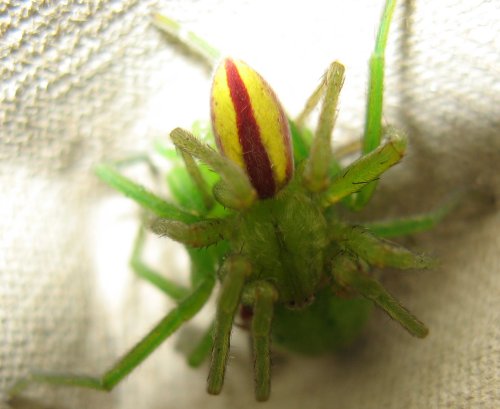
A mating pair of the spider Micrommata virescens was found in a Heath Trap placed in the wood to record moths. The species is quite uncommon, but I have recorded two females before in this wood in the same way.

According to David Haigh, the Society’s spder recorder, this is only the second time that the male of this species has been seen in the county (the yellow and red abdomen of the male is shown very clearly in the picture below), indeed that seeing spiders mating is rare and that this coupling would be very rarely seen.

Micrommata virescens, mating pair, East Wood, May 2007, Roger Gaunt

Sudmeadow (15 May, contributed by Gordon Avery)

A Roe Deer in the marsh in the evening constitutes a first record for the site.

Witcombe (14 May, contributed by Gordon Avery)

2 Dunlin at Witcombe Reservoir today plus a small hirundine flock brought down by the north west wind. The flock consisted of c.30 Sand Martin, 20 Swallows and 120 House Martins.

Ashleworth Ham and Coombe Hill (12 May, contributed by Les Brown and Mike Smart)

The continuing cool, wet windy weather seems of the last week to have played havoc with breeding Lapwings. On the other hand the chorus of song from warblers must be at its peak now.

At Coombe Hill: the Mute Swan by the Wharf has hatched five cygnets. A pair of Canada Geese with five goslings by the scrape (unusual here as a breeding bird; is this perhaps the first breeding record for the site?). Still five Shelducks; four male Wigeon, a pair of Gadwall. Lapwings behaving very differently from earlier in the week: no sitting females, no sign of any young birds; instead the males were back to doing aerial display flights with excited calling, as in early spring, very aggressive to one another, and constantly doing tail-up display to females; one attempted mating seen; looks very much as though they have lost their nests and are starting again. Three or four Redstarts singing, one Reed Warbler (first of year), at least a dozen Sedge Warblers along the canal, half a dozen Whitethroats, and the usual Blackcaps, Lesser Whitethroat, Willow Warbler and Chiffchaff. Big passage of over 100 Swifts and maybe 20 House Martins during a shower.

At Ashleworth, the three pairs of Lapwings which appeared to have young a week ago have all disappeared. A pair of Great Spotted Woodpeckers going into a nest-hole in an oak in Meerend Thicket to feed their noisy young. The Grasshopper Warbler still reeling at Hasfield.

Severn Hams (10 May, contributed by Mike Smart)

Continuing unsettled, with heavy cloud and showers not really suitable for birdsong.

Ashleworth/Hasfield Ham: Crack Willows justifying their name: a tree with a huge old pollarded head had cracked at the top and one half had fallen over , blocking Stank Lane. 1 Grasshopper Warbler reeling and several Redstarts singing, despite the wind; one drake Shoveler still present. No sign of Lapwings: have they all failed? And only one non-demonstrative Curlew.

Severn Ham, Tewkesbury: 1 Corn Bunting, singing from the electric wires. One bubbling Curlew. Couple of Sand Martins.

Ashleworth Ham (5 May, contributed by Les Brown, Mervyn Greening and Mike Smart)

One Shelduck, two Wigeon, two Teal, up to ten singing Redstarts, maybe eight singing Sedge Warblers. Two Hobbies chasing one another at midday, rather than hawking flying insects (too few insects, too much wind).

Coombe Hill (5 May, contributed by Les Brown)

The Meadows are all incredibly dry following a month without rain and with drying easterly winds; no surface water left, except in the scrapes and pools. The pair of Garganey has been seen every day since 2 May, and were still present today; also two Oystercatchers and two Little Ringed Plovers.

Sudmeadow (3 May, contributed by Gordon Avery)

The first Little Egret for 4 years flew off in the evening from the East channel and headed over Sudmeadow towards the tip.

Coombe Hill (2 May, contributed by Mike Smart)

In general, the last couple of weeks have been rather a quiet period for bird migrants at Coombe Hill, with few passing waders to report, mainly a small number of Whimbrel stopping to roost on their way to their Icelandic breeding quarters, and the odd Little Ringed Plover (there was one on the afternoon of 1 May). However, today 2 May, Les Brown saw the first two Coombe Hill Garganey of the spring, a male and a female.

Sightings – April 2007

St Mark’s Fly (25 April, contributed by Juliet Bailey)

St Mark’s Fly, so called because it usually appears around St Mark’s Day (25 April), is in our garden in Standish today, and in Longridge, Painswick yesterday. I wonder if it was named after the change from the Julian to Gregorian calendar in 1752, the upshot of which is that what had been May 1st became May 11th. May blossom (hawthorn flower) was one of the traditional flowers of May Day revels, hence its name, but because of the calendar change does not now normally appear until about the second week of the month. This year, of course, may blossom is already abundant, but it has been a record-breaking warm Spring. Perhaps the life cycle of St Mark’s Fly is not governed by temperature.

Severn Hams (23/24 April, contributed by Mike Smart)

The fine anticyclonic weather seems to have been replaced by fronts coming in from the west. At Leigh Meadows on 23 April at dusk: one Whimbrel, apparently roosting in the fields; one Redstart with alarm calls; one Lesser Whitethroat singing. On 24 April at Coombe Hill (with Les Brown, Graeme Watson, John Wiltshire) all was pretty quite on the scrapes: 33 Mute Swans grazing on Southern Meadows, 3 Greylags, 10 Canadas, a pair of Shelducks, 6 Wigeon (all males, where are the females?), 3 Tufted Ducks, 1 Hobby, 12 Lapwings, 1 Redshank, 2 Curlews, 1 Cuckoo singing. There was a fair showing of migrants along the canal and in the willows with 5 Sedge Warblers, 2 Lesser Whitethroats, 4 Whitethroats, 3 Blackcaps, 2 Chiffchaffs, 4 Willow Warblers plus 3 Redstarts.

Coombe Hill (18 April, contributed by Mike Smart)

A rather quiet evening at Coombe Hill. There is no spring flooding this year, but water remains nicely in the scrapes. Many birds came in to roost in the evening: at least 30 Mute Swans, nearly 40 Canada Geese, 2 Shelducks, 6 Curlews. Still 7 Wigeon, about a dozen Lapwings, a couple of Snipe calling. Not much birdsong – just a couple of Chiffchaffs and a Willow Warbler.

Cleeve Hill (17 April, contributed by Andy Jayne)

At least 16, probably 19 Ring Ouzels on Cleeve Hill early this morning, no doubt held up by the northerly wind. Also four Stonechats, four Wheatears, 35 Fieldfares, a Redwing and a Grasshopper Warbler ‘reeling’ and showing very well on top of low gorse.

Whelford (14 April, contribution per Gareth Harris)

Large Red Damselflies started to emerge today.

Cleeve Hill (12 April, contributed by Robert Homan)

Willow Warblers have arrived with a total of 10 singing from various scrubby areas around Cleeve Hill this morning. In addition there were 3 Wheatears near the aerials and 4 Ring Ouzels in flight over the Washpool Valley. In the extensive gorse on the east side of the common there were 2 male Stonechats and 1 male Reed Bunting.
Bluebells are already in full flower in Queen’s Wood and the area of scrub to the east.

Bluebells and Glow-worm larva, Cleeve Hill, April 2007, Robert Homan

Coombe Hill (11 April, contributed by Robert Homan)

The day belonged to the Mute Swan – in addition to the breeding pair there were 30 birds on the scrapes at lunchtime with many of them later moving to the fields on the south side of the canal to graze. In addition, there were 2 Tufted Ducks, 6 Shelduck, 2 Canada Geese, 1 Shoveler, at least 3 families of Mallard including with one with 9 ducklings, 1 Little Egret, 2 Grey Herons, 2 Coot, only 3 Lapwings and just 1 Willow Warbler singing. There were many butterflies flying including a Red Admiral, many Brimstones, Peacocks and 2 Small Tortoiseshells.

Gloucester Landfill Site (10 April, contributed by John Sanders)

A pair of Shelducks have reared 6 ducklings on the GLS pond – an early record for the species from an unusual site.

GLS Shelducks, adults and 6 ducklings, May 2007, John Sanders

Severn Hams (7 April, contributed by Mike Smart and Les Brown)

At Coombe Hill the flooding has gone, but water levels in the scrapes and Long Pool remain reasonably high: two Little Egrets, 1 Peregrine, 1 Little Ringed Plover (appeared to move off to the north, but could have returned), only 7 Lapwings, 3 Redshanks, 2 Curlews, duck numbers dropping fast: no more than 5 Wigeon and 40 Teal. Half a dozen Sand Martins moved through to the north. Plenty of Chiffchaffs singing, no sign of a Willow Warbler.

At Ashleworth, water levels have dropped by 50cms since the boards were removed from the sluice last Saturday; all remaining boards removed today, so levels will continue to drop. No Willow Warblers either.

At least three Mute Swan nests already being incubated in the general Ashleworth/Coombe Hill area.

Cheltenham (7 April, contributed by Robert Homan)

Continuing the theme of early butterflies – a Holly Blue was in Swindon Lane early afternoon.

Severn Hams (6 April, contributed by Mike Smart)

An evening visit to Walmore showed that the water level is back down to normal: 10 Mute Swans (two very territorial and aggressive, chasing others off); 2 Canada Geese (looking broody); 2 Shelducks (apparently a pair, perhaps thinking of breeding), 25 Teal, 1 Peregrine (a large brown female), 22 Lapwing, 2 Snipe, 2 Redshank, 2 Skylarks singing, 1 Chiffchaff singing but no other warblers, 2 Ravens, but no vast roosting assembly, 2 Reed Buntings.

Ashleworth after dark was quiet on a still windless evening and perfect for the display of nocturnal species, but there was nothing showing, just the calls of Grey Heron, Wigeon, Teal, Mallard and Coot.

Overall it seems that the northerly winds have held up northward migration.

Cleeve Hill (6 April, contributed by Gordon Avery)

1 Ring Ouzel seen this morning.

Highnam Woods (6 April, contributed by Robert Homan)

An afternoon walk around the nature trail produced at least 15 singing Chiffchaffs but just one Willow Warbler. Many Peacock butterflies and a few early Orange Tips and one Speckled Wood. Large numbers of Cuckoo flowers Cardamine pratense along the rides with some flowers visited by bee flies (Bombylius major).

Cuckoo Flowers Cardamine pratense, Highnam Woods, April 2007, Robert Homan

Leigh Meadows (5 April, contributed by Mike Smart)

It was all a bit quiet: two or three Grey Herons, many pairs of Mallards looking as though they had nests somewhere close, two Shelducks. It seems better not to comment on potential breeding waders as you never know what malevolent souls might be looking at websites. The biggest thrill was a sizeable flock of Fieldfares, about 400 in all with a very tiny number of Redwings, collecting at dusk at the tops of willows as they often do before going to roost in winter; at this time of year it seems more likely that they migrants about to set off for Scandinavia. I understand Andy Jayne had a flock of about 260 at Hasfield Ham.

Cleeve Hill (5 April, contributed by Robert Homan)

4 Ring Ouzels this morning in the SE corner of SO9825 where the Cotswold Way leaves the common. 100 Fieldfares in and around the beech wood on the Bill Smyllie Reserve.

Collinpark Wood (2 April, contributed by Robert Homan)

A great deal to see and listen to this afternoon at this GWT reserve. All three species of woodpecker heard calling and/or drumming; parts of the wood are carpeted with Wood Anemones and male Brimstone butterflies were patrolling the more open rides. Mines of Ectoedemia atrifrontella were present in the stems of young oaks – this is an unusual micromoth which mines the bark of young oak growth, typically on the warm, south side of the trees. (If you are tempted to go, note that the road via Upleadon Court is closed between Upleadon and Oridge Street near the A417)


Ectoedemia atrifrontella mine in oak (top) and fungus (above), tentatively identified as Trametes versicolor, Collinpark Wood, April 2007, Robert Homan

Cheltenham (1 April, contributed by Robert Homan)

A complete surprise today was this Orange Underwing in Swindon Lane. This is a species of day flying moth usually associated with birch woodlands. There are some birch trees in my garden, but this individual was a long way from its known haunts.

Orange Underwing, April 2007, Robert Homan

Hatherop church, GNS Lichen Group meeting (22 April 2007, contributed by Juliet Bailey)

Seven members met for the group’s first meeting of the year. This set us off to a good start, recording more than 80 species (our average for a Gloucestershire churchyard would be more like 50-60). The Cotswold churchyards of east Gloucestershire do seem to be better than average – have they escaped the pollution of the Severn Vale? – and this one had a surprisingly large number of old siliceous tombstones for a Cotswold site, boosting the chance of picking up a large number of species.

Purton Field Meeting (14 April 2007, contributed by Juliet Bailey)

Five people met for a beautiful hot afternoon at Purton on the south bank of the Severn. We followed the towpath of the canal towards Sharpness, then went out onto the saltmarsh and shore, examining the barge hulks beached there, distant views of Gatcombe where Sir Francis Drake kept a mistress and more recently Railtrack cut down the rare Service Tree (Sorbus domestica), and the site of the Severn Rail Bridge disaster which fell into the river one foggy night in 1960. This was very much a recording meeting, with highlights including finding of a rare Notaris weevil, refinding the canal spider (Larinioides scopetarius), the bug Podops inuncta, the ants Lasius nylanderi and L brunneus, and the pseudoscorpion Roncus lubricus. We counted six Little Egrets on the river, and heard Reed Bunting and Cetti’s Warbler from the timber ponds. Botanically there was a very fine show of English Scurvy Grass (Cochlearia anglica). We discussed the implications of the proposed barrage on the natural history of the area.

Purton Field Meeting, April 2007, Andrew Bluett

Sightings – March 2007

Severn Hams (31 March, contributed by Mike Smart and Les Brown)

For birdwatchers, as for weather forecasters, life is governed by ridges and troughs. Today was distinctly a day of lows, perhaps because of the cool northeast breeze.

At Coombe Hill: one Little Egret, Mute Swan female incubating by the Wharf (eggs seen during the week – another global warming indicator?), 23 Shelduck, 250 Teal, only 2 Wigeon (looks as though most have departed), 25 Shoveler, one Peregrine (the small unstreaked adult male, sitting on the grass), only two Lapwings (sharp decrease and no sign of display), four Redshank, one Curlew, four Snipe, no Jack Snipe, about three Chiffchaffs singing. No sign of recent Ospreys, LRPs, Blackwits, White Wagtails.

At Ashleworth (where several boards were removed from the sluice, so that water levels will drop in the next few days), one pair of Mute Swans incubating, a second pair mating, still 40 Wigeon, 50 Teal, 50 Shoveler, a Peregrine flying over (same one?), three Blackwits actually swimming, first Swallow, a Treecreeper singing.

Severn Hams (28 March, contributed by Mike Smart)

An evening visit to Coombe Hill, now the clocks have gone forward; it is often interesting at this time of year to see what birds turn up at dusk to roost.

No sign of yesterday’s Black-tailed Godwits, which strengthens the argument that they were passing migrants, in a hurry to reach Icelandic breeding sites. However a first Little Ringed Plover and a White Wagtail were noted among a group of Pied by Laurence Skipp. Otherwise up to a dozen Curlews and eight Shelducks coming in to roost from the surrounding fields.

At Ashleworth, Laurence observed an Osprey perched on a dead tree at 7.00pm, recalling last year’s observation of a passing bird at Coombe Hill on 31 March 2006. This year’s Ashleworth bird took off at 7.15pm and flew off in the direction of Coombe Hill, but was never observed at Coombe Hill. It probably turned north along the Severn like the 2006 bird.

Ashleworth (27 March, contributed by Juliet Bailey)

There are many spring flowers now appearing. One of the early joys is Rue-leaved Saxifrage (Saxifraga tridactylites), which is only about two inches high, but very lovely, with its neat three-fingered leaves and tiny white flower. In Ashleworth it grows on wall tops, so even though it is so small it can be examined with little difficulty.

Rue-leaved Saxifrage, March 2007, Juliet Bailey

Coombe Hill (27 March, contributed by Mike Smart and Les Brown)

Foggy today with several hours spent in the Grundon Hide, peering into mist.

The most interesting observation was of a flock of 32 Black-tailed Godwits at very close range: there have been several observations of flocks of 30-40 Black-tailed Godwits in the last ten days at Walmore, Coombe Hill and Ashleworth; our immediate reaction was to assume that these were part of the same flock, hanging around in the area. But their behaviour suggested otherwise: very anxious and nervous, and feeding extremely actively, as though famished; constant low-pitched chattering with plumage held in display mode – tail spread, back and wing feathers puffed up; everything suggested a recently arrived group of migrants; so perhaps there is a constant turnover of “Icelandic Godwits”, passing though on their way to the breeding grounds.

Otherwise: a Little Egret, 100+ Teal, 40 Wigeon, 15 Lapwings, 4 Redshanks, 1 Water Rail, 1 Sand Martin.

Severn Hams (24 March, contributed by Mike Smart and Les Brown)

The Severn continues to drop. Floods have fallen almost everywhere on the Severn Hams. Bird-wise it was a rather quiet day.

Coombe Hill: Duck numbers are down considerably: 200 Teal, 100 Wigeon, 6 Gadwall, 40 Shoveler, but 68 Shelducks; 34 Lapwings (some display), 2 Redshank, 1 Curlew (display), 5 Dunlin, 4 Snipe, at least 60 Coot, 3 Chiffchaffs singing.

Leigh Meadows: no sign of the Whoopers – looks as though they have left.

Ashleworth: 200 Wigeon, 100 Teal, 30 Pintail, 50 Shoveler, 10 Tufted Ducks.

Coombe Hill Meadows (22 March, contributed by Andy Jayne)

An interesting late afternoon with 74 Shelduck, two Dunlin, 45 Black-tailed Godwits, 14 Curlew, six Redshank, an adult Little Gull and a first-winter Kittiwake!

Severn Hams (20 March, contributed by Mike Smart and Les Brown)

Floodwaters continue to drop and the Grundon Hide at Coombe Hill is now just accessible with Wellingtons and caution!
The ancient Black Poplar by the entrance from the canal bank to the meadows has been brought down by the gales of the last couple of days. There was a fine spectacle today with lots of birds on the remaining shallow floodwater: about 1,500 ducks including some 1,000 Wigeon and 310 Pintail; 32 Shelducks (plus another 18 at the Cobney Meadows end). 38 Black-tailed Godwits ( a few in breeding plumage), at least 34 Lapwings, all in breeding plumage and beginning to display, 5 Redshanks; one Sand Martin and at least two Chiffchaffs singing.

At Ashleworth, the floodwater has almost gone: the three Whoopers are still hanging on (a late date, they have generally left by now, but the cold northerly winds are probably delaying their departure), a few hundred duck (mostly Wigeon), seven Lapwing displaying and 3 Snipe.

The Coombe Hill Black Poplar in its glory days, December 2003, Juliet Bailey

Sudmeadow (20 March, contributed by Gordon Avery)

A Peregrine over the area mid-morning today and a belated first Chiffchaff in song near the river.

Hay and Betty Daw’s Woods (18 March, contributed by Robert Homan)

The wild daffodils in the area north west of Newent are providing a magnificent show this year. However, the return of cold weather with hail and sleet showers reduced the amount of bird activity. More Chiffchaffs were singing from Betty Daw’s Wood and the disused canal cutting south of Dymock. A flock of 20 Redwings in the pasture opposite Gwen and Vera’s Fields.

Gwen and Vera’s Fields, March 2007, Robert Homan

Severn Hams (18 March, contributed by Andy Jayne)

At Walmore Common during the morning there were 15 Shelduck, 100 Teal, adult female Peregrine, two Jack Snipe, 80 Snipe, one Black-tailed Godwit and two adult Mediterreanean Gulls.
In the afternoon, the three adult Whooper Swans were at Ashleworth Ham and there were 440 Pintail and a first-winter Mediterranean Gull at Hasfield Ham.

Stow-on-the-Wold (17 March, contributed per Mary Palfrey)

A Red Kite seen near the Tesco supermarket today.

Cheltenham (17 March, contributed by Robert Homan)

The number of Chiffchaffs has crept up during the week with 1 heard singing from gardens at the rear of St George’s Road near the town centre yesterday (16th) and 3 singing along the Honeybourne Cycle Path at lunchtime today.
A Comma flying in Swindon Lane in today’s afternoon sunshine.

Walmore Common (16 March, contributed by Andy Jayne)

A morning visit produced 38 Black-tailed Godwits and 4 Little Egrets.

Severn Hams (13 March, contributed by Mike Smart)

The River Severn has gone down considerably and floodwater levels on the meadows are dropping, but more slowly than in the river; the water on the flood plain takes a long time to clear once the Severn has overtopped its banks. This is rather frustrating as most areas are still inaccessible.

Coombe Hill is still inaccessible from the Wharf car park; you can admire the hide (water still up to floor level) from a distance on the high ground by Deerhurst Walton: a few Wigeon and Pintail round the edges; some Tufted Ducks and four Curlews.

Ashleworth is still deeply flooded; the hide is inaccessible from the road, but can be reached from footpaths over the higher ground at the back: there was no sign of the Whoopers, but they could be almost anywhere; 2 Shelducks, a few Pintail and Tufted Ducks. Many Great Spotted Woodpeckers drumming and a burst of rather uncertain Chiffchaff song as though the bird was trying it out for the first time. A Blackcap in subsong.

Cheltenham (12 March, contributed by Robert Homan)

A Chiffchaff singing at the north end of the Honeybourne Cycle Path this morning.

Betty Daw’s Woods (11 March, contributed by David Anderson)

The daffodils are providing a good display in both Betty Daw’s Wood and at Gwen and Vera’s Fields. Betty Daw’s Wood also had two Chiffchaffs singing with a third, shown below, moving through the trees. A Lesser Spotted Woodpecker was seen in the woods adjacent to Gwen and Vera’s Fields.

Chiffchaff and Daffodils, Betty Daw’s Wood, March 2007 (D Anderson)

River Severn (11 March, contributed by Robert Homan)

The river level has fallen in the last 24 hours, but most of the flood plain between Tewkesbury and Gloucester is still under deep water. As Mike Smart’s recent contributions suggest, the extent of the flooding offers a real challenge to the bird watcher and little could be seen in the Deerhurst/Haw Bridge area today apart from a few Canada Geese and Mute Swans on the isolated patches of green. The Haw Bridge road is open to all traffic, but the roads to Wainlode, Ashleworth Ham and Tirley Church are all closed at their junctions with the B4213 and are impassable immediately beyond these points.

Top: Chaceley Stock from Deerhurst, Above: The car park at Odda’s Chapel, Deerhurst, March 2007 (R Homan).

The flood plain north of Haw Bridge, March 2007 (R Homan).

Sudmeadow (10 March, contributed by Gordon Avery)

A pair of Mandarin on the River Severn just below the weir today. This is the first record since April 2002.

Severn Hams (9 March, contributed by Mike Smart and Hichem Azafzaf)

Water levels are even higher today and are approaching November 2000 levels. The main road to Ledbury is closed at Maisemore, the Haw Bridge road is impassable except by lorries and tractors.

Near Tirley, a Red Kite was seen soaring, spotted by Mr Hichem Azafzaf from Tunisia (co-author of Birds of Tunisia).

Ashleworth: the hide can be reached by the footpath from the high ground behind: a flock of water birds on water’s edge below Great House at Hasfield included the three Whoopers, about 150 Wigeon grazing on the edge and about 75 Canada Geese.

Tewkesbury (9 March, contributed per Mary Palfrey)

A Hummingbird Hawkmoth was seen today feeding from the flowers of Daphne odora in a Tewkesbury garden. This is a significant record of a species which normally regarded as migrant during the summer months. However, such an observation suggests that the moth has been able to hibernate successfully and has been induced to feed by the recent warmer day time temperatures. Until now the occasional record of a hibernating insect has been confined to the South West Peninsula.

Severn Hams (6 March, contributed by Mike Smart)

The Severn continues to rise and is overtopping its banks in several places, thus causing much deeper flooding on riverside meadows. Current high tides are aggravating the situation. The road over Haw Bridge (B 4213) is still open.

Leigh Meadows: River Chelt has broken its banks in so many places that there is a single water surface covering the whole area: 3 Whooper Swans asleep on one of the few bits of bank emerging from the water, Curlew (surprisingly) bubbling still. The Red Lion road closed.

Coombe Hill: water is now covering the canal banks from the Wharf car park onwards, so that even the canal banks are inaccessible; The Grundon Hide (viewed from afar at Deerhurst Walton) has water nearly up to lowest window. Two Mute Swans are still looking hopefully at a nesting site by the Wharf where a Blackcap was in subsong, and a Curlew bubbling somewhere in the distance.

Ashleworth Ham: the Ham Road is closed, and the hide inaccessible from the road; the river bank from Haw Bridge is still passable, though water is coming over the top in places; water levels on surrounding meadows have risen by a metre and a half since Saturday, so there is little unflooded land: 15 Snipe, 1 Jack Snipe on one remaining bit of setaside (but no Short-eared Owls!); some ducks on floodwater including at least 150 Pintail. Many ducks have gone to Longdon Marsh, just over the border in Worcestershire, where flooding is less extreme: there were about 500 surface feeding ducks (including 330 Pintail), 5 Curlew and a singing Corn Bunting.

Standish (6 March, contributed by Juliet Bailey)

In my sheltered back garden, I watched a Red Admiral nectaring on Daphne and Primula, and then sunning itself. This is not my first Red Admiral of the year; I saw one nectaring on Viburnum at Ashleworth on 3 February, but did not have a camera handy. The books mostly state that this is a migratory butterfly, unable to over-winter here, with large numbers only arriving in late May or June. One of the more recent books, the Millenium Atlas (2001) says that such early sightings may indeed be over-wintering individuals. So if the world is really hotting up, Red Admirals on Daphne may be an increasingly common sight.

Red Admiral, Standish, March 2007 (J Bailey)

Severn Hams (3 March, contributed by Mike Smart)

The River Severn continues its yo-yo changes in water levels, up again since last week end, and still rising. Meanwhile, water on riverside meadows cannot escape, and they have been almost permanently under water since the end of November.

Coombe Hill: water higher, both hides still completely inaccessible, canal bank still just passable. Not many ducks on open water, but 200+ Teal, 20 Tufted, 2 Shelduck, 120 Lapwings, 3 Dunlin, 3 Ruff, 1 Black-tailed Godwit, 1 Redshank (first of spring), 2 Curlews, and last year’s pair of Mute Swans prospecting nest site.

Leigh Meadows: water very high and the River Chelt breaking its banks: 20 Mute Swans (non-breeding flock), 3 Whooper Swans (quite difficult to find of late, hidden below bank of river), 20 Shelducks, 150 Wigeon and 50 Pintail.

Ashleworth Ham: A lot more water on Ham Road, hide only just accessible; no green grass visible on the reserve, all under water. 4 Shelducks, Wigeon and Pintail dotted over floodwater, 5 Snipe on setaside by river, 1 Chiffchaff singing from Meerend Thicket by hide.

No sign of Bewick’s anywhere.

Churchdown (2 March, contributed by Ingrid Twissell)

A Red Kite over the centre of Churchdown in the morning, mobbed by a corvid.

Standish (1 March, contributed by Juliet Bailey)

Continuing the theme of colour variation on from the Winchcombe white blackbird, there seems to be a gene around here for white-flowered Red Dead-nettle (Lamium purpureum). Last year I saw several white plants on the roadside verge, and this year I have a white flowered red deadnettle in my garden. Only one, though, of the tens of thousands that are in bloom now. I have never noticed this colour Red Dead-nettle elsewhere, though white forms of plants are not uncommon, and the botanists’ field guide, Stace, says “corolla usually pinkish-purple”.

White-flowered Red Dead-nettle, Standish, March 2007 (J Bailey)

Cooper’s Hill Wood Field Meeting (24 March 2007, contributed by Juliet Bailey)

Under the leadership of the county bryologist Peter Martin, a select band of members enjoyed the mosses and liverworts of Cooper’s Hill Wood, recording some 50 species including the local speciality Oxyrrhynchium schleicheri (Eurhynchium schleicheri) seen here in the foreground with the much commoner Eurhynchium striatum behind.

Mosses at Cooper’s Hill Wood, March 2007, Juliet Bailey

Skip to content