Waterbirds and the cold weather

In these days of global warming, winters are generally becoming milder, and birds are reacting to warmer conditions by changing their migratory movements. One well-known Gloucestershire example is the reduction in numbers of Bewick’s Swans and White-fronted Geese that winter on the Severn estuary around Slimbridge; in recent winters they have stayed back on the European mainland rather than flying the extra miles to western England. However, the weather can sometimes throw up unexpected events like the cold spell in mid-December 2022 (the only one in the whole of the year, though there was another in mid-January 2023, still to be assessed), which may surprise the birds and cause them to adopt different behaviours. The note that follows attempts to investigate what actually happened in the December 2022 cold snap.

Read the full article by Mike Smart.

A request for help from Buglife

Please see the following request which we’ve received from Lucia Chmurova at Buglife. If you’d be interested in taking part please contact Lucia at Lucia.Chmurova@buglife.org.uk.

We are looking for conservation-minded people in and around Wye Valley and Forest of Dean area to help with user-testing/feedback on an Important Invertebrate Area profile document for this area. You do not need to be an entomologist. Thank you to those that attended our online mapping workshop – we would like to give you an update and invite further feedback. For those who haven’t attended, here is some background information to our Important Invertebrate Area work:

  • Over the last few years Buglife have been working on developing an Important Invertebrate Areas map for Great Britain. This exciting work aims to identify nationally and internationally important places to direct and prioritise conservation of invertebrates and the habitats upon which they rely.
  • We have already identified the broad-scale hectad areas for around 100 different IIAs, based on over 45 million invertebrate records from 80 invertebrate recording schemes.
  • We are now making our way through these broader areas and run focussed workshops with local experts and stakeholders across the country to whittle these down to create fine-scale maps with sites of highest perceived value for invertebrates. The Wye Valley & Forest of Dean workshop has already been completed, please see the resulting IIA map attached (due to its wide shape, this comes in 2 parts).
  • For each IIA, we are aiming to have a few different files available to download from our interactive map including a selection of maps and an area profile document describing the IIA landscape.
  • We are hoping the resources will be used by a variety of users including conservation professionals, advisors, ecologists, land managers and wardens, (and further down the line) policy and outreach officers to inform their conservation and outreach actions.

It is the area profile document I would like to invite feedback for – please see the draft file attached.

Please let me know if you would be willing to give me some feedback on the profile document and I will send you a few questions. These are about the general document structure and if you are local, I would also love to hear about any area-specific conservation issues in different habitats.

Any feedback will be priceless – I will be producing over 100 of these and so would really like to get it right and to make sure the documents will be factually-correct and useful for people!


Looking forward to hearing from you,

Lucia

2023 Botanical Meetings GNS Plant Group

For the botanists amongst you and for anyone else with an interest in plants, please see this pdf for a list of Botanical Meetings for the GNS Plant Group for February to October 2023.

If there are any queries, please contact Clare and Mark Kitchen direct using the details at the top of the list.

Peregrine talk

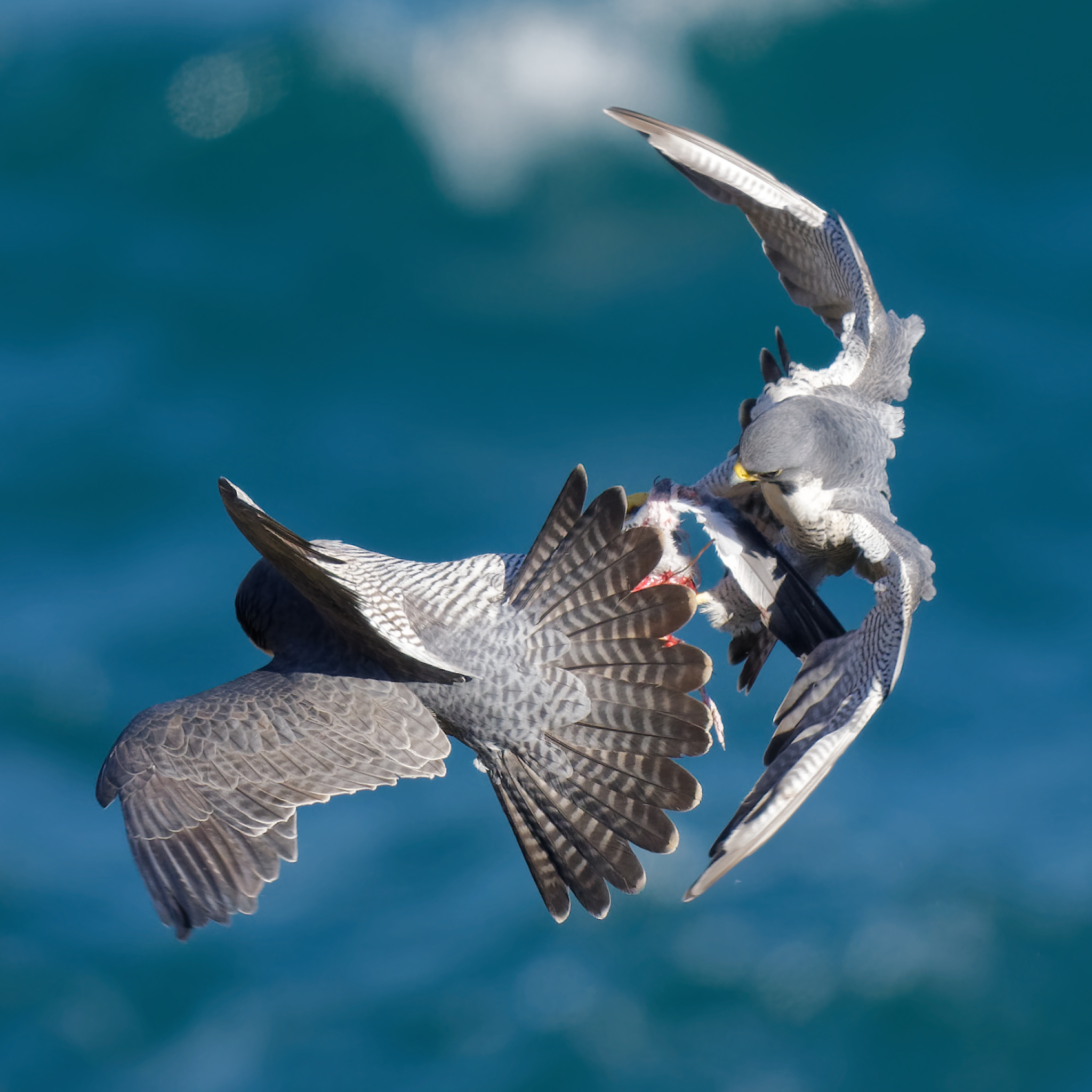
The Stroud Valleys Project has let us know that they will be hosting a talk on the Peregrine Falcon later this month. The regal Peregrine Falcon has earned a fearsome reputation as one of the natural world’s most ruthless killers. The raptor, which sits at the top of the food chain, is the fastest bird in the sky when it drops (or ‘stoops’) to catch its unfortunate prey… it’s been recorded at speeds of up to 200mph (320kph).

Peregrine experts Steve Watson and Richard Sale will reveal the secrets of this majestic but deadly bird of prey at a talk hosted by Stroud Valleys Project at Stroud Brewery this month. Richard is a former astrophysicist and the first author to win the Wildlife Society’s book award prize three times, while Steve is a trustee of Gloucestershire Raptor Monitoring Group and Raptor Aid who has conducted a 40-year study of Peregrines at Symonds Yat; they’ve channelled their passion for the Peregrine into a hefty new book, The Peregrine Falcon, which goes into painstaking detail about the life and predatory habits of the bird.

The talk starts at 2pm on Saturday 21 January; tickets are £7.50 for adults and £4 for children. You can book your place at stroudvalleysproject.org/events.

The GNS Annual Photographic Competition

Almost 250 entries were received this year from 31 contributors, the standard of many of the photographs entered was high and covered a diverse range of subjects. As for last year, the judging was carried out anonymously and independently by Helen and Phil Muggridge, two local professional wildlife photographers – see their work here at willridgeimages.com.

From the total list of entries, up to 12 photographs were selected as finalists in each of the six categories – Any species in its Environment, Behaviour and Interaction, Habitats and Landscapes, Plants and Botanicals, Portraits and Fun & Awful Photos.

For each category a winner was then selected and finally, an overall winner judged to be the best photograph overall.

Category winners each receive a Waterstones gift voucher with an additional gift voucher for the overall winner.

The photographs entered are available to view here –

We will be running the competition again next year and invitations for entries will be sent out to
members, and by way of a short note in the next issue of GNS News (March 2023).

2022 Bird Photographer of the Year – discount for GNS members

The 2022 Bird Photographer of the Year exhibition is on at Nature In Art in Gloucester until the 15th January. Nature In Art have kindly agreed to offer a discount to members of GNS, who will be admitted for £5 (normally £6.50 or £7). Simply state that you are GNS members when paying for your admission to receive the discount.

2022 is the seventh year that Bird photographer of the Year has been held and it already has firmly established itself as the pre-eminent competition of its sort.
Bird Photographer of the Year is a global photographic competition: it is a celebration of avian beauty and diversity, and a tribute to the flexibility and quality of today’s modern digital imaging systems. Never before has there been a competition of this scale dedicated purely to the growing interest in, and passion for, photographing one of the most interesting and engaging areas of natural history – birds. The advent of digital technology has revolutionised photography in recent years and some fantastic images, of a quality that wouldn’t have been possible in the days of film, now proliferate on the internet for millions to see.
This display will be fresh from its launch in September and feature images taken by photographers from across the world, selected from 20,000 entries, representing a mix of photographs taken by both hardened professionals and keen, skilled part-time photographers who, as well as having an eye for a picture and knowledge of their subject, have developed ways to exploit the potential of the ever-developing digital world. With categories from birds in the environment to bird portraits, bird behaviour and birds in flight, ‘Attention to Detail’ and black and white, urban birds and creative imagery, plus other awards including the Portfolio Award and Video Award, there is a feast of remarkable images to enjoy.

Further infomation available on the Nature In Art website.

Missed a GNS talk?

We hold regular online presentations and talks which members are all entitled to attend free of charge, and in most cases non-members are welcome to attend for a small fee. We don’t promise to make all of these available to watch afterwards but wherever possible, we make them available to view on demand.

The History of the Red Helleborine

Copies of the latest GNS publication are now available to buy for £10 (inc P&P).

The Red Helleborine (Cephalanthera rubra) is a rare and enigmatic member of the orchid family, surrounded by secrecy and intrigue, and Gloucestershire is one of its strongholds in the British Isles. The author, David Armstrong, has spent the best part of 30 years studying and researching this plant whilst working for the National Trust. This has involved visits to the few other known sites in the country as well as the local ones, literature searches, and visits to various herbaria, all pulled together in this illustrated booklet to create a fascinating read.

GNS Zoom meetings

GNS Zoom meetings are here again for the Autumn and Winter 2022/2023 season; start times 7.00pm for 7.30pm. The first is a members only talk to discuss our summer sightings. The second is an illustrated talk by Mervyn Greening about his quest to see 51 native species of orchid in Britain in one year. Further details on our events page, where further future events will be listed soon.

Marvelous Meadows Open Evening

The ‘Marvelous Meadows Open Evening’ might be of interest to GNS members – Come and experience some of the best floodplain meadows in the Severn Vale, in their full glory. A self-guided walk with botanists and farmers on hand to help you ID flora and fauna and hear about their management and history.

Thursday 23rd June, 6pm-8pm at The Wharf, Coombe Hill, GL19 4BB.

Skip to content