

GNS Zoom meetings are here again for the Autumn and Winter 2022/2023 season; start times 7.00pm for 7.30pm. The first is a members only talk to discuss our summer sightings. The second is an illustrated talk by Mervyn Greening about his quest to see 51 native species of orchid in Britain in one year. Further details on our events page, where further future events will be listed soon.
 Ben Locke
Marvelous Meadows Open Evening

The ‘Marvelous Meadows Open Evening’ might be of interest to GNS members – Come and experience some of the best floodplain meadows in the Severn Vale, in their full glory. A self-guided walk with botanists and farmers on hand to help you ID flora and fauna and hear about their management and history.
Thursday 23rd June, 6pm-8pm at The Wharf, Coombe Hill, GL19 4BB.
Pop-up Botany
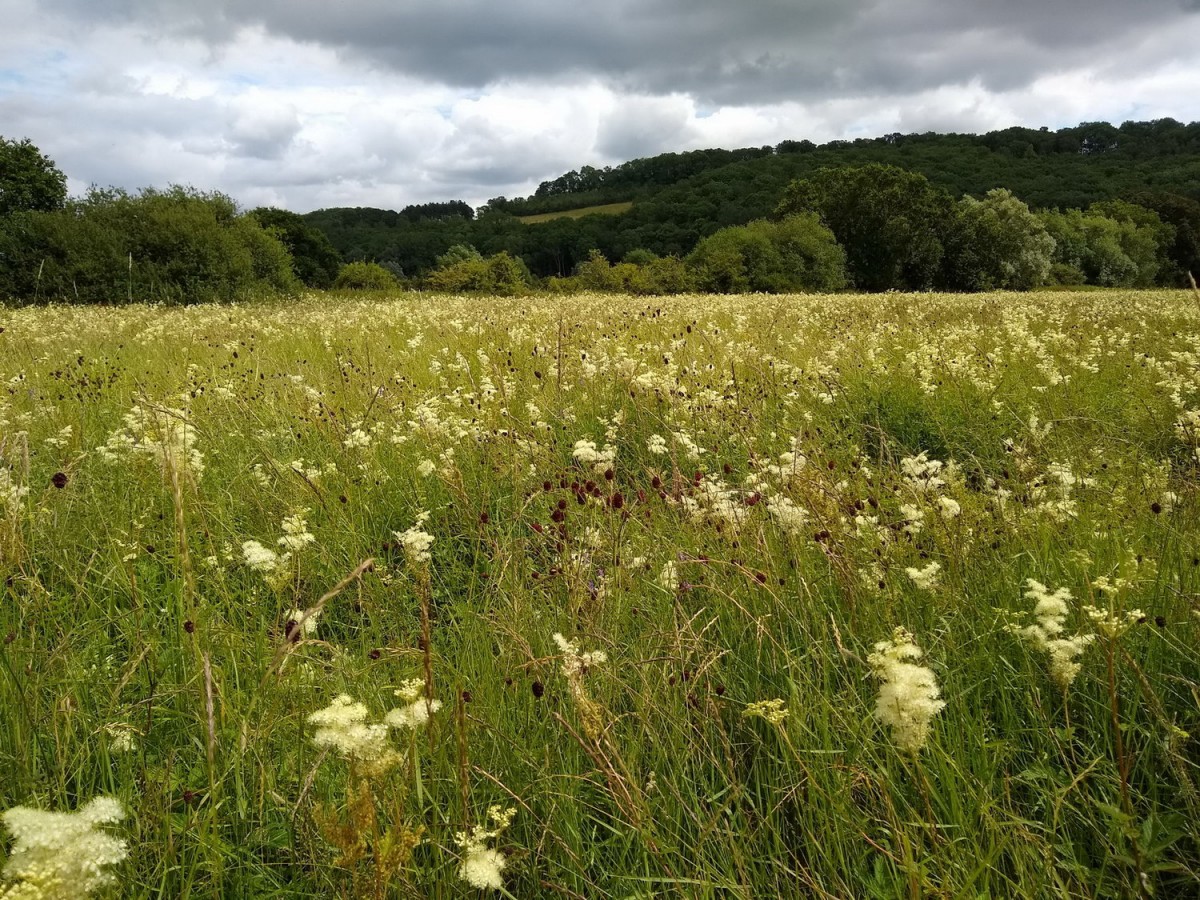

These Pop-up Botany meetings are being organised in recognition of the work of Clive Lovatt whose sudden death recently was a shock to all who knew him. Clive was an indefatigable botanist, and since moving to the county, a generous giver of his time and knowledge to local botany. He will be very much missed.
Getting started in botany can be daunting, so these meetings are for beginners, or near beginners. They will last around two hours and will finish in a pub or café where we can discuss further what we have been looking at.
The meetings have themes which could be: characteristic plants of a particular habitat (wetlands, floodplain meadows, acid grasslands, hedgerows, etc.), or particular groups/families of plants (sedges, rushes, yellow dandelion look-alikes, thistles, vetches) or plants that are in flower at the time, types of seeds, etc.
It is hoped that Habimap volunteers might also find these events useful as they will cover some of the key indicator species for ‘habimapping’. There are four events planned, and members and non-members are welcome to attend.
Wednesday 13 July. 17.00. Guiting Power.
Wednesday 20 July. 17.30. Clearwell Meend.
Saturday 30 July. 10.00. Whitminster/Fromebridge.
Wednesday 3 August. 18.00. Horsley Woods, nr Nailsworth.
Further details on the events pages.
Meadow restoration course

Places are available on a free course aiming to show how to produce plug plants from local seed and restore species-rich meadows or even small patches. The course starts next week. It is based near Gloucester and aimed principally at floodplain meadows though the techniques will be applicable elsewhere. See pdf below for more detail.
GNS Pub-Chat follow-up

GNS Pub-Chat Zoom meeting Wednesday 4th May 2022 – Beavers
During this evening’s Pub Chat Zoom meeting there was some discussion about Beavers (Castor fiber) as a follow up to the Field Meeting visit to the Beaver release enclosure in the Forest of Dean on 13th April.
Beavers have been reintroduced in a number of locations in Britain as a whole but there is what might be seen as a feral population, rather than controlled releases in part of Scotland, specifically in the catchment of the River Tay in Perth & Kinross district. A point was made that given how much information is available about the Beaver populations particularly in Scotland, is there really any need for the long and drawn-out studies and consultations that appear to be necessary before any further releases are licensed, or is the English Government dismissing, or ignorant of, the situation north of the border?
To illustrate that thinking, and for general information, the report to the Scottish Assembly prepared by Scottish Natural Heritage is available here…
Andrew Bluett
9th May 2022
Dawn Chorus events


We have arranged four dawn chorus events, over the weekend 30 April – 1 May, for those who are awake early. They are spread around the county, so there should be one that is reasonably accessible to most people. The meetings start at 05.00 and should
finish at around 07.00. Sunrise is about 05.40 so please arrive on time!
These events, along with all our other scheduled events, field meetings and talks, are listed here.
Hempsted field meeting

by Juliet Bailey.


Seventeen members and friends met near Hempsted church on 6 February 2022 for a general-interest morning walk. We had fine weather until the very last stop when a driving rain-shower caught us off-guard, though the sun quickly came out again.
We walked down Rectory Lane from the church and out onto the floodplain of the river Severn. There was little flowering along the lane – just some rather dejected White Deadnettle (Lamium album) which had been nipped by recent frosts.
The first field in the plain was low ridge-and-furrow and in spring is a romantic haze of Cuckoo Flower (Cardamine pratensis) but being late winter there were no flowers in bloom. Still we could see the leaves of it in the grass, together with Sorrel (Rumex acetosa), Creeping Buttercup (Ranunculus repens) and other plants typical of floodplain meadows including Deschampsia cespitosa, Tussock Grass, known by many Gloucestershire farmers as Bull’s Pate. This is a strong marker of impeded drainage, and here was noticeably in the furrows rather than on top of the ridges. Farmers don’t like it because the cattle won’t touch it. Its leaves have a serrated edge – easy to pull in one direction but cutting like a knife if you run your finger – or tongue – the other way.
There were several people interested in mycology in the party. We admired some Turkey Tail (Trametes versicolor) on some logs lying on the ground, and later Scarlet Elfcup (Sarcoscypha coccinea).
At the far side of the meadow a band of trees marks the boundary of the 360-acre Hempsted waste tip which is mostly soil-capped and grassed over. The water in the brook here appears to be clean, with banks of Water Starwort (Callitriche sp.), so the tip must be well coffered. However, the walking became more tricky on this stretch, hemmed in by the brook and the edge of the tip. It had rained heavily over night and the path was narrow and muddy and lined with mounds of bramble.
Much of the bramble is Rubus caesius, Dewberry, which can be affected by the gall-wasp Diastrophus rubi. No doubt inspired by the GNS zoom talk from Tommy Root the previous Wednesday several examples of this gall were found, together with swelling on a thistle stem caused by the fly Urophora cardui, and willow catkin galls – mystery causative organism, possibly viral or bacterial.
A flock of about 30 Goldfinches (Carduelis carduelis) were feeding on alder cones in the trees along the brook. We followed the path to the river’s edge where the vista opened out with views across the Severn and the Minsterworth meadows where Curlew can still be heard here in spring and summer. A Cormorant (Phalacrocorax carbo) was perching in a nearby tree. The star bird of the morning was to come later when a few people in the party, that by that time had become a little strung out, were lucky to see a Stonechat (Saxicola rubicola).
Badgers (Meles meles) were very evident. We did not see one, but saw a massive sett early in the walk and a latrine area right on the riverbank. Badgers are tidy creatures, scraping little pits into which they deposit their droppings, and often as here on the river’s edge, having latrines with half a dozen or more pits marking the boundaries of their home ranges.
Returning back up the hill on the final part of the walk we regrouped at Our Lady’s Well (or St Anne’s Well). This elegant stone well head of the 14th century is a Grade I structure, so the same status as Gloucester Cathedral which could be seen just over a mile away to the north-east. However, the archaeology of the site goes back further still. Roman features, including ditches and burials, with pottery, coins and other material have been found on the hilltop, and indeed it would have been a good lookout point to observe shipping coming up the river towards Gloucester, where the cathedral marks the north-west corner of the Roman fortress and later colonia.
The low earthworks on the hilltop were identified as a ‘Roman camp’ by 19th century antiquarians, and it appears as such on Ordnance Survey maps up until the 1940s. More recent archaeological investigations in advance of modern housing development on the hilltop has shown that the earthworks post-date the Roman activity. They may be pillow mounds for the farming of rabbits, and related to the ownership of the site by Llanthony Secunda Priory.
The site has long been of interest to local natural historians and antiquarians. One has to admire the stamina of our predecessors in the Cotteswold Naturalists’ Field Club who, on 23rd February 1860, held their AGM at the Ram Inn in Gloucester (now the New County Hotel in Southgate Street), then, after breakfast, proceeded to Hempsted to admire the then recently identified “Roman” earthworks, finishing off with a lunch at Hempsted House, and an examination of material in the private museum. It is good to feel oneself one in the long line of history.
Proceedings Cotteswold Naturalists’ Field Club, 3 (1861-1865) 17
url: https://www.biodiversitylibrary.org/item/45534#page/25/mode/1up
Photos
Turkeytail (Trametes versicolor) by John Woodbridge
Scarlet Elfcup (Sarcoscypha coccinea) by John Woodbridge
Galled Willow by Mervyn Greening
Diastrophus rubi gall on Dewberry by Mervyn Greening
Urophora cardui gall on Creeping Thistle by Mervyn Greening
GNS AGM

The Gloucestershire Naturalists’ Society AGM will take place on March 25th at 7.30pm and will take place online as a Zoom meeting. The meeting will open at 7.15pm. Following the AGM, Andy Lewis will be giving a talk about the Winter Bird Survey. Both members and non-members are welcome to attend using the joining information below.
The agenda can be downloaded using the following link:
The Science and Publications sub-Committee report for the year ending March 2022 can be downloaded using the following link:
Joining information:
Topic: GNS AGM
Time: Mar 25, 2022 07:30 PM London
Join Zoom Meeting
https://us02web.zoom.us/j/82945226334?pwd=VmhRaGEvaHhBeHVHbEtSeUZ0QzZnUT09
Meeting ID: 829 4522 6334
Passcode: 005059
Upcoming Field Meetings
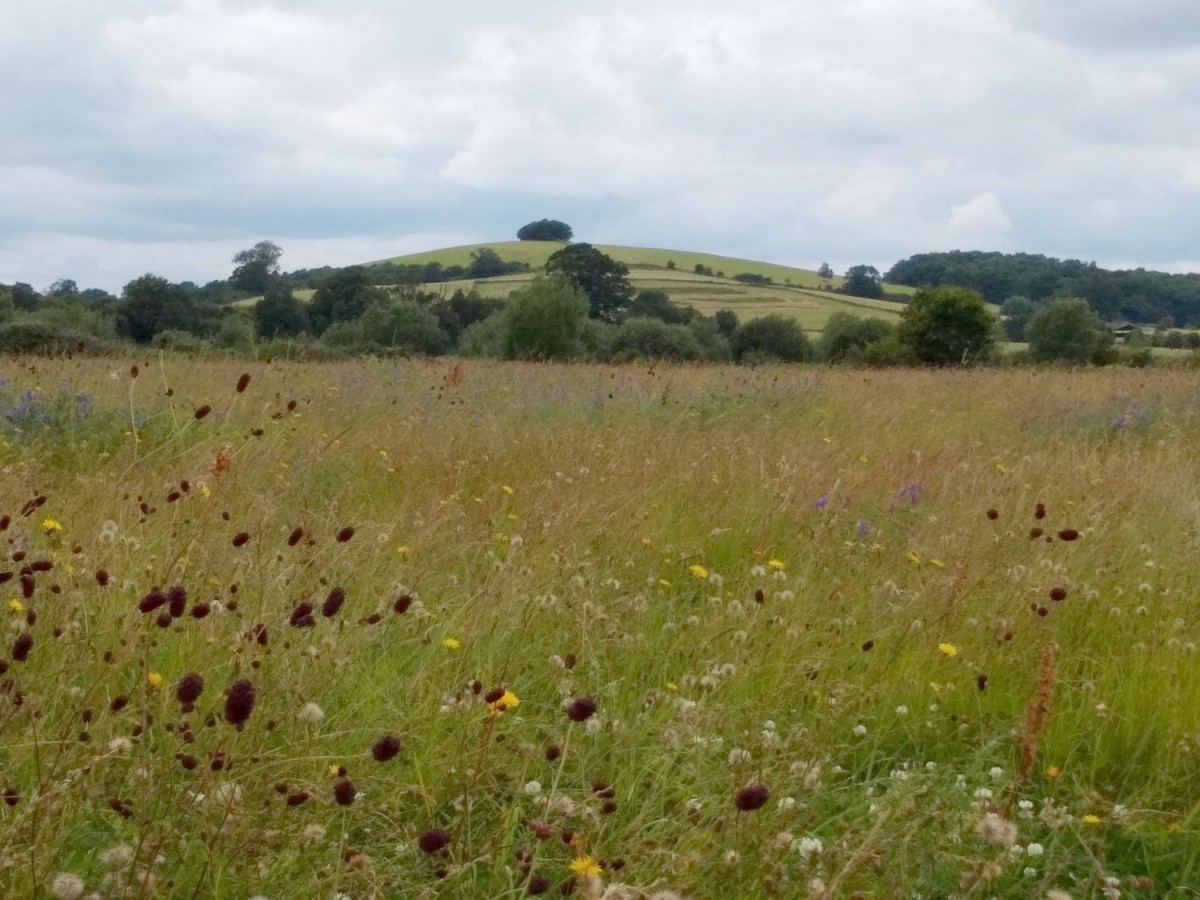

Many more field meetings have been added to the events pages, with 23 currently scheduled between now and the end of the year. This schedule now includes the Botanical meetings. Many members will be aware of the recent and sudden death of Clive Lovatt. Clive was an enthusiastic field botanist and several of these meetings had already been planned by him. In respect for Clive’s memory, Clare and Mark Kitchen have arranged to run these meetings as well as the walks they had planned themselves. Dates and venues have not changed.
The Birds of Gloucestershire
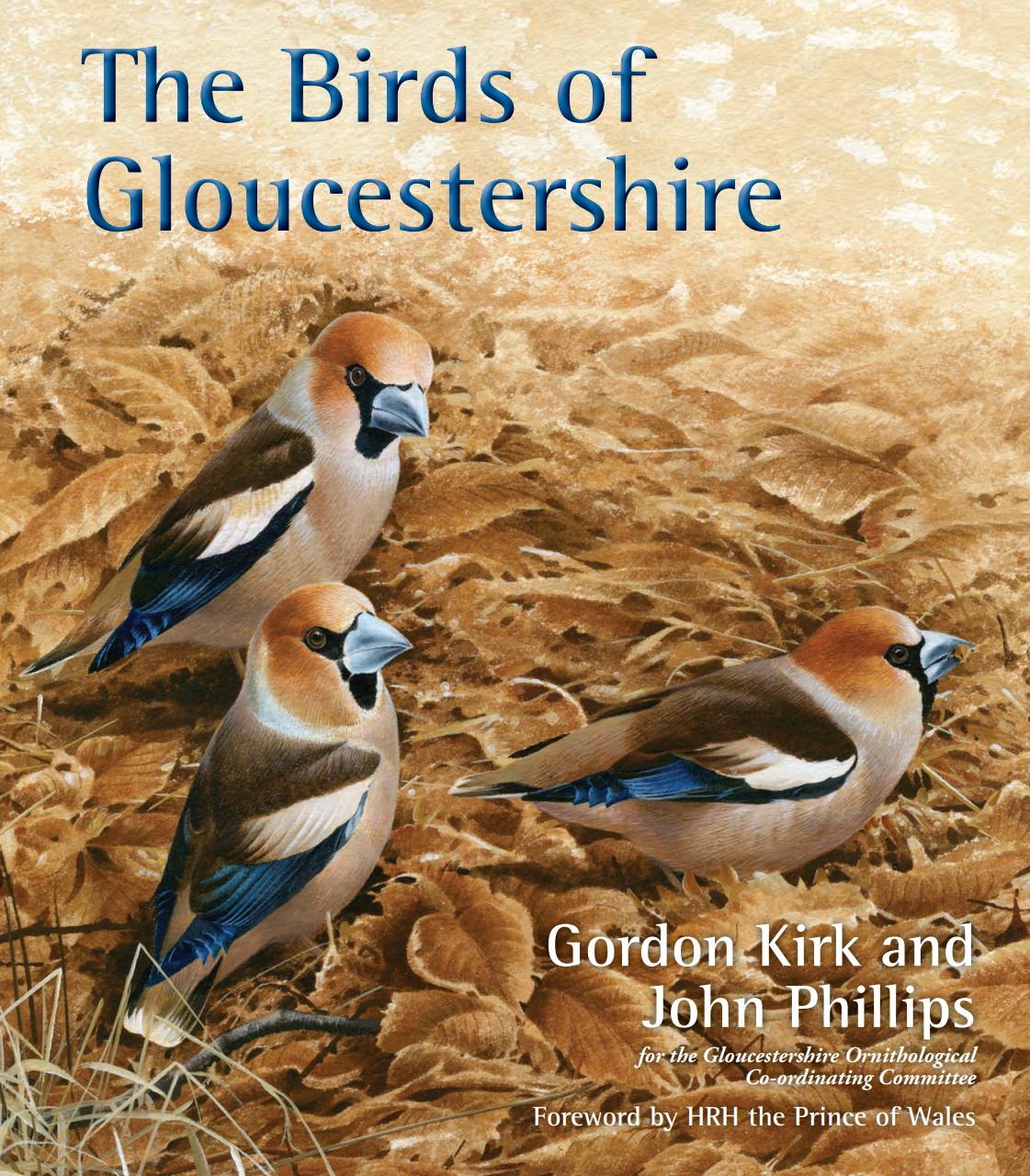

The county bird atlas is now available as a free electronic version.
The Birds of Gloucestershire was published in 2013, in parallel to the British Trust for Ornithology’s national atlas. It was a joint volunteer effort between the county’s various bird clubs and birders.
This electronic version has been made available free for anyone to use for non-commercial purposes. There are versions in pdf and ePUB formats.
Should you wish to quote from it, please include this citation:
Kirk, G.R. and Phillips, N.J. 2013. The Birds of Gloucestershire, Liverpool University Press.