Results of the Bioblitz 700 at The Park and Poor’s Allotment 25th – 26th July 2015

Results of this bioblitz were assembled months ago. I did mention in the September 2015 issue of GNS news that they will be published on this website. I have been busy in the meantime but unfortunately this slipped my mind. So thank you Maris for the reminder!

Number of species found in each taxon group

Fungi
4
Mosses
52
Liverworts
12
Stonewort
1
Ferns
10
Flowering plants
223
Conifers
2
Millipedes
2
Woodlice
4
Spiders
3
Dragonflies & Damselflies
11
Grasshoppers & Crickets
3
True Bugs
7
Beetles
12
Scorpion fly
1
Moths
176
Butterflies
22
True Flies
42
Ants, Wasps & Bees
12
Molluscs
12
Amphibians
5
Reptiles
3
Birds
40
Mammals
16
Total677

As you can see we didn’t quite make the 700 species. The persistent rain on the second day dramatically reduced recording effort.
Here’s the full list:

Heathland 700 The Park & Poor’s Allotment Species list

Just as a reminder: there will be another bioblitz at Crickley Hill, the new Gloucestershire Wildlife Trust reserve and SSSI from Friday 8th to Saturday 9th of July. Here’s hoping for optimum conditions to hit a realistic target!

http://www.gloucestershirewildlifetrust.co.uk/events/2016/07/08/crickley-bioblitz?instance=0

Dragonflies & Damselflies of Gloucestershire now on sale

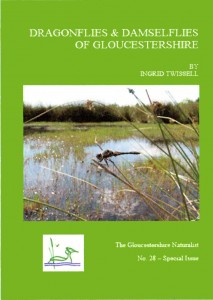
Dragons Cover002Copies of ‘Dragonflies & Damselflies of Gloucestershire’ by Ingrid Twisell are now available to buy on the publications page. The result of a long and careful campaign of fieldwork and recording, this publication is an important addition to Gloucestershire fauna reference works and contains much useful information about dragonflies & damselflies in the county complete with distribution maps, flight times, sites guide etc. It is lavishly illustrated with photographs of both species and habitats. Copies of the book cost £15 plus £2.50 p&p. Please note that stocks are limited.

Latest news on the breeding Curlew survey

A real movement to study and protect breeding Curlews in lowland Britain seems to be developing.  Apart from our efforts in the Severn and Avon Vales in Gloucestershire and Worcestershire, Phil Sheldrake is busy on Salisbury Plain and has contacts with Curlew observers in the New Forest; surveys are being carried out in two areas of the Upper Thames Catchment (through RSPB Otmoor and Jenny Phelps of  Gloucestershire FWAG) and there’s a demonstration on one of the farms near Faringdon tomorrow); Phil and I are planning to visit the Somerset Levels next week, to see how their Curlews are doing.  Furthermore Mary Colwell is now in the middle of her 500 mile walk from Ireland to East Anglia to highlight the plight of the Curlew: she came to the Severn and Avon Vales in early April before beginning her walk; you can see notes on her visit to our area, plus details of how her walk is going, on her website www.curlewmedia.com  The latest edition of RSPB’s magazine “Nature’s Home” carries a note about the lowland Curlew surveys on page 39.

We hope at the end of the breeding season to arrange some kind of get together for all those interested in Curlews and who have taken part in the surveys.

Now for some updates on the situation in the Severn and Avon Vales in Gloucestershire and Worcestershire:

  • In the Gloucestershire section we had April flooding for the first time since 2012 (thanks to Storm Katie coinciding with high elver tides); this meant that many of the traditional breeding sites were under water until mid-April, and still remain very wet; so 2016 is definitely a late season.
  • Whether because of the wet conditions, or because of the continuing decline in Curlew numbers, I have the impression that there are fewer Curlews than usual in the traditional breeding haunts this year: that’s only an impression, and I hope I shall be proved wrong as the season advances.  Several people have sent NIL returns for sites usually occupied.
  • Many pairs at traditional sites have spent the month of April holding territory, just standing round (often in pairs), showing other pairs that this field is occupied.  I haven’t seen much chasing or courtship behaviour: this is in fact quite hard to see, because they stand still, apparently doing nothing, for a very long time, and you need patience, waiting at the edge of a field behind your telescope to see them actually indulging in courtship chases.
  • The grass has now grown belly high to a Curlew, and I think they are just now in the process of laying.  Typically, a pair will stand feeding in a field, then one (the female which can be distinguished by its longer de-curved bill and larger size) walks away, often with a particular gait, looking alert and keeping close to the ground to avoid attention, and disappears out of sight.  Meanwhile the male stands round, on guard.  Phil Sheldrake tells me that he has observed this kind of behaviour on Salisbury Plain, and has pinpointed several nests in this way.
  • I have been to the Gloucestershire Wildlife Trust reserve at Coombe Hill a couple of time in the evenings, to look at numbers coming to roost.  Numbers were small because of the flooding in early April, but the last two visits have produced only five and four roosting birds, another reason for thinking numbers are low.
  • Two of the birds colour ringed in autumn from 2010 to 2013 on the Severn estuary have been re-sighted on their traditional fields, one at the Gloucestershire Wildlife Trust reserve at Ashleworth, one near Twyning.  No one has as yet found the colour-ringed bird seen in previous breeding seasons in the Queenshill Rough/ Ripple Lake area.
  • I have been to see John Belsey at the Worcestershire Wildlife Trust reserve of Upton Warren, where there is a tradition  of Curlew roosts; interestingly, these turn out to be mainly in winter, with numbers dropping off in summer; so the situation there is clearly different, with wintering rather than breeding birds coming to roost.
  • Carrion Crow and Magpie control is practised by many farmers in the area around Haw Bridge.  They are convinced that excessive numbers of predators is one of the reasons for the decline of breeding Curlews (which is  what the British Birds article in November 2015 said).  Foxes at Coombe Hill cause panic among the waders present.
  • It is hoped that mowing on the Severn Ham at Tewkesbury will be flexible (like last year), to allow any chicks produced there to fledge before the hay is cut.

I’d welcome any comments on the above remarks, and – even more so! – any additional observations that any of you may have made.

Nightingale walk at Highnam Woods

This event  arranged through the Gloucestershire Wildlife Trust will be held at RSPB Highnam Woods reserve on:

Thursday 5th May from 7pm to 9.30pm. 

This will be led by RSPB warden Hannah Moreton who will also look at habitat management for the species.

It’s completely free to attend but spaces are limited; so if you’d like to come you need you to book your place in advance from this link:

http://www.gloucestershirewildlifetrust.co.uk/events/2016/05/05/habitat-management-nightingales

Join GNS online!

It is now possible to become a member of GNS online. Various options such as one-year membership, recurring annual membership and life membership are available to both new and existing members alike.

In addition to field meetings and indoor meetings, members of the Society receive:

  • the quarterly newsletter, containing articles on wildlife matters as well as news about the Society and its events;
  • a free copy of The Gloucestershire Bird Report each year;
  • free copies of The Gloucestershire Naturalist which contains more scientific articles on Gloucestershire wildlife.

GNS members also have free access to the Society’s extensive library of several thousand volumes, which is held at Hartpury College.

For further information, to become a member or to renew your existing membership, visit our membership page.

Otters seen at Coombe Hill

Water levels at Coombe Hill are currently quite high, because of recent rain and the high level of the Severn, made even higher by high tides between 6 and 12 April. On the morning of 9 April, Andy Lodge was lucky enough to see and photograph three otters very close to the Grundon Hide. There have been more and more records of otters along the Severn in recent years, indicating that this once scarce species is returning, and that water quality must be improving, but not many people get such good views; the Lapwing was clearly interested too!

Otters 2016.04.09 DSCN0269

Otters 2016.04.09 DSCN0273


Coombe Hill on 16 April

Horrid weather with snow showers early in the morning, leaving probably the heaviest snowfall of the year on the Cotswolds and a little snow on the southern end of the Malverns, and bringing large numbers of hirundines down over Coombe Hill; once the snow passed, fair numbers of singing summer migrants; no sign of the cranes seen yesterday by Andy Jayne.  Water levels continuing to rise (over the top of the stage boards again, water on the boardwalk) , making life very difficult for any ground nesting birds but nice variety pof breeding and passage waders.

4 Mute Swans (one with nest by board walk); 6 Greylags; 2 Canada Geese; 6 Shelducks; 3 Wigeon; 6 Gadwall; 150 Teal (still lots of them about, are they going to nest??); 20 Mallard; 20 Shoveler; 3 Tufted Ducks; 3 Little Egrets; 2 Grey Herons; 1 Cormorant landed; 15 Coot (family still with four growing chicks on canal); 2 Oystercatchers (mating seen); 20 Lapwings (lots of aerial display, and some display on the ground with raised tail, but no sign of any sitting birds, either on the reserve which was under water, or on the barley field which has recently been ploughed and sown); 1 Little Ringed Plover; 2 Snipe; 1 Curlew (only a bit of bubbling); 1 Whimbrel; 1 Black-tailed Godwit (in bright summer plumage); 2 Redshanks (very lively, lots of trilling and display, looks as though they would like to nest if the water levels ever drop); 1 Green Sandpiper, 10 Black-headed Gulls moving through; hundreds of Swallows and dozens of Sand Martins, plus a single House Martin, flying low early on and landing on willows to get out of the wind and snow; 2 Yellow Wagtails; 3 Pied Wagtails; one male Wheatear; at least one singing Cetti’s Warbler; about four singing Sedge Warblers; one singing Whitethroat; 1 singing Lesser Whitethroat; 3 singing Blackcaps; 2 singing Willow Warblers; at least three singing Chiffchaffs; 2 singing Reed Buntings.

Gloucestershire Curlews

This is a short video with Mike Smart about Curlew monitoring.

I work in local conservation in the Severn and Avon Vales, through the Gloucestershire Wildlife Trust, the Gloucestershire Naturalists’ Society, and various other bodies. We have, with BTO, carried out a colour-ringing project on Curlews that winter in the Severn estuary. Thanks to the colour rings we can now recognise individuals, and have confirmed that they are incredibly faithful to both breeding and wintering sites, returning year after year to the same mudflat and high tide roost in winter, and to the same breeding field in summer. Our ringed wintering Curlews breed across a broad swath of land from the Severn estuary to Yorkshire, Suffolk, The Netherlands, Germany and as far as Sweden and eastern Finland.

Though Curlew is generally considered to be a breeding bird of high moorland, a reasonable population continues to breed in the lowlands of south west England; one of the main centres is the Somerset Levels, and there are almost as many in the Severn and Avon Vales upstream of Gloucester. Curlew is very much one of the iconic summer species of the Vales in summer and its lovely bubbling call is a feature of the area, much loved by local people. We are going to do a survey this year, to try to find out exactly how many pairs breed; my “off the top of the head” estimate is 50-100 pairs. The nests are terribly difficult to find as the birds nest in very large flat hayfields in the broad river valleys, where it is difficult to get on an eminence from which you can watch them. We think that one reason for the decline is early cutting of these hay meadows, though predation is clearly a problem too. We have a team of local observers, who are making regular visits to the main sites, and hope to produce a document at the end showing where the main sites are, in the hope that bodies like Natural England will help persuade farmers and land-owners to cut their grass a bit later, when any chicks have fledged.

Mike Smart

Skip to content