The Gloucestershire Naturalist Volumes 1 – 12

As a result of having to provide copies of back issues of The Gloucestershire Naturalist Volumes 1 – 12 to the British Library and through the generosity of some of our members, we now have on file scanned copies of all of those issues. 

If anyone needs copies of specific articles for reference or research, we can supply them as e-mailed scanned pdf files free of charge on request.

Full sets of Volumes 1 – 12 as scanned pdfs can be supplied on disc at a cost of £6.00 (inc. postage) payable to Gloucestershire Naturalists’ Society.

The document attached below is an index of the issues and articles available. We hope to add later issues in due course but due to the size of volumes 13 and 14, the Stephen Bishop Flora of Gloucestershire, we are still considering whether we are able to make them available and in what format.

Printed copies of specific articles may be possible in certain cases but we cannot provide printed copies of whole issues.

All enquiries for these services should be addressed to Andrew Bluett, Membership Secretary, at gnsmembership@btinternet.com or on 01452 610085.

The Gloucestershire Naturalist Vols 1 -12 Index


GNS Joint Meeting with Painswick Bird Club

Poles Apart by Dr Michael Leach


The next event in the GNS calendar is a joint meeting with Painswick Bird Club on Tuesday 4th November commencing at 7.30pm in the Painswick Town Hall, Victoria Street (just across the road to the left of the churchyard and on the opposite side of the main road from the Fiery Beacon Gallery).

The speaker will be Dr Michael Leach, the subject entitled “Poles Apart” is about bird life and animals in the Arctic and Antarctic. Michael is always good value for money as a speaker and this looks like a fascinating subject to be explored with excellent photographs and dialogue – not to be missed.

We don’t do many joint meetings with Painswick Bird Club and recently, the attendance from GNS members at these has been disappointing, so your support if you can come would be very welcome.

Michael’s web-site can be accessed here… http://www.michael-leach.co.uk/

Field Meeting at Plusterwine and Aylburton Warth 12th October 2014

Mike Smart was joined by seven members for this field meeting to visit and view the early stages of the development of new salt marsh on the riverside at the south-west end of Aylburton Warth.

The Environment Agency have purchased several fields from farmers and breached the old flood defence wall in places to allow the inflow of water from the estuary at high tides to facilitate this change, it is both a conservation measure for the birds but also a managed means of reducing erosion of the riverbank. Similar exercises have taken place at Steart Point in Somerset with advice from WWT and in parts of Essex on the east coast.

The weather for the visit was not especially good, whilst dry it was chilly and rather foggy and continued to be so throughout the day, high tide occurred just about the same time as the meeting started at approximately 11.00am. Ground conditions were rather wet and muddy in most places but an impressive list of birds was accumulated, some of these recorded as a WeBS count by Mike Smart prior to the start of the meeting:

Several hundred Curlew on roosts at Guscar and Aylburton Warth together with Redshank, Dunlin and Ringed Plover. 5 Greenshank, 1 Green Sandpiper, 4 Little Egret, 32 Golden Plover, a Common Snipe and 60 Lapwing on or in the vicinity of the flashes on Aylburton Warth, a Kestrel hunting over the Warth, a cock Pheasant by the railway line, a Sparrowhawk hunting the hedgerows and stubble, a Peregrine hunting over several areas, 3 Kingfisher and 2 Reed Bunting in the Phragmites filled ditches, 5 Stonechat, 20 Mallard, 12 Wigeon and 2 Cormorant over the river, 15 Teal in flight, 3 Common Snipe in flight over the river and a handful of Lesser Black Backed, Herring and Black Headed Gulls.

Other birds in various locations – 4 Wren, 15 House Sparrow, 40 Skylark, 8 Pied Wagtail, 25 Crows, 4 Heron, 4 Robin, 50 Linnet, 20 Meadow Pipit, 15 Goldfinch, 5 Dunnock, 2 Chaffinch, 3 Blackbird, 1 Jackdaw, 4 Jay, 12 Long Tailed Tit, 2 Great Tit, 1 Mistle Thrush, 1 Buzzard, 1 Great Spotted Woodpecker, 1 Raven, 2 Grey Wagtail, 1 Greenfinch and finally Martin Wright spotted 2 Swallow flying north eastwards high over the river.

Members present – David Priddis, Martin Wright, Cathy Booth, Guy Meredith, Juliet Bailey, Pam Jones and Andrew Bluett. Thanks to David Priddis for the use of his photographs.

Group photos by Andrew Bluett (left) & David Priddis (right)

Group P1030373  Group 2 IMG_1461_adj

Juliet Bailey up close and personal with Lichen (David Priddis)

JB IMG_1459_adj

Guy Meredith & Juliet Bailey exploring a Rhyne

Expl Ditches P1030374

The Aylburton Warth flashes (Andrew Bluett)

Flashes P1030378

Golden Plover (digiscoped with mobile phone, Andrew Bluett)

Gold Plover WP_20141012_12_54_39_Pro

Curlew in flight over the roost at Aylburton Warth (David Priddis)

Curlew roost IMG_1465_450_Curlew_cr

Lapwing, Little Egret and Golden Plover on the flashes (David Priddis)

Egret_Lapwing_Golden_Plover_IMG_1482_cr

The remains of an old quay or landing stage in the Cone Pill (dubbed by David Priddis the “Hobbit House”!) constructed of a platform on wooden piles now “roofed” with a deposit of mud covered with riparian plant growth (David Priddis)

IMG_1493


Slad Valley Pocket Guide – Wildflowers, Butterflies and Trees

20141010 Book cover

The idyllic Slad Valley in Gloucestershire is one of Britain’s richest and most diverse habitats. This coat-pocket guide in sturdy hardback is an ideal walker’s companion, with 450 colour photographs to help identify wild flowers, grasses, trees, butterflies and day-flying moths.

Among the hundreds of plant species thriving in the valley’s limestone grassland are up to thirteen orchids, including the early purple, pyramidal and bee orchids.

The 125 page book is by Richard Morris, a resident of the Slad Valley, science teacher and enthusiastic amateur botanist.

More information: sladvalley.co.uk

Forthcoming Meetings

We have two GNS Meetings coming up this weekend…

Friday evening, the 10th, at Watermoor Church Hall, Cirencester, an indoor meeting “A Journey into the Unseen World of Insects” with Cath Hodson, a local wildlife artist who specialises in close up detail work on insects. This will be a practical meeting looking at insect specimens through microscopes – fascinating stuff and a real chance to get up close and personal with truly beautiful invertebrates.

Sunday morning, the 12th, at Plusterwine Railway Crossing (on some maps Woolaston Level Crossing) – Meet at 11.00am at the end of the lane by the level crossing at ST 600 991 (The usual location for visits to Guscar Rocks and the Severn riverbank at the south-west end of Aylburton Warth), leader – Mike Smart (01452 421131).

A visit to view the managed re-alignment project being carried out by the Environment Agency who have breached the flood defence wall allowing almost 100 acres to flood on high tides (of which there were several this week). GNS are monitoring the salt marsh development here, this will be a meeting of general interest but wintering Wildfowl and Waders are expected to feature. Weather prediction is for cloudy with bright sunny spells and possible showers, light southerly winds so wear boots or wellingtons and a weatherproof coat. High tide will be circa 10.00am.

Red Kite and Buzzards at Hampen

Whilst a passenger in a car driving on the A436 from Andoversford towards Naunton on Saturday (about 13:30hrs) I spotted what appeared to be a group of buzzards – 1 big one and 2 smaller ones – circling in the sky ahead.  As we drew closer I suddenly realised the group was actually made up of two buzzards (Buteo buteo) and a Red Kite (Milvus milvus) and all three were in the process of aerial squabbling to the rights to some roadkill (an unfortunate pheasant).  The location was to the west of Hampen Farm (OS SP0474 2014) just south of the wooded old railway line.  As we passed by the roadkill, the Red kite was only about 10m above us and I’ve never been as close to one of these birds before and was struck by just how big they are – a fantastic moment! 

On a sidenote, I noticed during the roadtrip that there was a large number of roadkill pheasants around – always sad to see but on the plus side it means plenty of food for scavengers (as long as they can avoid the same fate).

A provisional Red Data Book of Gloucestershire Bryophytes

Bryophytes001a

GLOUCESTERSHIRE NATURALISTS’ SOCIETY

Is pleased to advise members that we now have a limited number of copies of

“A provisional Red Data Book of Gloucestershire Bryophytes” by renowned local ecologist and joint county bryophyte recorder in Gloucestershire for the British Bryological Society, Richard Lansdown, as a special edition of The Gloucestershire Naturalist (TGN 25)

This publication, whilst important in its own field is unlikely to be of use to those naturalists who do not have a specialist interest in this branch of botany. If you do wish to receive a copy, but have not already reserved one, please contact the Membership Secretary, Andrew Bluett, by e-mail at gnsmembership@btinternet.com or by post to

GNS Membership Secretary, 50 Kingsmead, Abbeymead, Gloucester, GL4 5DY

Those members who have already reserved copies will receive them by post in the very near future.

Cinderford Northern Quarter – Petition

The Dean Natural Alliance has informed Gloucestershire Naturalists’ Society about the 38 Degrees Petition asking the Secretary of State for Communities and Local Government to hold a public enquiry on a major development in the Forest of Dean.  Gloucestershire Naturalists’ Society has registered an objection to the development, and is represented on the Cinderford Regeneration Environment Forum.

The petition can be read here: https://you.38degrees.org.uk/petitions/save-wildlife-and-national-forest-from-major-development

Here is the text of the petition:


Save wildlife and national forest from major development

To: The Rt Hon Eric Pickles MP. Secretary of State for Communities and Local Government

Dear Secretary of State please intervene and hold a PUBLIC INQUIRY before making your decision on major development in the FOREST OF DEAN (Planning Application P0663/14/OUT)

Why is this important?

This major development will cause irreversible damage to the landscape and ecology of this stunning part of the publicly-owned National Heritage Forest of Dean, Gloucestershire. This site supports wildlife with EU protection. It is a much valued space for recreation with unrestricted public access. There are other solutions and sites for job creation.

This is a major development of a new college, hotel, housing, employment sites and a through road on a sensitive landscape and wildlife site in the National Heritage Forest of Dean, Gloucestershire. There are 2 national, cross-boundary walking routes through the site at Cinderford Northern Quarter.

Many acres of publicly-owned Statutory Forest will be transferred to the Forest of Dean District Council and the planning application for development made by the Homes and Communities Agency. This is likely to set an unwarranted national planning precedent for major development in other areas of the Forest of Dean, other publically owned Forests and other highly sensitive landscape and wildlife areas throughout the UK.

National Public Forests should not be used as cheap building land for major development. The majority of the development site is part of the Premier Heritage Forest of Dean, owned by the nation and the site should remain publically owned as recommended by the Independent Panel Report on Forestry wholly accepted by the Government.

  • Over 1,300 species have been recorded there, the breeding and feeding grounds for many EU and Nationally protected species. There is a Lesser Horseshoe Bat maternity roost vital to the maintenance of the Wye Valley and Forest of Dean Bat Special Area of Conservation (SAC). The site also has 13 other different species of bat, Great Crested Newts, Dormouse, other BAP species of newts and reptiles, butterflies, moths, dragonflies, notable and red data book species of birds including the iconic Turtle Dove and Hawfinch. This site should never have been allocated for development because of its high ecological value supported by a tightly knit interdependent ecosystem. The soils, plants and invertebrates underpin the food supply for other species’ survival. With the advent of Climate Change it is contrary to Government Policy not to protect such habitats.
  • The Wye Valley and Forest of Dean Bat SAC is one of the most important areas in the UK for lesser horseshoe bats containing 26% of the national population and is cross boundary with Wales. Yet it is to be subjected to the experimental manoeuvre of attempting to relocate a large maternity roost, vital to the maintenance of the SAC and to demolish an existing maternity roost.
  • Unrestricted public access over the site will be lost. The quiet enjoyment of recreation, wildlife and landscape experienced by local residents and visitors will be drastically degraded into a busy noisy urban polluting environment, visible from vista viewpoints outside the site.
  • This is not Sustainable Development. By the National Indices of Deprivation which uses the 20% percentile to indicate deprivation, the Forest of Dean and Cinderford is not a deprived area. Alternative solutions have not been fully explored such as alternative sites for the different elements of this major development. The biodiversity of this site could significantly contribute to the economy of the Public Forest Estate and the economy of the District as a resource for ecotourism (as illustrated by the economic generation achieved by the Peregrine Falcons for the Wye Valley) and as an educational resource for study and research which could attract EU funding.
  • This is not good planning, is not value for money for the taxpayer. The site is designated by the Coal Authority as a “High Risk Area” The creation of a new college building, hotel and housing is highly inadvisable in an area riddled with mine shafts, post open cast mining landfill and part flood zone. There is significant risk of massive overspending of taxpayers’ money.
  • The proposal is of more than local importance because it gives rise to substantial effects beyond the immediate locality, cross-boundary and national controversy, and conflicts with national policies on important matters.

BY supporting this campaign you are asking the Secretary of State to intervene and make the planning decision by holding a PUBLIC INQUIRY, rather than be determined by the Forest of Dean District Council, a joint sponsor of the scheme and therefore an interested party.

Object to this planning application, P0663/14/OUT Hybrid at planning@fdean.gov.uk

This is the link to the planning application website: http://publicaccess.fdean.gov.uk/online-applications/applicationDetails.do?activeTab=dates&keyVal=N4FS82HI01000

Read about the campaign and full objection details on Dean Natural Alliance Website: http://www.deannaturalalliance.org
Facebook: https://m.facebook.com/DeanNaturalAlliance
Twitter: http://www.twitter.com/DeanNatAlliance


Moth Larvae

image

This White Ermine larvae was spotted at Puzzlewood, in the Forest of Dean on the 18th August, 2014.

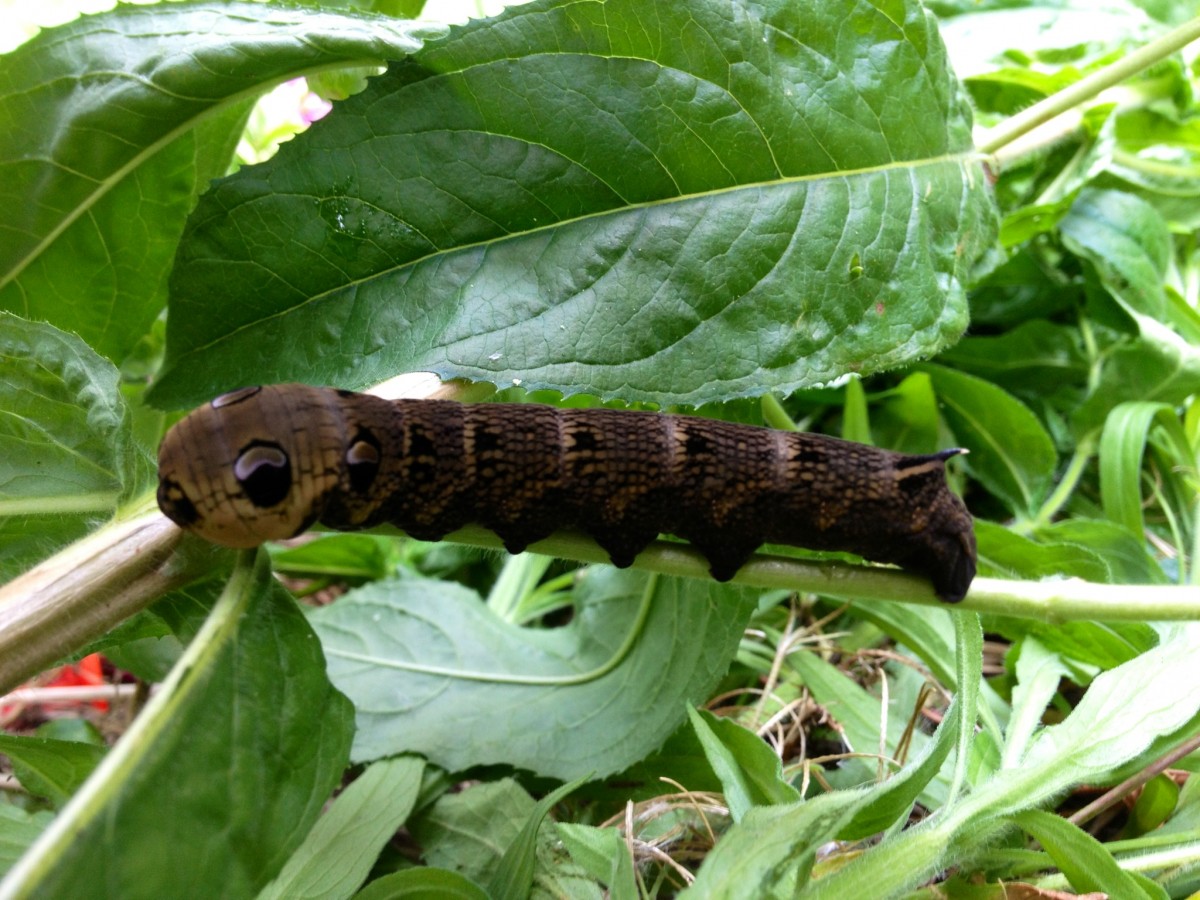
Elephant Hawk Moth Larvae Hawk Moth Larvae

This Elephant Hawk Moth larvae was spotted in my back garden in Cheltenham, quite close to pupation I believe as the colours are quite dark and it became quite sluggish over the course of a few days. It measured at least 90mm in length.

The Loneliest Bird in the World

Martha

In memory of Martha, the last Passenger Pigeon who died 100 years ago today, the 1st September 1914, in Cincinnati Zoo, USA.

The Dodo, Great Auk, Passenger Pigeon, Eskimo Curlew, Guam Flycatcher, Ivory Billed Woodpecker and many others…where they have gone, primarily as a result of the stupidity and avarice of mankind, others are following, regrettably at an ever increasing rate, which is why we naturalists do what we do, in the hope that we might at least slow down that rate if not stop it altogether.

Skip to content