Volucella zonaria

Volucella zonaria IMG_3641

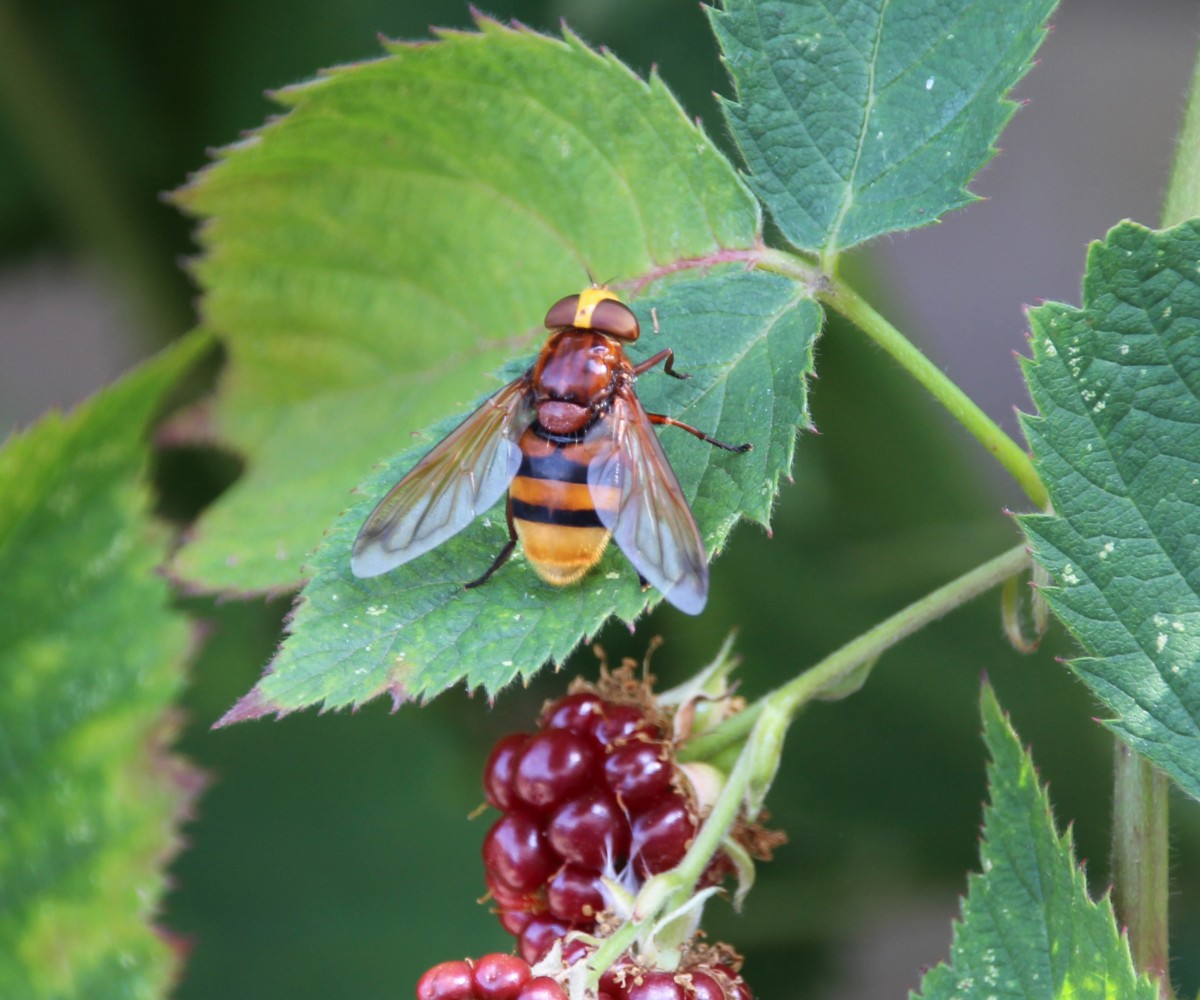
This little beauty turned up in my garden in Abbeymead at the weekend and was photographed on my Blackberry bush, it is a female of the species Volucella zonaria, the Hornet Mimic Hoverfly. Little was perhaps the wrong word, it was actually quite large at 20mm long…!


David Iliff, county Ladybird and Hoverfly recorder says “A very fine female V. zonaria. The species seems to be having a good year in the county”.


Wikipedia says:


“Volucella zonaria, the hornet mimic hoverfly, is a European species of hoverfly.


In Great Britain, it was only known from two specimens prior to 1940, so was regarded as rare. Since then, it has become increasingly widespread in many parts of the South and South East England, often in association with parks and gardens, where adults are usually seen visiting flowers. Elsewhere in England, only a few scattered records exist. The larvae live as commensals in nests of wasps of the genus Vespula. Like all Volucella, the adults are migratory”.


More authoritative information is available at: http://www.hoverfly.org.uk/viewtopic.php?t=45

Cinderford Northern Quarter Update Aug 2014

As many members will be aware GNS has been involved in various ways with the controversial development proposal for the Cinderford Northern Quarter site at Steam Mills in the Forest of Dean.

There is currently a Hybrid Planning Application in place with Forest of Dean District Council which was due to be decided during August but so many comments, observations, objections and amendments have been made that the decision date has been pushed back to possible September or even October. This is a significant and complex matter, there are now several hundred documents relating to the application available to view on the Council web-site.

As might be imagined, the Homes and Communities Agency and the Forest of Dean District Council have made a number of statements in respect of the development and the effects it will have, both in terms of the effects on the environment and wildlife and in terms of the economic benefit they believe will accrue to the area. They have made comments regarding the mitigation measure that are proposed for dealing with the wildlife on the site which is varied, extensive and amounts to 1300+ recorded species, a number of which are threatened or rare with Amber and Red conservation status. There could be many more if those species that have not been counted and recorded are taken into account. GNS members have been pro-active in adding to the list. Part of the site sits within a Special Area of Conservation as a result of the population of Lesser Horseshoe Bats (and others) which inhabit and use the site, the total numbers of which make the site notable in a European context, let alone a national or regional context.

The wildlife organisations, GNS among them, see things rather differently from the HCA and F of DDC; GNS along with other organisations through the medium of the Cinderford Regeneration Environmental Forum and by other means are attempting to influence the Council to at least modify the development and mitigation for the benefit of the wildlife on the site. It does seem that the message is beginning to get through and that some things are being re-considered and may change.

Dean Natural Alliance, a group of like-minded individuals and organisations, largely wildlife interested, have objected most strongly to the development and have had some publicity in the pages of the local newspapers. DNA held an open public meeting at the Forest Church Rooms in June, followed by a second meeting in July at the Speech House at which Jonathan Porritt was the main speaker. A copy of the report from the first DNA public meeting is appended below.

As things progress, we will give further updates and will continue to do what we can to limit the adverse effects of the development.

Dean_Natural_Alliance_Open_Public_Meeting_revised

Pond at Gotherington – newts etc.

Sir,

Our  garden joins to open fields in Gotherington.  We installed a 10 x 6 pond here 40 years ago and to encourage wildlife we have never had any goldfish. We quickly had a population of about 20 each of  great crested and smooth newts which has been  fairly stable, and breeding  over the years,  but only rare visits from frogs and never any frogspawn.

This year we have not seen a single newt following 2 or 3 years of declining population.  This may be connected to our purchasing 10 sticklebacks for the pond around that time. These are healthy and breeding but not noticeably increasing in numbers.

PS. It has been a very good year for dragonflies at this pond.

Regards
Norman Peak

The Peregrine Falcons of Gloucestershire, talk at Stroud on 5th September

The Peregrine Falcons of Gloucestershire
By Steve Watson
Friday 5th September
7.30pm – approx 9.30pm
Cost: £5/adult & £3/child

20140806 Peregrine

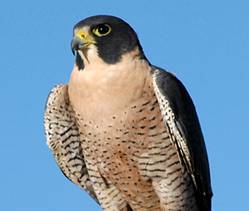
We are very lucky to have Peregrine falcons living close by in the wilds of Symonds Yat over in the Forest of Dean. Few of us may have been lucky enough to see, in real life, one of the fastest animals on the planet.  On 5th September Stroud Valley’s Project is offering you the chance to see this illustrated talk.  ‘The Peregrine Falcons of Gloucestershire’ is a fascinating presentation by Steve Watson, who has been studying the Symonds Yat peregrines for 30 years.

This talk will cover the biology, ecology, hunting strategies, UK population dynamics and the pesticide story of the peerless peregrine falcon. Steve will also discuss the Symonds Yat breeding performance and convey some personal anecdotes. The talk will include high quality photographs and video clips.

We hope you will be able to join us for this unique and interesting evening. Refreshments will be available.

Friday 5th September 7.30pm – approx 9.30pm Stroud                                                                                                                                                        

Cost: £5/adult & £3/childBooking and paying in advance is essential as places are limited.

Please call Stroud Valleys Project on 01453 753358 to book or find out more.

Julie Wickham
Marketing and Fundraising Manager
Stroud Valleys Project
8 Threadneedle Street
Stroud
Gloucestershire
GL5 1AF
Tel. 01453 753358
www.stroudvalleysproject.org

Butterflies & Moths at Hetty Peglar’s Tump

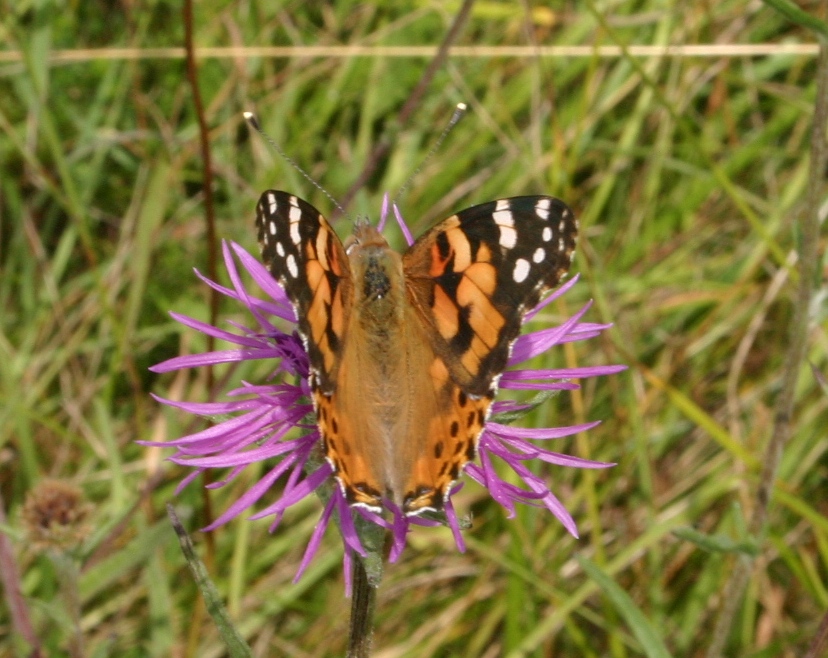
If you are interested in butterflies, moths and other insects, I can recommend a visit to Hetty Pegler’s Tump (Uley Tumulus), the famous Neolithic chambered long barrow, north of Uley (OS Map Ref SO789000).  I took a friend to the barrow on Saturday and was amazed at the variety and number of butterlies, moths and insects around the (including horseflies – grrh!).  Here are some photos of a Painted Lady (Vanessa cardui – note: the image is not stretched, the bututterfly had its wings partially folded), a Common Blue (Polyommatus icarus) and a Scarlet Tiger moth (Callimorpha dominula).  There was also one huge Red Admiral (Vanessa atalanta) that I was unable to photograph but which was quite the largest butterfly I’ve ever seen in the UK!

Common Blue Uley long barrow 26 July 2014 Painted Lady Uley long barrow 26 July 2014 Scarlet Tiger Uley long barrow 26 July 2014

Nightjars Video Clips

To follow the recent report, a short video below of Nightjars in action. The quality is not great because the filming was done in near dark with the movie function on an SLR camera rather than a Camcorder but it does give a taste of some of the action seen.

Nightjars 2

Nightjars in the Forest of Dean

As a result of member’s requests, Andrew Bluett led a further two meetings in search of Nightjar in the Forest of Dean, nine members and guests attended on 3rd followed by another five on the 10th July.


Meeting at 8.45 for 9.00pm, each walk set off as the sun was setting and in both cases the Nightjar activity began somewhat falteringly after 9.30 but soon became more positive and interesting as the darkness gathered. On the 3rd, the party met by chance with Lewis Thompson, locally renowned birder and photographer who was prospecting the area for an RSPB organised evening with Nightjars due to take place on the following Sunday evening.


Birds were heard churring to begin with, followed by some flight activity; at least two birds were churring on both occasions, often together and in competition with one another, occasionally close together, often some distance apart. They were inclined to move around and take up song posts at various points around the area, returning to the most favoured several times. Flights included pairs together, some display and courtship and on the 3rd, one pair were seen to mate after the female took to a perch, the male joined her on another perch, then flew up to and mounted her in full view of the observers. Mark Kitchen was fortunate enough to capture this behaviour on video, perhaps uniquely.


During the display flights in particular, the birds were calling with the soft chirping sound and males were clapping the wings high and forward over the back of the body. Even in the darkness the birds were easily visible, sometimes aided with one or more torches which enabled the observers to see the white wing flashes of the male birds and the enormous eyes which reflected the light (like cat’s-eyes in the road) at considerable distances.


On both visits several Wild Boar were seen prospecting and feeding amongst the scrub and bracken, including one particularly fearless and closely approaching “weaner”, still with a stripey body; a Fox was noted on the 10th, bats were flying around on both occasions and on the walk back to the cars, some dozens of Toads and Frogs were seen on the forest track ranging from perhaps 10mm up to 75mm in length, along with a small Palmate Newt seen on the 10th.


A single Woodcock put in a brief and grudging appearance and a young Tawny Owl was heard making contact calls.


The photographs below are not of great quality but are stills, captured from video clips taken in near darkness and illustrate some aspects of the flights seen.

Single bird in normal flight
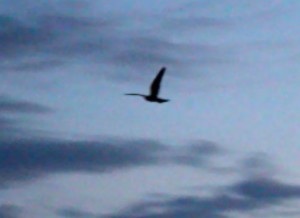
Nightjar 1

Male in display flight, widely fanned tail, white wing and tail flashes just visible
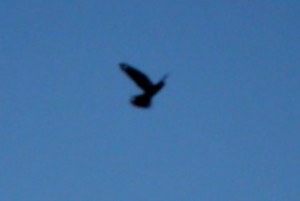
Nightjar 3

Display flight, wing clapping with the wings high and forward over the body

Nightjar 4

Male bird, wing flash visible

Nightjar 5

Male chasing female, his tail fanned and held low behind the body

Nightjar 6

Woodcock roding

Woodcock IMG_1076a

Toad, looking rather grumpy…!

Toad IMG_1306

Roman snail (Helix pomatia), Withington

Whilst visiting Sale’s Lot long Barrow at Withingon on 10th July 2014, I happened to encounter about five Roman snails (Helix pomatia) on the track leading to the barrow.  It was a hot day and I noticed that – with one exception – the snails were all exhibiting the same behaviour in that they were seemingly burrowing into the earth, presumably to escape the sun.  I haven’t encountered this species doing this previously – although I haven’t seen them on such a hot day.  I also came across a nice hare (which my dog didn’t see) and a female Fallow deer (which my dog did see as it leapt over him – he was too shocked to give chase!).

Sales Lot snail environment Roman snail close up

Cirencester Branch 50th Anniversary

IMG_1494a Excellent Birthday Cake

IMG_1518a David Scott-Langley & Mary Cservenka cut the cake

IMG_1512a Busy-busy in the Kitchen, caterer in chief Maggie Scott-Langley & Co

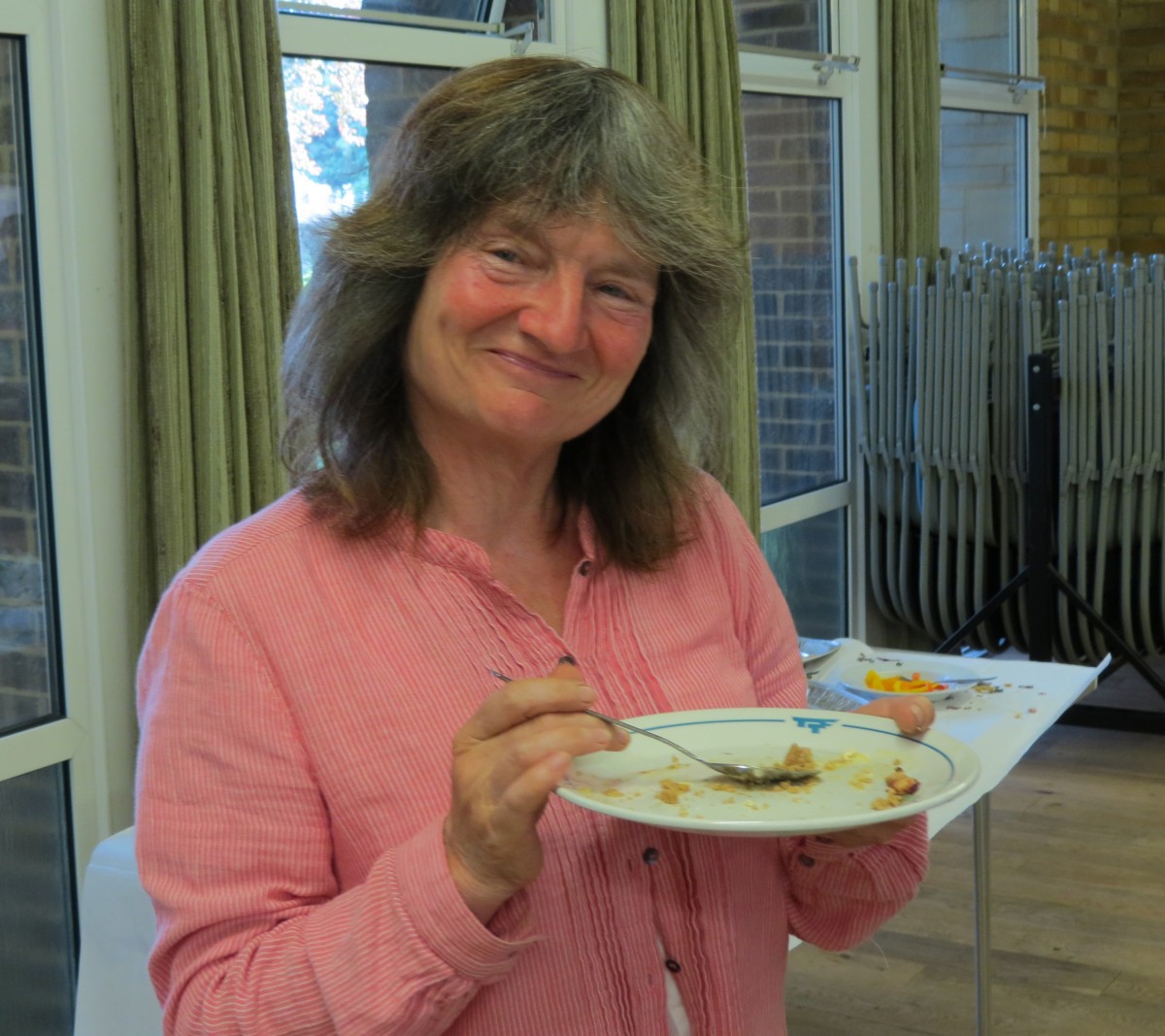
IMG_1509a Yum-Yum…Juliet Bailey tucking in

IMG_1507a GNS Stalwarts, Ingrid Twissell and Lynne Garner

IMG_1504a Animated conversation at the President’s table

IMG_1503a Members relaxing

IMG_1513a Ready for the evening’s presentation “It’s a funny way to make a living…!” by Michael Leach

Slow Worm

A Slow Worm in Welshbury Wood near Flaxley mid-evening on 18th June. It was about 1ft long and crossing the main track, very slowly!

P1040645

Skip to content