Red Kite and Buzzards at Hampen

Whilst a passenger in a car driving on the A436 from Andoversford towards Naunton on Saturday (about 13:30hrs) I spotted what appeared to be a group of buzzards – 1 big one and 2 smaller ones – circling in the sky ahead.  As we drew closer I suddenly realised the group was actually made up of two buzzards (Buteo buteo) and a Red Kite (Milvus milvus) and all three were in the process of aerial squabbling to the rights to some roadkill (an unfortunate pheasant).  The location was to the west of Hampen Farm (OS SP0474 2014) just south of the wooded old railway line.  As we passed by the roadkill, the Red kite was only about 10m above us and I’ve never been as close to one of these birds before and was struck by just how big they are – a fantastic moment! 

On a sidenote, I noticed during the roadtrip that there was a large number of roadkill pheasants around – always sad to see but on the plus side it means plenty of food for scavengers (as long as they can avoid the same fate).

Moth Larvae

image

This White Ermine larvae was spotted at Puzzlewood, in the Forest of Dean on the 18th August, 2014.

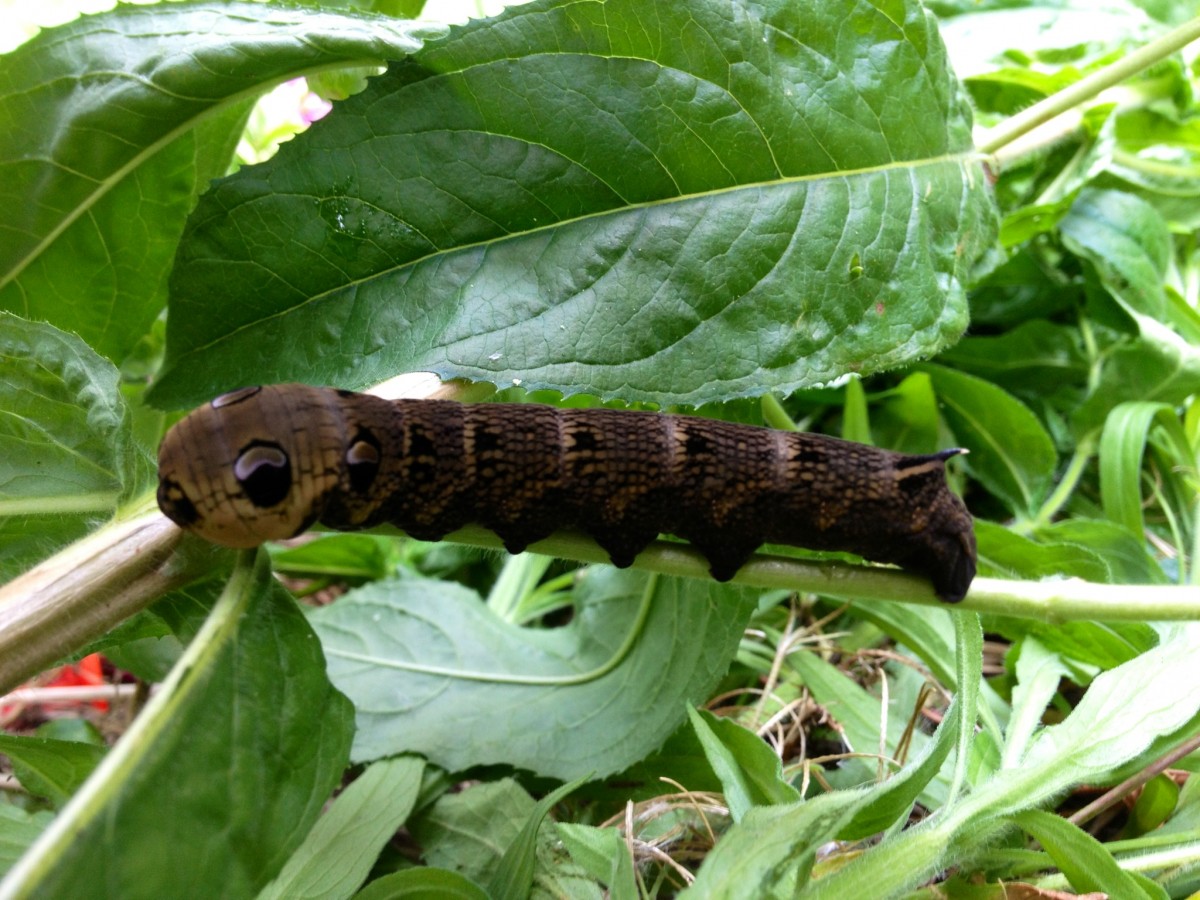
Elephant Hawk Moth Larvae Hawk Moth Larvae

This Elephant Hawk Moth larvae was spotted in my back garden in Cheltenham, quite close to pupation I believe as the colours are quite dark and it became quite sluggish over the course of a few days. It measured at least 90mm in length.

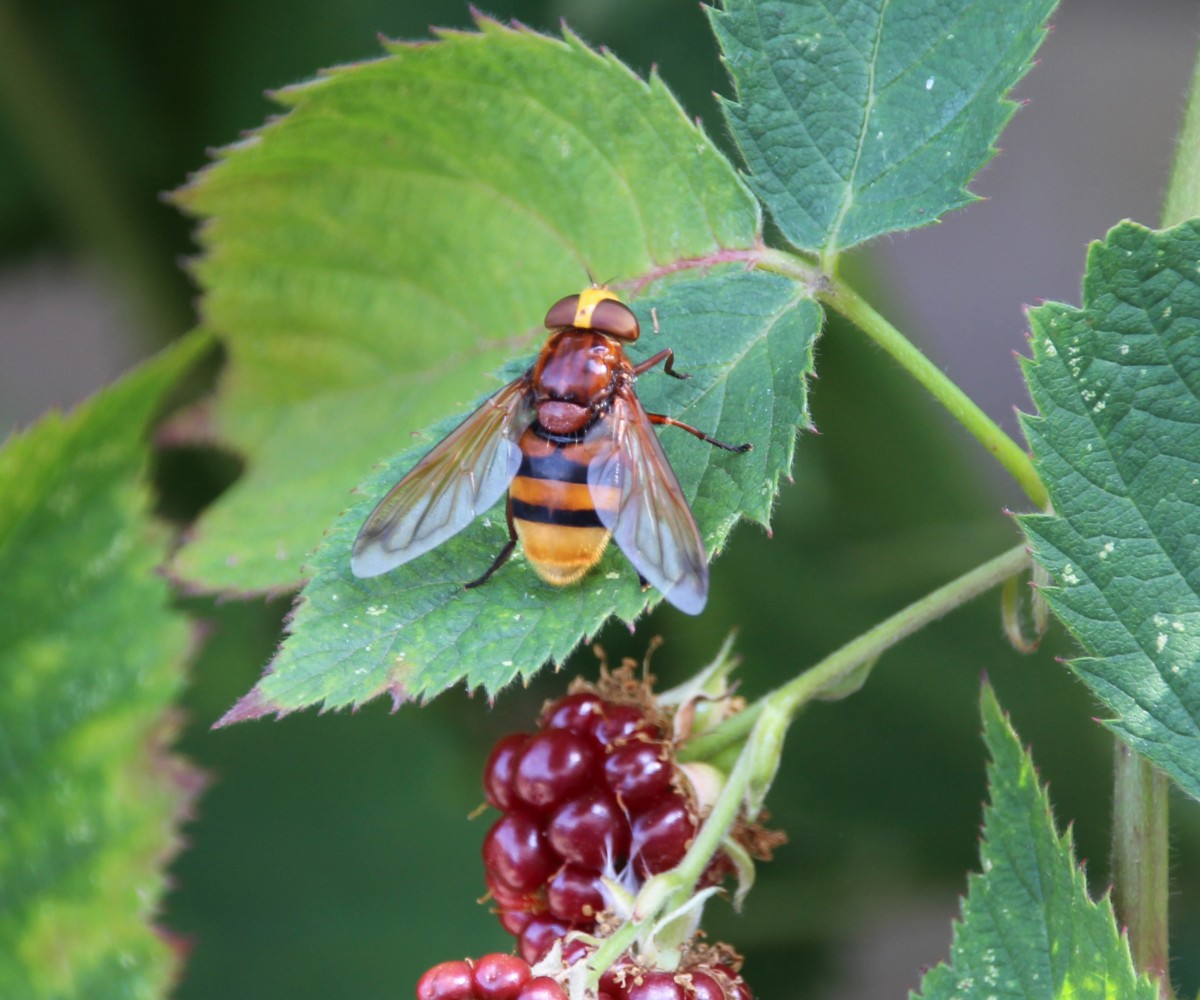
Volucella zonaria

Volucella zonaria IMG_3641

This little beauty turned up in my garden in Abbeymead at the weekend and was photographed on my Blackberry bush, it is a female of the species Volucella zonaria, the Hornet Mimic Hoverfly. Little was perhaps the wrong word, it was actually quite large at 20mm long…!


David Iliff, county Ladybird and Hoverfly recorder says “A very fine female V. zonaria. The species seems to be having a good year in the county”.


Wikipedia says:


“Volucella zonaria, the hornet mimic hoverfly, is a European species of hoverfly.


In Great Britain, it was only known from two specimens prior to 1940, so was regarded as rare. Since then, it has become increasingly widespread in many parts of the South and South East England, often in association with parks and gardens, where adults are usually seen visiting flowers. Elsewhere in England, only a few scattered records exist. The larvae live as commensals in nests of wasps of the genus Vespula. Like all Volucella, the adults are migratory”.


More authoritative information is available at: http://www.hoverfly.org.uk/viewtopic.php?t=45

Pond at Gotherington – newts etc.

Sir,

Our  garden joins to open fields in Gotherington.  We installed a 10 x 6 pond here 40 years ago and to encourage wildlife we have never had any goldfish. We quickly had a population of about 20 each of  great crested and smooth newts which has been  fairly stable, and breeding  over the years,  but only rare visits from frogs and never any frogspawn.

This year we have not seen a single newt following 2 or 3 years of declining population.  This may be connected to our purchasing 10 sticklebacks for the pond around that time. These are healthy and breeding but not noticeably increasing in numbers.

PS. It has been a very good year for dragonflies at this pond.

Regards
Norman Peak

Butterflies & Moths at Hetty Peglar’s Tump

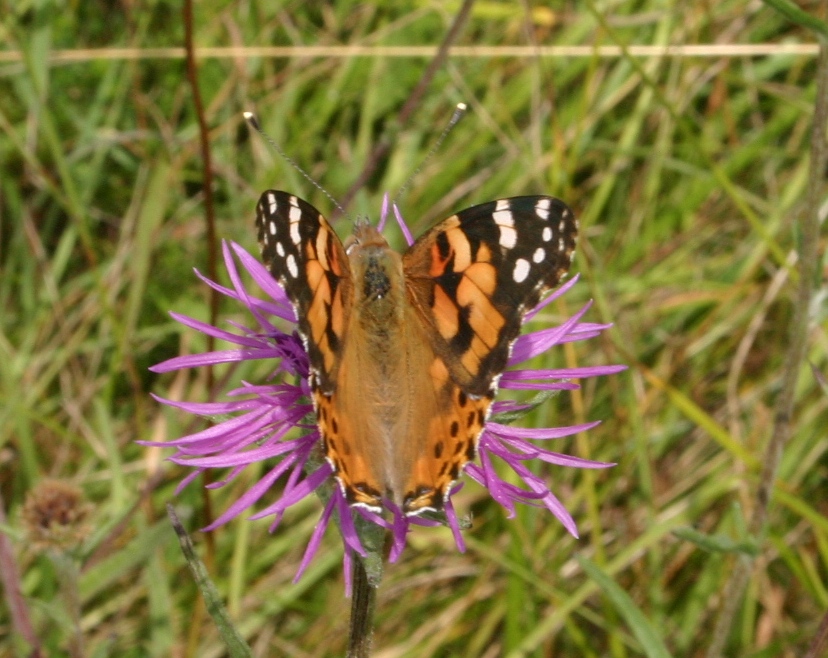
If you are interested in butterflies, moths and other insects, I can recommend a visit to Hetty Pegler’s Tump (Uley Tumulus), the famous Neolithic chambered long barrow, north of Uley (OS Map Ref SO789000).  I took a friend to the barrow on Saturday and was amazed at the variety and number of butterlies, moths and insects around the (including horseflies – grrh!).  Here are some photos of a Painted Lady (Vanessa cardui – note: the image is not stretched, the bututterfly had its wings partially folded), a Common Blue (Polyommatus icarus) and a Scarlet Tiger moth (Callimorpha dominula).  There was also one huge Red Admiral (Vanessa atalanta) that I was unable to photograph but which was quite the largest butterfly I’ve ever seen in the UK!

Common Blue Uley long barrow 26 July 2014 Painted Lady Uley long barrow 26 July 2014 Scarlet Tiger Uley long barrow 26 July 2014

Nightjars Video Clips

To follow the recent report, a short video below of Nightjars in action. The quality is not great because the filming was done in near dark with the movie function on an SLR camera rather than a Camcorder but it does give a taste of some of the action seen.

Nightjars 2

Roman snail (Helix pomatia), Withington

Whilst visiting Sale’s Lot long Barrow at Withingon on 10th July 2014, I happened to encounter about five Roman snails (Helix pomatia) on the track leading to the barrow.  It was a hot day and I noticed that – with one exception – the snails were all exhibiting the same behaviour in that they were seemingly burrowing into the earth, presumably to escape the sun.  I haven’t encountered this species doing this previously – although I haven’t seen them on such a hot day.  I also came across a nice hare (which my dog didn’t see) and a female Fallow deer (which my dog did see as it leapt over him – he was too shocked to give chase!).

Sales Lot snail environment Roman snail close up

Slow Worm

A Slow Worm in Welshbury Wood near Flaxley mid-evening on 18th June. It was about 1ft long and crossing the main track, very slowly!

P1040645

Bee Orchids

It seems to be a bumper year for Bee Orchids on Minchinhampton Common – 169 spikes so far and still counting.

Grass Cutting and Red Kites

It has been a good day for cutting the grass, with machinery in several local fields in Standish. This has attracted small flocks of Lesser Black-backed and Herring Gulls, but also at least two Red Kites. The Kites tend to fly a little higher than the gulls, as shown in the photo, dropping down occasionally to pick something up. Their mastery of the air, turning on the curve of a tail, is wonderful. At a distance the long graceful angular proportion of the wing lets you know they are not buzzards. A good view of the forked tail (as shown on the home page of this GNS website) is confirmation.

Red Kite above gulls to left.
Skip to content