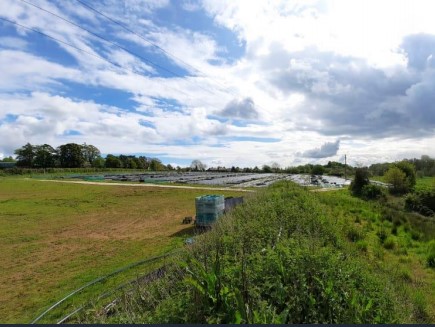
If you’ve enjoyed the recent articles from Pete Jeans in the last couple of issues of GNS News, then you might also be interested to know that he is going to be giving a talk entitled ‘The Upper Windrush valley: how does it illustrate some of the landforms of the N.Cotswolds, and their evolution’ to the Upper Windrush Local History Society on Tuesday 5th October at the Temple Guiting Village Hall at 7.30pm.
Any GNS members are welcome to attend, non-members of the UWLHS must pay £3.
GNS are planning to have two meetings a month for the next season: one a fixed meeting on the first Sunday of the month, usually starting at 10.30 and lasting about 2 hours. This will always be a general meeting to see what we can find. The second meeting of the month has no fixed date and might be more specialist to a particular habitat or taxonomic group. Some meetings may require pre-booking, in which case this will be flagged up in the listings. Otherwise, there is no need to book. Please do not attend if you have, or have recently, tested positive for Covid-19.
The first two meetings of the new season are general interest ‘all-taxa’ meetings – further details on the events page.
Sunday 12 September. 10.30–12.30. Newent Lake. Park and meet in the car park behind the Good-News Café, opposite the library at the western end of Newent, SO722 260, GL18 1AN. There is a small charge to park. Leader Mervyn Greening, 07999 883247.
Tuesday 21 September. 10.30–12.30. Nottingham Hill, Bishop’s Cleeve. On the B4632 Cheltenham to Winchcombe road turn north-west opposite the road up to Cleeve Hill Golf Club, into Wickfield Lane. Park and meet at the north-west part of the lane where several tracks meet, SO987278, approx. GL52 3PN. Leader Des Marshall, 07968 419813.
As mentioned in last night’s Curlew talk given by Mike Smart, some further information relating to various organizations and websites concerned with Curlews…
Curlew Forum
A very informal body, which brings together local groups studying breeding Curlews in lowland England. Set up following the “Call of the Curlew” website held at Wildfowl and Wetlands Trust, Slimbridge, in February 2017. The website, www.curlewcall.org which is supported by GNS, posts field observations about Curlews, notably on breeding Curlews, colour-ringed birds and practical advice and comments. Steering Committee: Mary Colwell (Curlew author), Geoff Hilton (WWT), Phil Sheldrake (Salisbury Plain), Mike Smart (GNS).
Curlew Action
An officially registered Charity established in 2020 with the aim of raising funds for Curlew Projects, and of promoting outreach and public awareness. Appoints Curlew Ambassadors (aims at 100), Ambassadors Abroad, and Junior Curlew Network which engages with junior schools. Mike Smart is a Trustee. Website at www.curlewaction.org. Supports Curlew Recovery Partnership, and will be active for World Curlew Day (normally celebrated on 21 April, but on Saturday 23 April 2022).
Curlew Recovery Partnership England
Formal body established in March 2021 with support from the Department of Environment, Food and Rural Affairs. Brings together the major Curlew conservation bodies and upland organizations. Will be influential in application to Curlew conservation of the new Environmental Land Management Schemes to be established in the government’s 25 year Environment Plan. Website www.curlewrecovery.org . Individuals may sign up as members. Chair: Mary Colwell. Manager: Prof. Russell Wynn.
This autumn/winter the RSPB will be running a youth volunteering group once a month on a Saturday with the aim of encouraging young people to join them and gain skills and experience in woodland habitat management to help with career progression or to improve their connections to nature, as well as having the opportunity to meet like-minded people. The youth group will run one Saturday a month between October and March, and will alternate between Nagshead and Highnam Woods. On the reserves a range of tasks are carried out such as coppicing, brash clearing, ride widening and more. No prior experience is necessary as training will be given.
A message on behalf of the Gloucestershire Branch of Butterfly Conservation…
As many of you may know, the ‘Limestone’s Living Legacies’ Back from the Brink (BftB) project is due for completion at the end of August, after four and a half years. In order to celebrate many of the things undertaken during this time the BftB team are inviting you to join them for an Online Celebration Event on Monday 26th July 10am-1pm.
This event is being held via Zoom and will bring together the Back from the Brink partners for a morning celebrating the project’s achievements over the past four years. It will also be an opportunity for the team to say thank you to everyone who has supported them since the project started in 2017.
Please click here to see the events flyer for further details and please feel free to forward this on to anyone else who might be interested. To book your place please reply by email to Jen Gilbert, BftB Cotswolds Community Engagement Officer jgilbert@butterfly-conservation.org or use mobile 07483 039321.
We are looking for a volunteer to help our county bird recorder, Richard Baatsen. Currently Richard (who is a volunteer) receives, collates and verifies over 100,000 bird records each year, so it’s not surprising he is looking for a bit of help! Many of the records arrive via email.
We are looking for someone who can manage the incoming emails within a shared email box and turn them into proper records (a line on a spreadsheet) to be fed into the database. You do not need to be an expert on birds. The person we are looking for should be organised and be able to help mould how emails are responded to and dealt with.
A little spreadsheet knowledge is required but help with this will be available. Grid references are used so that sightings can be mapped; these are easily looked up using a website so nothing to fear there. But you will have to find the location on the map. That is the tricky bit – and of course you may need to correspond with the person who sent in the record.
The role could expand into other areas if that is what you would like, and could include writing up work instructions and following up on rare and scarce sightings to get them fully documented and help writing a monthly round-up/summary.
Requirements:
You would need to commit to 3-4 hours a week, (or more if that’s what you would like)
Manage Email inbox on a shared email account (polite and encouraging responses)
Enter bird records on an Excel spreadsheet template (help given)
A little bird knowledge would be helpful
Be able to look up map grid references on a website (very simple).
If you think you might be interested, please contact Richard for a chat about the “job”… his email is Richard.Baatsen@gmail.com
(Some of these notes first appeared in the members only Gloucestershire Naturalists’ Society Facebook Group, GNS Playground, on 5 July 2019).
These photos taken first week of July 2012
There are three water-dropworts (Oenanthe species) commonly found in the floodplain meadows of the Severn and Avon in Gloucestershire. They are difficult to tell apart, especially when the basal leaves have disappeared, which often will have happened by mid-June.
They have slightly different habitats and time of flowering, but this can’t be relied on. At the wettest end, in places where water lies all winter or the edge of a pond, is Tubular Water-dropwort (Oenanthe fistulosa). This tends to be the latest to come into flower, often in early July. Its characters include a very reduced number of partial umbels – sometimes just two or three, the stem is constricted at the nodes, and the upper stem leaves are very reduced – a bit like a stick drawing of a leaf. Narrow-leaved Water-dropwort (Oenanthe silaifolia) is the plant of the wet meadows and is the earliest to come into flower, often in mid-May. In the driest fields on the floodplain and unimproved fields and road verges off the floodplain, is Corky-fruited Water-dropwort (Oenanthe pimpinelloides) which flowers from about mid June.
It is easy enough to decide which of the the latter two you have if you are comparing them side-by-side, but when you only have one plant in front of you you can begin to doubt yourself. These notes may be helpful.
A consistent character is the stem at the base of the flowering shoot. If it squashes easily between the thumb and forefinger it is O silaifolia. The stem here is fairly silky to the feel and only gently ridged. If it gives very little when squashed between the thumb and forefinger and feels hard and ridgy, it is O pimpinelloides. At the other end of the plant, looking at the biggest head of flowers, if you can imagine getting your fingers between them then it is silaifolia. If in the biggest head of flowers the partial umbels are touching or almost touching then it is probably pimp. This character is even better developed as the fruits ripen. A clincher difference between these two – in silaifolia the fruits of the partial umbel splay out into a gentle dome. In pimp they stay pretty much upright, so that looking from the side you can see a row of individual fruits in profile.
Our wild bees and other pollinators are so important, but they are still the unsung heroes of the environment, gardens and countryside and continue to decline in number and range.
On 7th July, GNS will be hosting Roselle Chapman – ‘Our Wild Bees – An illustrated talk on the wild bees of the UK’. As usual this event is free to members and £2 to non-members. Head over to the events page for further information and tickets.
An announcement on behalf of the Ell Brook Community Project:
“The Ell Brook Community Project, on the edge of Newent, is a +10 hectare site dedicated to conservation, education, and therapeutic outdoor pursuits.”
The earliest grass to flower in quantity in the Gloucestershire meadows is Meadow Foxtail (Alopecurus pratensis) sometimes joined by Sweet Vernal Grass (Anthoxanthum odoratum).
Meadow Foxtail is the first thing to poke up its head above the general level of the sward, and the dense waving flowering heads in May, can give the meadows a dark shimmering haze at about knee height.
In the meadow photo, Meadow Foxtail is the one waving its heads in the clouds, with Sweet Vernal the main grass flowering in the lower storey. The buttercup is Bulbous Buttercup, also an early flowerer.
Up close, the reason for the name Foxtail is obvious, and the flowerhead can be seen to be packed quite densely and neatly usually into a parallel-sided cylinder. Sweet Vernal can have the same overall shape but is looser and tattier. Sweet Vernal is a much shorter grass – usually only up to mid-calf height.
Get really close, with good eyesight or the help of a hand lens, and the individual components making up the flowering head look very different. From the photos with the pulled-apart heads, it can be seen that the spikelets of Sweet Vernal are lopsided, and they are on short stalks up to about 1mm long joining to the main stem. The spikelets of Meadow Foxtail are flattened but elegant and almost symmetrical, joining the main stem with virtually no stalk.
Fun Facts:
When in doubt, chew it! Pull a grass stem so that the lower part of the stem comes out clean from its sheath. Chew it. Wait a few seconds and see what taste sensation you get. Meadow Foxtail is pleasant enough, but nothing special. Sweet Vernal has a rich sweet perfume – the scent of “new mown hay” due to the chemical coumarin. Hence the name – Sweet because it is sweet, and Vernal which means spring-time.
In the past, both grasses have been sown by farmers, Meadow Foxtail has early growth, good yield and stock find it highly palatable. However, it takes several years to establish well so isn’t suitable for modern requirements in a temporary grass field. Sweet Vernal was widely sown because of its fragrance but is no longer considered an agricultural grass as it does not produce much matter and is rather stemmy. Apparently, stock don’t like it much.
Juliet Bailey May 2021
This website uses cookies to improve your experience. We'll assume you're ok with this, but you can opt-out if you wish. Cookie settingsACCEPT
Privacy & Cookies Policy
Privacy Overview
This website uses cookies to improve your experience while you navigate through the website. Out of these cookies, the cookies that are categorized as necessary are stored on your browser as they are essential for the working of basic functionalities of the website. We also use third-party cookies that help us analyze and understand how you use this website. These cookies will be stored in your browser only with your consent. You also have the option to opt-out of these cookies. But opting out of some of these cookies may have an effect on your browsing experience.
Necessary cookies are absolutely essential for the website to function properly. This category only includes cookies that ensures basic functionalities and security features of the website. These cookies do not store any personal information.
Any cookies that may not be particularly necessary for the website to function and is used specifically to collect user personal data via analytics, ads, other embedded contents are termed as non-necessary cookies. It is mandatory to procure user consent prior to running these cookies on your website.