Slender Hare’s-ear, 21 August 2012

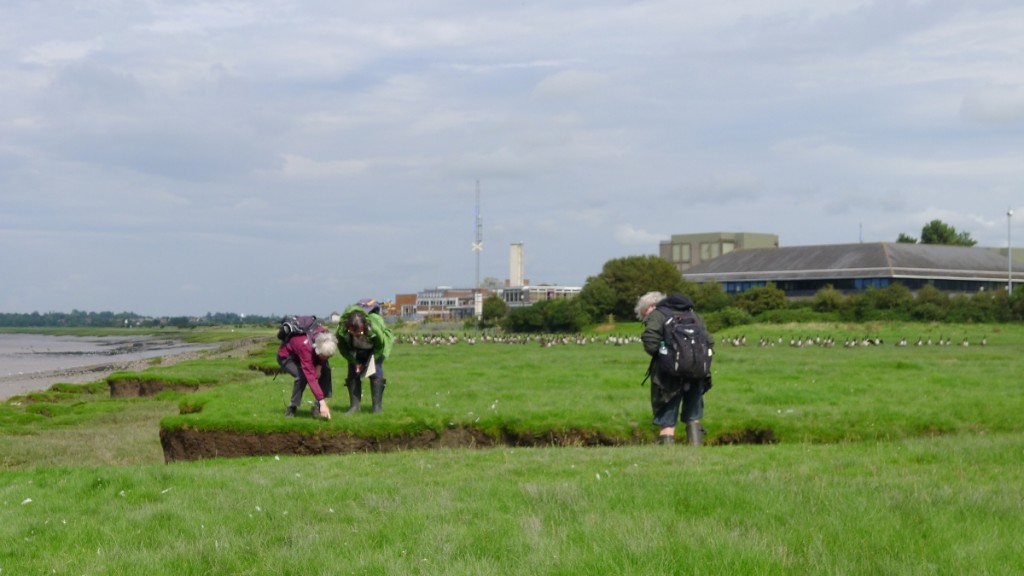
Slender Hare's-growing on Severn estuary mud mini-cliff
Slender Hare’s-growing on Severn estuary mud mini-cliff
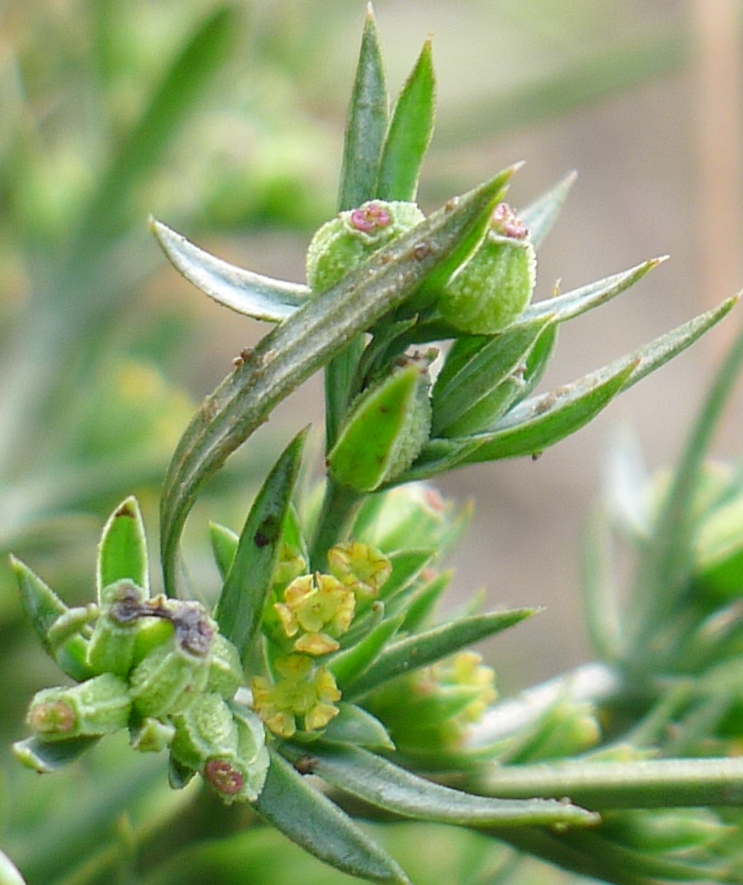
Close-up showing flowers, fruit and narrow leaves

As part of BSBI’s Threatened Plants Project, the Gloucestershire Plant Group searched for Slender Hare’s-ear (Bupleurum tenuissimum) along the Severn shore at Berkeley. This is a small plant, here no more than about 2 inches high, an unlikely-looking member of the carrot family. Most of it was in the thin fescue turf just at the top of the mini-cliffs of mud, and we did not see it even a couple of paces away from the edge. A few plants were still in flower, though most were in fruit.

Habitat
Habitat

Walmore Common

The damp conditions have attracted some interesting birds over the past few days. The highlights have been up to four Garganeys and also a juvenile Wood Sandpiper. The only previous Wood Sandpiper here was a spring one on 29th April 1987 (a year that produced many more records than usual in Glos). Other sightings have included 40 Teal, 100 Lapwing, six Snipe, a Redshank, a Wheatear, ten Yellow Wagtails and singles of Sparrowhawk, Kestrel and Hobby. Not many dragonflies about in the breezy conditions, but there was an obliging male Southern Hawker today.

Southern Hawker
Southern Hawker

Cleeve Hill limestone heath, 19 August 2012

Heather in bloom
Heather in bloom

Ellie Phillips led a GNS field meeting to examine the limestone heath of Cleeve Hill. There are several patches of heather (Calluna vulgaris) on Cleeve Hill near the Masts, currently in full bloom and alive with bees. Cleeve Hill, (about the highest point on the Cotswold ridge) rears up above Prestbury near Cheltenham, and is oolitic limestone, so heather would seem an unlikely plant to find there, but it picks out the small patches of Harford Sands. Some parts were fenced off about 20 years ago to protect the heathland flora from stock grazing for most of the year. It is very striking that you can be walking through the enclosures and move from an acidic flora (the heather) to a limestone flora (tor-grass) within two paces.

Narrow Lipped Helleborines flowering in Buckholt Woods

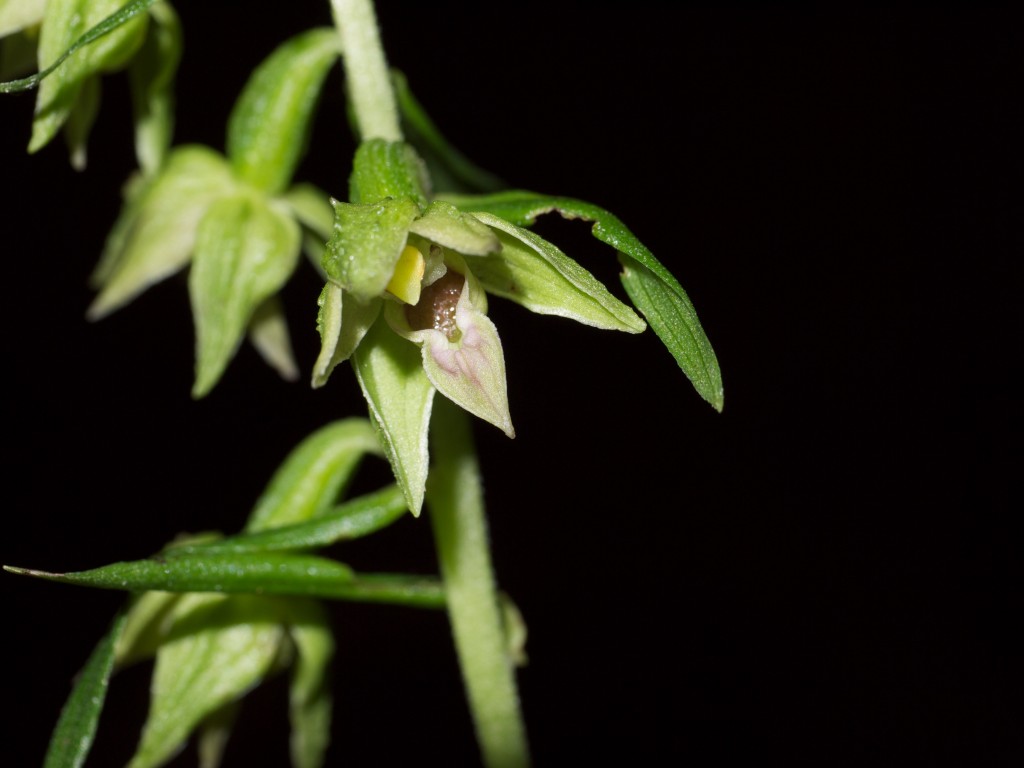
Narrow Lipped Helleborine, Buckholt Woods, one of only two plants in this location.
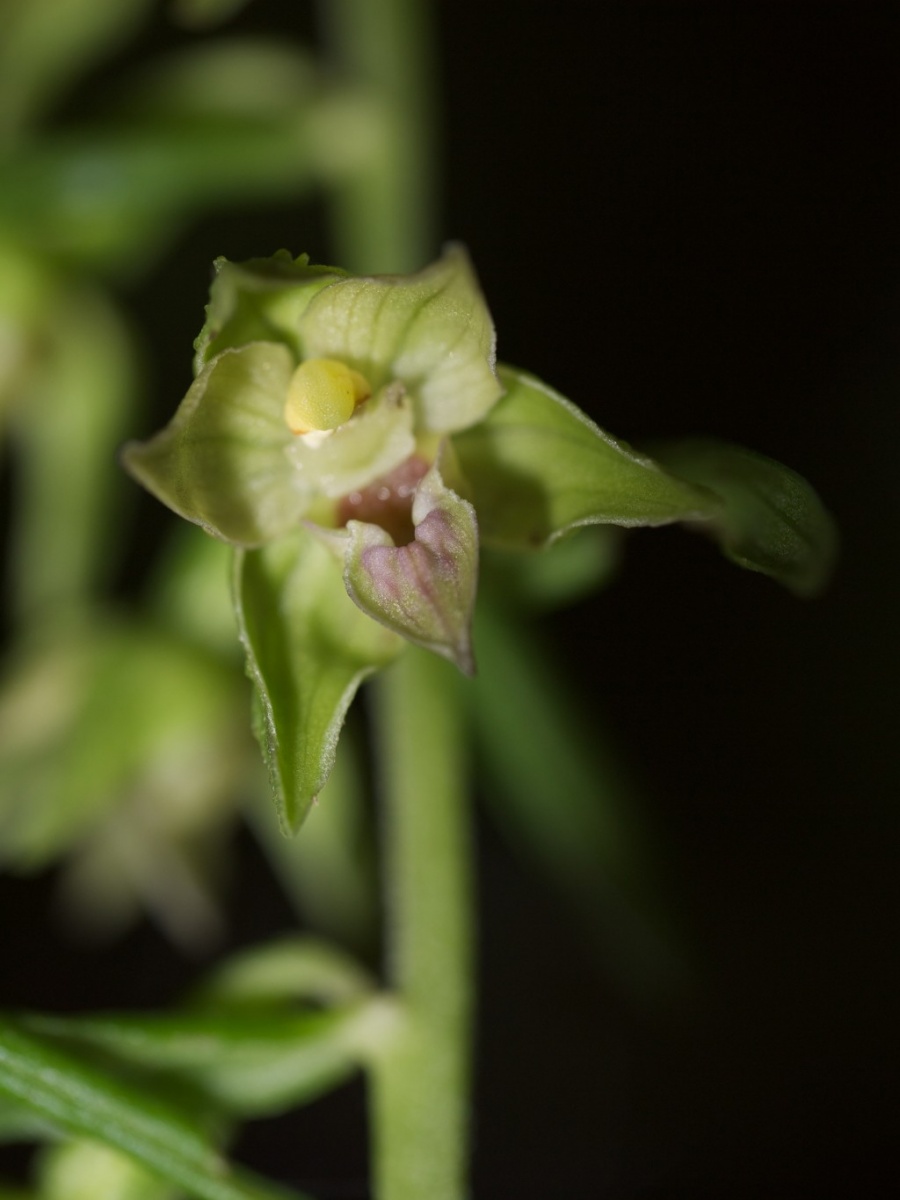
Narrow Lipped Helleborine, flower detail (taken with flash)

20120819 P1070966 Narrow Lipped Heleborine

There are a few Narrow Lipped Helleborines currently flowering in Buckholt Woods near Cranham . I managed to visit one site near to the road that cuts through the woods from Birdlip to the A46 . They were under the trees, the light was poor and there was a nifty breeze so I had to use a flash to get any useable pictures . There were only two plants at this location but there are at least a few more in a clearing deeper in the woods however I didn’t have time to check them on this occasion. ( 14th August ) . I have posted some higher resolution pictures at my blog http://longstoned.blogspot.co.uk/ where there are also photos of my Orchid finds from earlier in the year .

Curlews on the Severn Estuary between Lydney and the Severn Bridge

I visit this area fairly frequently, and I’ve been looking regularly over the last few days (mainly in search of colour-ringed Curlews), at the top of the latest high tide cycle (with high tides of around 9.0 metres at Sharpness).  I generally arrive at the lowest point of the tide (typically three hours or so before high tide) and stay until the tide is high.  Past experience, plus observations over the last few days, lead me to think I understand how Curlew use the area, at least at this time of the year.

The main feeding sites (as named on the O.S. map) are: Oldbury Sands; Sheperdine Sands; and Lydney Sands.  Certainly at Sheperdine and Lydney Sands, the main feeding area seems to be the sandier areas.  Sheperdine Sands (the area off the Oldbury tidal Lagoon) is the first to be covered by the tide; birds feeding there either move upriver to feed further on Lydney Sands, or move to roost at Guscar Rocks.  Birds feeding at Lydney Sands go to roost at the tip of Aylburton Warth, once their feeding areas are submerged.  Birds from Oldbury Sands, which are the highest and last to be covered, head straight across the river to roost on Wibdon Warth.  From a vantage point at Guscar Rocks, it’s possible, if the light is good, to keep an eye on what’s happening at Wibdon and Aylburton.  It seems that very few Curlews roost (at this time of year at least) on the east bank – perhaps because the seawall is very close to the water’s edge so that there is little open saltmarsh available; also the Oldbury Power Station inland lagoons are generally dry at this time of year, so Curlew don’t go there at this time of year.

Physical conditions are different at the three preferred roost sites on the west bank.  A “warth” (good Gloucestershire wetland word!  The “Dumbles” at Slimbridge is the same) is an area of flat saltmarsh which may be flooded by the highest tides; crucially, where the flat top meets the river’s edge, there is a steep earth bank or cliff, whose lower part shelves down to the water.  On low high tides, the lower sector of this shelf is not covered by water, so the Curlews can roost just above the water level.  On a “high” high tide (say 8.5 metres or more at Sharpness), only the vertical earth wall is uncovered, so the birds must either jump up on to the flat surface of the warth, or go elsewhere.  As their names imply, there are warthes at both Aylburton and Wibdon, so birds there have to move when the high tide is over 8.5 metres.  At Guscar Rocks, there is no earth cliff, and the shore shelves more gradually, so birds from Aylburton and Wibdon often move, as the tide rises, to Guscar.  Birds may also move according to local disturbances, e.g by farm workers, dog walkers, or fishermen.

On Friday, Saturday and Sunday last, the Curlews gathered at all three of the above-mentioned west bank sites on the rising tide, but just before high tide they all moved to Guscar; usually the Aylburton birds arrived first at Guscar, then the birds from Wibdon came upriver; this year because of the heavy rainfall, the hay has not yet been cut at Wibdon, so the grass is long and not really suitable for roosting Curlew; Aylburton on the other hand is grazed, so grass there is shorter.  In general the flock sat at Guscar; on the weekend they were often disturbed by dog walkers, in which case they moved back to the flat tops at Wibdon and/or Aylburton.  On Monday, with a lower high tide of only 8.3 metres, only a few came to Guscar, with good numbers staying at both Aylburton and Wibdon.  In the past two Septembers, we have canon-netted birds on the very highest tides (generally 9.5 metres or more) at Wibdon, because that is practically the only area not inundated by the very highest tides, and birds take refuge there if disturbed from any other sites.

So  you have to look at the Curlews in the area as a single population, moving back and forth between roosting sites, according to daily variation in tide and disturbance.  It doesn’t matter that much where you go to read rings, as all birds from the area are likely to turn up at any of the three main roosts.  I got what I believe was a complete count of 910 birds on Friday; I don’t think this was unusually high, just a case of the birds being in the same place and in a reasonably countable situation, rather than spread all over the place.  Even so this is nowhere near the international threshold figure of 8,500, and is short of the GB threshold of 1,400 (though if you add in Slimbridge birds, you get pretty close); the colour-ringing has shown there is some exchange between the Lower (Wibdon/Guscar/Aylburton) and Slimbridge (Upper) Severn basins in Gloucestershire; and the five-year mean for the whole Severn down to Bridgewater Bay and Cardiff, as given in the 2009/10 WeBS report, is 3,218.

Finally, as some other observers have noted, Curlew is nowadays about the only wader that uses the area in significant numbers.  It seems to me pretty clear, as shown by the ringing, that the area is regularly used for post-breeding moult by a good number of adults; not yet clear whether all of them stay on to winter, though a fair number obviously do.  In winter, when birds disperse more widely dispersed over wet fields along the river, it is more difficult to pin them down and obtain an overall complete count.  The days when you would find flocks of several hundred varied Calidrids in winter or on post-breeding passage are long past, as noted in BTO publications about wintering waders moving away from west coast estuaries.  In the last few days I have seen a single Whimbrel (the same bird every day probably), two different Dunlin (an adult and a juvenile), a lone Oystercatcher, single Common Sandpipers, and (on one high tide only) a little group of three Turnstones, no doubt passing migrants.

Mike Smart

A Curlew replacement clutch

20120802 Coombe Hill Curlew juvenile

Because of the difficulty of finding Curlew nests and eggs in the large hay meadows where they nest in the Severn and Avon Vales, it is hard to follow the nesting cycle of this species.  They don’t lay their eggs very early in the season because, being the largest wader, they would be an obvious target for foxes, crows and other predators (though Lapwings seem to take this risk, with some success).  So an incubation period of 28-30 days and a fledging period of 32-38 days (BTO guide to monitoring nests) means that a relatively early laying date of 15 April would give fledging on 23 June, and a laying date of 30 April would give fledging on 8 July.  On the rare occasions when we have found young birds, this has often been of unfledged chicks well into July, so some Curlews obviously don’t start incubating until early May.  All this means that that there is never going to be time for a second clutch, quite apart from the effects of predators or of damage by hay-making machinery.

This year, the Curlew breeding season has been disrupted by flooding, in particular the flood from the last days of April until mid-May; then there was another flood in late July.  As a result, it seems to me that in all the breeding areas along the Severn and Avon, clutches were washed out.  The birds have generally hung around at the favoured sites after the floods, but have not behaved as they do when they have young, flying round and round with agitated alarm calls.  I therefore suspect very strongly that the majority of Curlews have failed this year (though I still need a better final look at Upham Meadow, Twyning).

However, at Coombe Hill, south of the canal, not on the GWT reserve but on nearby fields belonging to Mr John Arkell (a regular breeding site for Curlew where “bubbling” displaying birds had been present since late March), one pair of Curlew (and a couple of Lapwings) successfully raised a replacement clutch.  There were birds nesting here before the April flood, but they must have been washed out in late April or early May, when water was nearly a metre deep in places.  When the floods dropped, I found a fresh clutch of Lapwing eggs on 26 May, clearly a replacement clutch as the site had been under water ten days previously.  I paid regular visits to the area to follow the success of the Lapwing clutch.  In doing so, I noted signs of Curlew nesting in long grass, and in early July, there was an agitated adult Curlew in the area (presumably the female), flying round and giving increasingly agitated alarm calls (the sharp “waup” call and the five-note alarm, both generally used when there are chicks about).   The last time I observed this behaviour over these fields by a single adult was on 24 July.  On 28 July three Curlew were flying about the scrapes on the GWT reserve, 100 yards away over the canal, at least one of which appeared to be a juvenile with a short bill (though this was not absolutely confirmed).  However on 31 July, an adult and two short-billed but fully-fledged chicks were well seen round the scrapes, and one of the juveniles was photographed by Dave Pearce on 2 August (photo attached).   These birds must thus have fledged between 24 and 28 July, a relatively late date compared with other local findings of Curlew chicks; on the basis of a 60-68 day cycle, and assuming fledging to be 25 July, this means the eggs must have been laid somewhere between 18 and 25 May, i.e. after the May flood.  Ergo, a replacement clutch!

Great Green Bush-Cricket on Rodborough Common

Three days ago whilst strolling on Rodborough Common we saw a Great Green Bush-Cricket nymph sitting on a thistle leaf.  Apart from waving its antennae around it was very inactive.  Our county recorder, John Widgery, confirmed that Rodborough Common is a well-known site for this species.  I went back to the same thistle today and found the Bush-Cricket still there – but its adult wings had grown.  If you are lucky enough to find an inactive nymph and have the opportunity it is probably worth monitoring it quite closely.

Great Green Bush-Cricket nymph
Great Green Bush-Cricket nymph – about 3cm long
Great Green Bush-Cricket adult
Great Green Bush-Cricket adult – Three days later

Waders and Common Gulls

Contributed by John Sanders.

Black-tailed Godwit

There has been much talk in the national news about the early return of some of our autumn migrants and winter visitors, Black-tailed Godwits in particular. The theory goes that the summer weather has been so wet and cold that nesting attempts have failed, and birds have abandoned their breeding grounds to start their autumn migrations earlier than usual. This may be so, but the unseasonal weather in Britain has been blamed on the jet stream passing directly over the country. It is difficult to understand how this relatively narrow band of fast moving air can have affected the weather over the whole of Northern Europe. It is to be hoped that counts of juvenile birds will be made in the autumn, in order to discover just how unsuccessful the breeding season has been.

Common Gull PU93

I have been monitoring the Common Gull roost on the estuary at Purton, just south of the New Grounds at Slimbridge, for several years now. It is one of the few places in the County where I can check the birds for colour rings. When they are feeding and loafing on pasture the grass obscures the rings, and when they are following the plough they move so quickly that I cannot keep up with them. Even on the estuary it can be difficult, the birds are often too far away to read the codes on the rings. It requires a calm and sunny evening to have any chance of success.

I made my first visit to the estuary on 11 July, and saw just the odd one or two first-summer Common Gulls. They were obviously non-breeding birds, and had probably spent the whole summer on the river. However, on 19th there were already 450 in the roost. This is not a particularly early date, the birds normally start arriving after the middle of the month. Most were adults, with a few first-summers. It is usual for the juveniles to appear several weeks later. They were resting on a sand bar, a long way out, and as I panned my telescope through the flock I could see two white colour rings, but could not read them. By a stroke of good fortune, the incoming tide pushed the birds much closer to the river bank, and I quickly read the first ring, JP43. Any four digit code starting with the letter ‘J’ has to be from Norway, and sure enough this bird had been ringed as a nestling near Trondheim in 2004. It has been a regular in the Purton roost, gulls are great creatures of habit. The second ring was not so easy, it was old and worn, but at my third attempt I obtained a clear view, PU93. My heart missed a beat, could this really be. I checked again and, sure enough, there was no doubt. I first saw this bird in 1997, and it was old then, but my last sighting had been in 2009, so I had presumed that it had died. It was metal ringed at the Matsalu Nature Reserve in Estonia as a nestling in 1981, and then trapped as a female on the nest at the same place in 1987, when colour rings were added. It has returned to the reserve to nest each year since, and the colour rings have been changed twice more, as the original ones have become worn. This summer it laid three eggs, but the nest site became flooded in a storm on 12 May. Although the nest was rebuilt at a higher level, and eggs transferred, they were already chilled, and did not hatch. I received an interesting e-mail from the ringer, Kalev Rattiste, and he told me that there were further storms on 2 and 17 June. He said that PU93, at 31 years, is the oldest bird in the colony, and explained how she had failed in her breeding attempt, which would explain her prompt return to the Severn roost. So perhaps there is some truth in the theory that bad weather has caused the early return of many migrants. But then Kalev went on to say that he had ringed ‘only’ 1,356 nestlings this year, compared with 1,490 in 2011, so maybe it was not such an unsuccessful breeding season after all. We shall have to wait and see, but, what is certain, is that PU93 is the oldest colour ringed gull I have ever seen in nineteen years of recording.

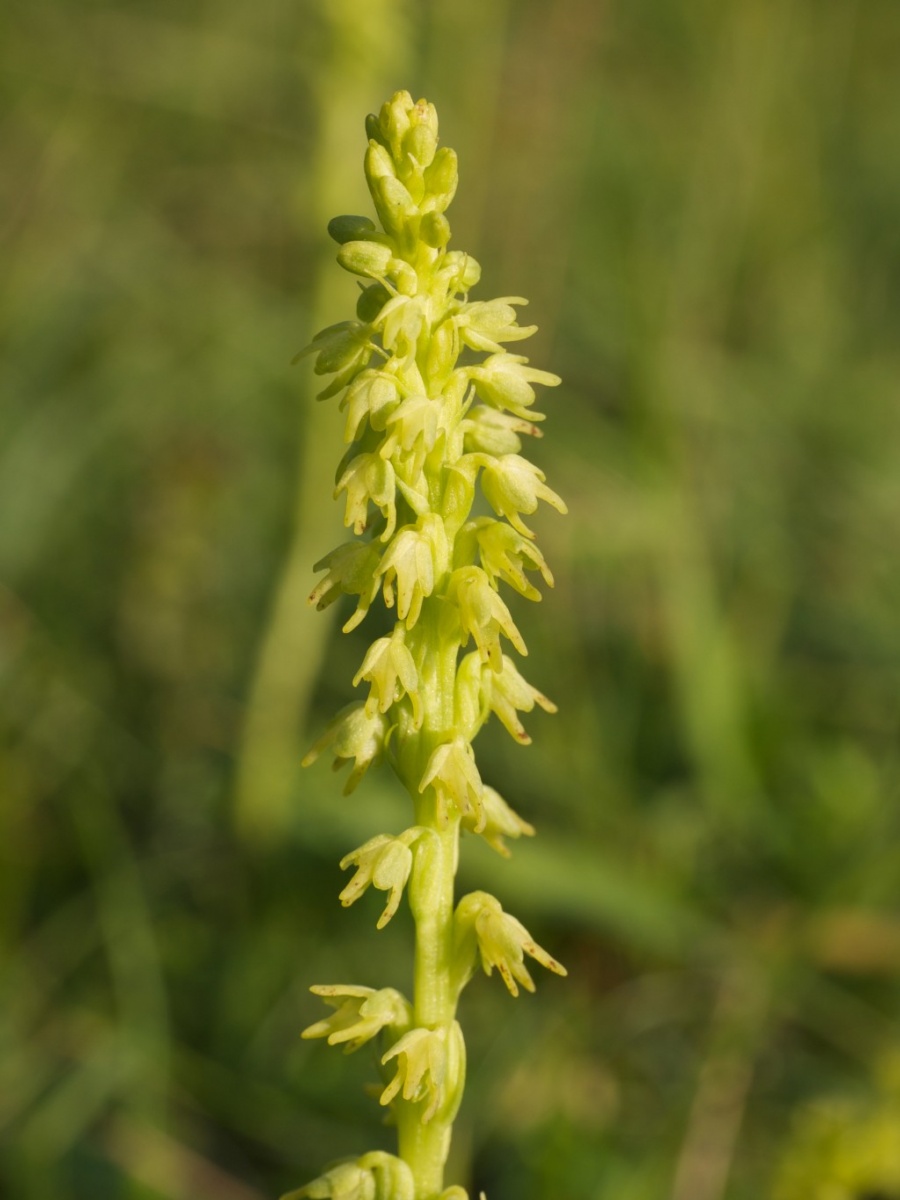
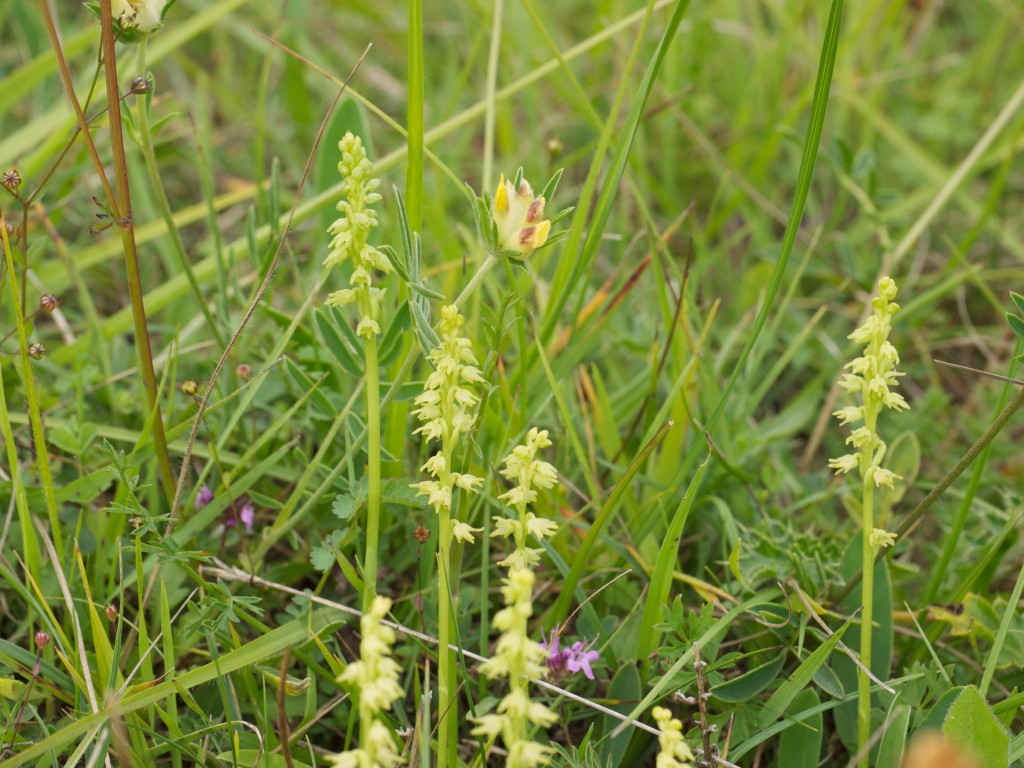
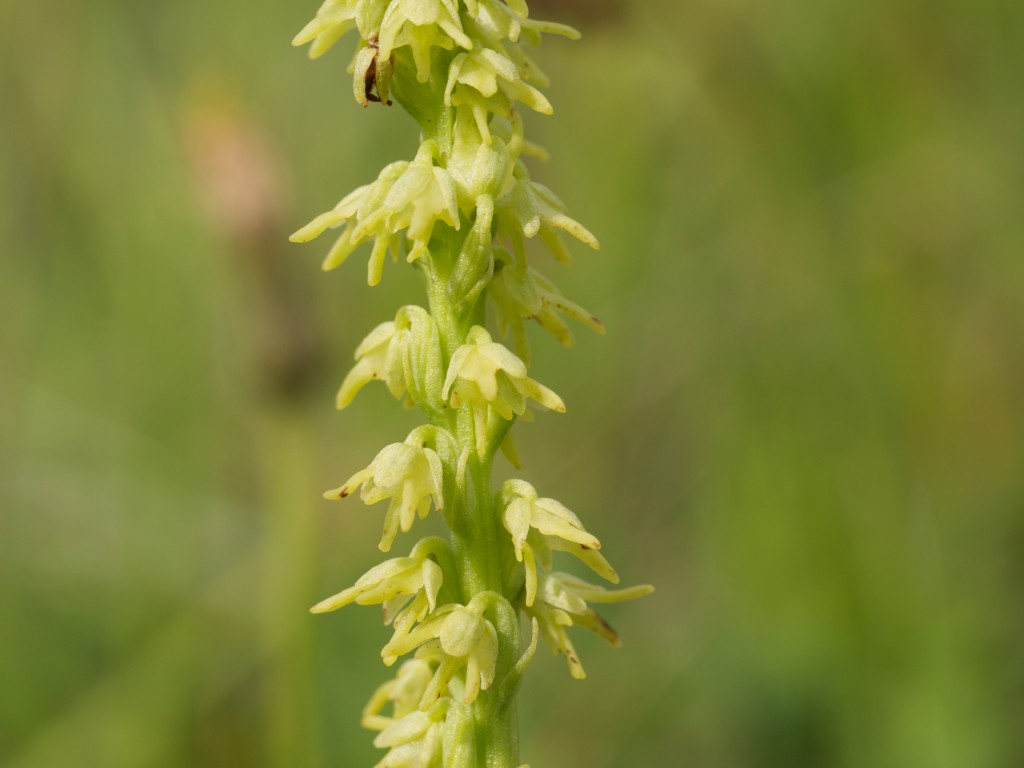
Musk Orchids flowering at three sites.

I was pleased to discover healthy populations of Musk Orchids flowering at three separate sites in recent weeks. July 5th at Barrow Wake where there were dozens of plants on short grass to both sides of the car park. July 8th, while looking for Frog Orchids at Swift’s Hill there was a reasonable Musk Orchid site with maybe 20 plants on the steep slope where we found just a solitary Frog Orchid that had finished flowering. In addition while walking on Leckhampton Hill there were also reasonable numbers of flowering Musk Orchids on the lower grassy slopes near higher parts of Daisy Bank lane.

Musk Orchid at Barrow Wake
Musk Orchid, Flowers, Barrow Wake
Musk Orchid, macro, Barrow Wake
Musk Orchids, Swift's Hill
Musk Orchids, Swift’s Hill
Musk Orchid Flowers, Swift's Hill
Musk Orchid Flowers, Swift’s Hill

Dark Green Fritillaries on Rodborough Common

Dark Green Fritillaries were on the wing on the south side of windy Rodborough Common yesterday. I photographed two and there seemed to be a third flying about. One obliging individual kept returning to feed on some thistles in a sheltered mini-quarry which he clearly reckoned was his territory since he kept chasing the Marbled Whites away.

20120718 IMG 5099 Dark Green Fritillary

20120718 IMG_5098 Dark Green Fritillary

Skip to content