Dear Fellow Members of GNS
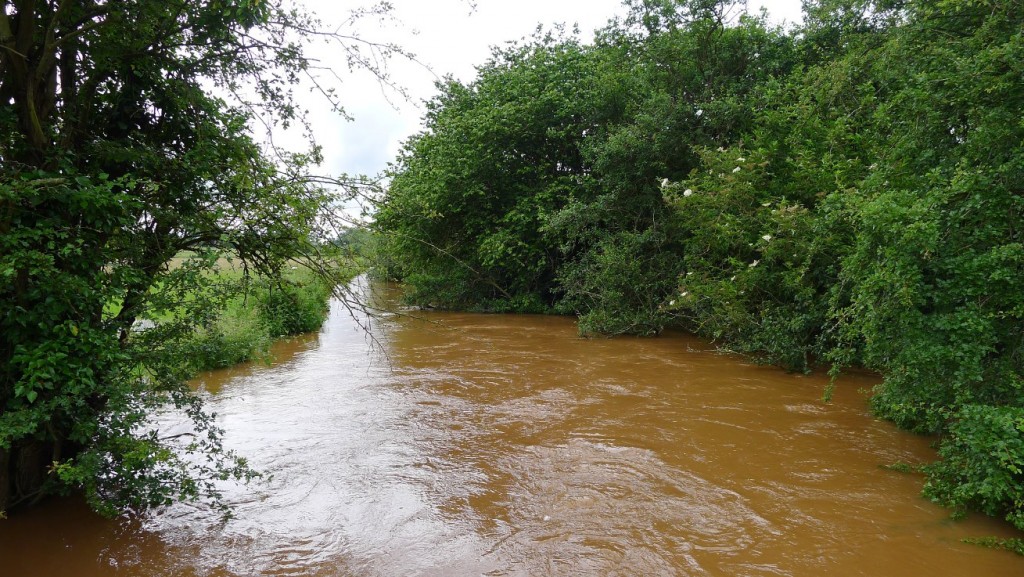
In recent Letters from the Chair, I have referred to the lack of rainfall, and expressed the hope, the prayer even, that it might rain. You may remember – it seems a long time ago now – that a drought was officially announced in early April 2012, but in the second half of the month my prayer was answered: it never rains but it pours (see the separate note on the weather in the last three months in the June issue of GNS NEWS). Those wetlands in the Severn Vale that were suffering from lack of rain in the early months of the year have been flooded throughout late April and early May. This has clearly caused havoc among birds that nest on or near the ground: we know that nesting Lapwings at Coombe Hill and Ashleworth (some of which had started nesting in mid-March and already had chicks by mid-April) have lost eggs and young, as have Redshank and Oystercatcher; it looks as though passerines like Sedge and Grasshopper Warblers have suffered too, while Whitethroat and Reed Bunting have had to build new nests and lay replacement clutches. But the water levels were nowhere near as high as in the midsummer floods of 2007, and water levels have already dropped; undoubtedly, plants like Great Burnet (which seem to be adapted to sudden spring and summer floods) will come back strongly.
Since the previous issue of GNS NEWS, the Annual General Meeting has taken place, and the Minutes, published in draft in the June 2012 issue of GNS NEWS (with many thanks to our valiant minute taker, Andy Bluett) will give those of you unable to be present a flavour of the content of the meeting. I would like to highlight issues raised there, notably our grants programme, our subscriptions, and our role in local conservation campaigns.
The speaker after the AGM was Dr Rachel Taylor, from the British Trust for Ornithology, who presented a brilliant overview of the results of bird-ringing and other BTO surveys; as one who has taken parts in some of these surveys, I found it fascinating to see just how my own observations made a contribution to the larger national picture. One of the reasons we had invited her to speak was that the first of the GNS larger grants (mentioned in a previous Letter from the Chair) had aimed to kick-start a BTO programme that will enable observers to submit sightings of colour-ringed birds online; we understand that our initial grant has persuaded others to make contributions, so that the project will definitely be brought to fruition. Since that first larger grant, two others have been approved by your Executive Committee, one relating to the purchase of a first rate butterfly site by Butterfly Conservation, the other to the production of the first ever Red Data Book on bryophytes in Gloucestershire.
The butterfly site is Rough Banks, covering 18 hectares on the scarp of the Cotswolds four miles north-east of Stroud. It is part of the Cotswolds Commons and Beechwoods National Nature Reserve/ Site of Special Scientific Interest, and is well known for holding four species of blue butterflies; it is a proposed site for re-introduction of Large Blue. The Society’s policy on grants says that grants will normally be given for projects related to the Society’s principal aims: biological recording, environmental education and public awareness of natural history; thus we would not normally give grants for land purchase. In this case however the Committee felt that the site was of very high significance in the Gloucestershire context, and that there was an opportunity to improve relations with Butterfly Conservation and thus improve recording of butterflies in the county; a contribution towards the purchase price of £200,000 was therefore approved. We understand that the purchase has gone ahead and that contracts have been exchanged, but that Butterfly Conservation would still be grateful for any further contributions. If anyone would like to contribute on a personal basis, they can do so via http://www.justgiving.com/roughbanks .
The other GNS grant approved is for the publication of a Red Data Book on Bryophytes (or mosses) of Gloucestershire by the county bryophyte recorder, Peter Martin, in close collaboration with Richard Lansdown. The project will involve collation of existing records, collection of new records and some training in identification of mosses; the final document will be of major importance in conservation of sites for bryophytes in the county; it will be published as a special issue of “The Gloucestershire Naturalist”, and will therefore be distributed to all GNS members. If anyone is interested in taking part in the training programmes, please look out for notices in GNS NEWS or on the GNS website. Mention of the GNS website leads me to remind you (as I noted at the AGM), that we have an improved website, thanks to Richard Beal who has put in a great deal of work in developing it. One section of the website which allows anyone to post their own recent sightings of natural history observations: it’s very easy to do and often gives fascinating updates on local natural history issues; I hope any member will feel free to enter observations, and to draw the attention of other members (as well as anyone out there in cyberspace) to all the interesting natural sights to be seen in our county: just contact Richard for a login name, and you can start posting now.
The AGM also discussed the possibility, to which I have referred in previous Letters, of an increase in members’ annual subscriptions to GNS. The Executive Committee has felt that the subscription rate (which has not changed for about twenty years) should be increased to keep the Society on a healthy financial footing, and so a proposal on an increase will be put to a Special General Meeting, to be held in conjunction with next year’s AGM in March 2013.
As regards local conservation issues, the AGM concluded with a lively discussion of the Society’s role in local habitat and species conservation issues, particularly relevant in the light of the new National Planning Policy Framework, about which the current GNS NEWS carries an article. The general conclusion, further discussed by the Executive Committee at its latest meeting, is that GNS on its own is unlikely to have the weight and authority to carry out campaigns on these issues but that, through its network of recorders and experienced naturalists, it could very well feed basic information into such campaigns – “provide the ammunition”, as one speaker commented. We shall certainly aim to collaborate with other like-minded bodies, such perhaps as the planned Local Nature Partnership. We look to members to keep us informed of any issues that merit such treatment.
With best wishes
Yours sincerely
Mike Smart
Hon. Chairman, GNS