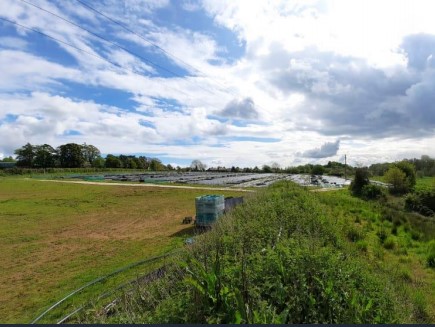
GNS are planning to have two meetings a month for the next season: one a fixed meeting on the first Sunday of the month, usually starting at 10.30 and lasting about 2 hours. This will always be a general meeting to see what we can find. The second meeting of the month has no fixed date and might be more specialist to a particular habitat or taxonomic group. Some meetings may require pre-booking, in which case this will be flagged up in the listings. Otherwise, there is no need to book. Please do not attend if you have, or have recently, tested positive for Covid-19.
The first two meetings of the new season are general interest ‘all-taxa’ meetings – further details on the events page.
Sunday 12 September. 10.30–12.30. Newent Lake. Park and meet in the car park behind the Good-News Café, opposite the library at the western end of Newent, SO722 260, GL18 1AN. There is a small charge to park. Leader Mervyn Greening, 07999 883247.
Tuesday 21 September. 10.30–12.30. Nottingham Hill, Bishop’s Cleeve. On the B4632 Cheltenham to Winchcombe road turn north-west opposite the road up to Cleeve Hill Golf Club, into Wickfield Lane. Park and meet at the north-west part of the lane where several tracks meet, SO987278, approx. GL52 3PN. Leader Des Marshall, 07968 419813.
As mentioned in last night’s Curlew talk given by Mike Smart, some further information relating to various organizations and websites concerned with Curlews…
Curlew Forum
A very informal body, which brings together local groups studying breeding Curlews in lowland England. Set up following the “Call of the Curlew” website held at Wildfowl and Wetlands Trust, Slimbridge, in February 2017. The website, www.curlewcall.org which is supported by GNS, posts field observations about Curlews, notably on breeding Curlews, colour-ringed birds and practical advice and comments. Steering Committee: Mary Colwell (Curlew author), Geoff Hilton (WWT), Phil Sheldrake (Salisbury Plain), Mike Smart (GNS).
Curlew Action
An officially registered Charity established in 2020 with the aim of raising funds for Curlew Projects, and of promoting outreach and public awareness. Appoints Curlew Ambassadors (aims at 100), Ambassadors Abroad, and Junior Curlew Network which engages with junior schools. Mike Smart is a Trustee. Website at www.curlewaction.org. Supports Curlew Recovery Partnership, and will be active for World Curlew Day (normally celebrated on 21 April, but on Saturday 23 April 2022).
Curlew Recovery Partnership England
Formal body established in March 2021 with support from the Department of Environment, Food and Rural Affairs. Brings together the major Curlew conservation bodies and upland organizations. Will be influential in application to Curlew conservation of the new Environmental Land Management Schemes to be established in the government’s 25 year Environment Plan. Website www.curlewrecovery.org . Individuals may sign up as members. Chair: Mary Colwell. Manager: Prof. Russell Wynn.
This autumn/winter the RSPB will be running a youth volunteering group once a month on a Saturday with the aim of encouraging young people to join them and gain skills and experience in woodland habitat management to help with career progression or to improve their connections to nature, as well as having the opportunity to meet like-minded people. The youth group will run one Saturday a month between October and March, and will alternate between Nagshead and Highnam Woods. On the reserves a range of tasks are carried out such as coppicing, brash clearing, ride widening and more. No prior experience is necessary as training will be given.
A message on behalf of the Gloucestershire Branch of Butterfly Conservation…
As many of you may know, the ‘Limestone’s Living Legacies’ Back from the Brink (BftB) project is due for completion at the end of August, after four and a half years. In order to celebrate many of the things undertaken during this time the BftB team are inviting you to join them for an Online Celebration Event on Monday 26th July 10am-1pm.
This event is being held via Zoom and will bring together the Back from the Brink partners for a morning celebrating the project’s achievements over the past four years. It will also be an opportunity for the team to say thank you to everyone who has supported them since the project started in 2017.
Please click here to see the events flyer for further details and please feel free to forward this on to anyone else who might be interested. To book your place please reply by email to Jen Gilbert, BftB Cotswolds Community Engagement Officer jgilbert@butterfly-conservation.org or use mobile 07483 039321.
We are looking for a volunteer to help our county bird recorder, Richard Baatsen. Currently Richard (who is a volunteer) receives, collates and verifies over 100,000 bird records each year, so it’s not surprising he is looking for a bit of help! Many of the records arrive via email.
We are looking for someone who can manage the incoming emails within a shared email box and turn them into proper records (a line on a spreadsheet) to be fed into the database. You do not need to be an expert on birds. The person we are looking for should be organised and be able to help mould how emails are responded to and dealt with.
A little spreadsheet knowledge is required but help with this will be available. Grid references are used so that sightings can be mapped; these are easily looked up using a website so nothing to fear there. But you will have to find the location on the map. That is the tricky bit – and of course you may need to correspond with the person who sent in the record.
The role could expand into other areas if that is what you would like, and could include writing up work instructions and following up on rare and scarce sightings to get them fully documented and help writing a monthly round-up/summary.
Requirements:
You would need to commit to 3-4 hours a week, (or more if that’s what you would like)
Manage Email inbox on a shared email account (polite and encouraging responses)
Enter bird records on an Excel spreadsheet template (help given)
A little bird knowledge would be helpful
Be able to look up map grid references on a website (very simple).
If you think you might be interested, please contact Richard for a chat about the “job”… his email is Richard.Baatsen@gmail.com
Our wild bees and other pollinators are so important, but they are still the unsung heroes of the environment, gardens and countryside and continue to decline in number and range.
On 7th July, GNS will be hosting Roselle Chapman – ‘Our Wild Bees – An illustrated talk on the wild bees of the UK’. As usual this event is free to members and £2 to non-members. Head over to the events page for further information and tickets.
An announcement on behalf of the Ell Brook Community Project:
“The Ell Brook Community Project, on the edge of Newent, is a +10 hectare site dedicated to conservation, education, and therapeutic outdoor pursuits.”
GNS member, Alan Waterman, has a new book titled ‘Woodland Wild Flowers’ being published on May 6th, and is making copies available at a discounted price for GNS members. If interested, please contact Alan directly as per the above.
A good deal has happened in the Curlew population of the Severn and Avon Vales in the last couple of weeks, so I thought it was time for an update.
Firstly, a disappointment: we have not succeeded in re-sighting the ringed bird, possibly one of those raised from eggs at Slimbridge in 2019, so cannot say whether this really is a bird returning to the Vales to breed; it may still be found, so we are keeping a careful watch.
The Coombe Hill public enquiry continues (its final session will be on World Curlew Day, 21 April), and the Inspector’s report and decision is not expected for some weeks afterwards.
The weather has remained very dry, though those watching Curlew at first light have noted the very sharp early morning frosts; this may have delayed nesting a little. The communal night roosts noted in March have declined in importance, most of them now holding birds only in single figures, as the birds begin to spend the night close to their nest sites. Pairs of birds have been seen walking together (the grass has not yet grown too high, though it will do so very soon). They often indulge in courtship chasing, where the male chases the female at some speed, its wings raised and quivering; this is sometimes, but not by any means always, followed by mating. Some have already begun laying: a first nest was found on 13 April, a nest with a single egg, giving a good indication of the date of first laying.
We expect the nest formation and egg-laying to speed up considerably in the next few days. We shall be aiming to find as many nests as possible, both by traditional fieldcraft (watching them back to their nests from a distance with a telescope) and by using heat-seeking drones to identify nest sites.
The biggest development has been in catching Curlews, for colour ringing. To understand their behaviour and actions, we need to be able to distinguish one individual from another, which means marking them with colour rings that can be read in the field. Our previous attempts to catch them with mist nets at roosts were unsuccessful, so we have been trying a different technique, with the help of Tony Cross from the Mid-Wales Ringing Group and the Curlew Country project. Tony uses a “whoosh net”, which is a placed flat net on the ground, propelled by strong elastic; the birds are attracted in by a stuffed decoy Curlew and by recordings of the bird’s song. It is extraordinary to see how rapidly the birds react to an apparent intruder in their territory – the males especially, but we have also caught several females. You set up the net, retreat to the car, pull the string, and almost every time, catch a bird.
The net set, ready to catch, with the decoy in the catching area.
So far, we have caught five adults in Gloucestershire, while Tony has caught another three in Herefordshire. The Gloucestershire birds are marked with a yellow inscribed ‘flag’, each one different from the other, and easier to read than the rather small rings used on the 2019 Slimbridge birds. We hope to catch more in the coming days, marking some with flags, but also marking some with satellite tags, so that we get even more information on their movements.
Finding Curlews and their nests remains very difficult. At some traditional sites we have not yet had many signs of the presence of Curlews; have they failed to appear this year, or are we just failing to pick them up? They can be very secretive, and we could be overlooking them.
A male Curlew, caught with a whoosh net.
The male is distinguished by his smaller size and shorter bill, more sharply curved than the bill of the female.
As always, our observations depend on the efforts of a large number of observers, and on the kindness of farmers and land-owners who allow us to visit their land. Many thanks to both.
The society is proposing to organise some more walks this spring, though any plans put in place may of course change at a moment’s notice. Outdoor meetings with groups of up to six are permissible, given the following guidelines:
Members will need to pre-book through Des Marshall and receive a confirmation that they have a place.
Equipment and books should not be shared or passed round.
Members are asked to maintain a two-metre distance between each other.
Members are advised to bring hand sanitiser and face mask.
Members should be aware of their own risk level and the suitability of this activity.
Please do not come if you are showing any symptoms of Covid 19 or have recently been in contact with anyone who has contracted Covid.
We have arranged six walks for spring/early summer 2021. They are spread around the county, and each will last about two hours, though members can come and go in the usual way. Most are general walks to see what natural history is around. They are not primarily intended as recording exercises, though we shall record what we see.
This website uses cookies to improve your experience. We'll assume you're ok with this, but you can opt-out if you wish. Cookie settingsACCEPT
Privacy & Cookies Policy
Privacy Overview
This website uses cookies to improve your experience while you navigate through the website. Out of these cookies, the cookies that are categorized as necessary are stored on your browser as they are essential for the working of basic functionalities of the website. We also use third-party cookies that help us analyze and understand how you use this website. These cookies will be stored in your browser only with your consent. You also have the option to opt-out of these cookies. But opting out of some of these cookies may have an effect on your browsing experience.
Necessary cookies are absolutely essential for the website to function properly. This category only includes cookies that ensures basic functionalities and security features of the website. These cookies do not store any personal information.
Any cookies that may not be particularly necessary for the website to function and is used specifically to collect user personal data via analytics, ads, other embedded contents are termed as non-necessary cookies. It is mandatory to procure user consent prior to running these cookies on your website.