Sightings – October 2008

Cheltenham (31 October, contributed by Robert Homan)

2 Ravens flying over the Tivoli area at tree top height.

Sudmeadow (22 October, contributed by Gordon Avery)

A pair of Stonechats on the old Fieldings Playing Field in Sudmeadow Road today.

Coombe Hill (21 October, contributed by Mike Smart and Les Brown)

The water level is back to the autumn normal. Seen today were: 7 Grey Herons, 7 Wigeon, 20 Teal, an adult Peregrine in the dead tree, a female Merlin sitting on the grass in front of the hide before taking off and chasing a passing Mallard, a male Sparrowhawk chasing Skylarks, 1 Water Rail calling, 6 Snipe, 1 Curlew (unusual here at this time of year), up to 60 migrant Skylarks, and about 50 passing Meadow Pipits.

Guscar and Aylburton (20 October, contributed by Mike Smart)

On the high tide this morning: 1 Little Egret, 35 Wigeon, 1 Sparrowhawk, 1 Peregrine sitting on the grass, 85+ Lapwings, 35 Golden Plover (sitting on Aylburton Warth), 435 Curlews at high tide roosts, 1 Redshank, 1 Common Sandpiper, a little visual migration of Skylarks and Meadow Pipits.

Standish (10 October, contributed by Juliet Bailey)

Two unspecified Redpoll species were seen drinking at a pond today.

Hempstead (9 October, contributed by Gordon Avery)

A cat brought in a dead Harvest Mouse the house this morning – an unusual location for this species.

Coombe Hill and Ashleworth Ham (7 October, contributed by Mike Smart and David Anderson)

The Severn is rising quite fast and water levels on meadows increasing slowly in response.

The Coombe Hill area is still very brown and muddy with not a lot of birds about: 70 Greylags and 100+ Canadas roosting, only 3 Wigeon, 70 Teal, 50 Mallard, 2 Shoveler, 1 Peregrine, 5 Ringed Plovers dropped in briefly before moving on, 10 Snipe, 6 Swallows, 2 House Martins.

At Ashleworth the water is also rising; 40 Teal, 20 Mallard, 4 Wigeon, 1 male Sparrowhawk were seen.

Walmore Common (5 October, contributed by Andy Jayne)

Seen today were 15 Teal, two Little Egrets, a Water Rail (heard), a Jack Snipe, five Snipe, two Stonechats and a Wheatear.

Coombe Hill and Ashleworth (3 October, contributed by Mike Smart)

A remarkable decrease in bird numbers at Coombe Hill compared to a week ago, now that the floods have receded. Instead of 1,000 ducks, only about 90 Teal and 30 Mallard. Wader numbers and variety also much lower: 1 Lapwing, one or more Golden Plover heard going over at first light, 1 Greenshank departed to south west at 07.30am, about five Snipe. Good numbers of feral geese roosting on the Long Pool, departing at 07.00am, 200 Canada going off towards Tewkesbury, 70 Greylags to feed in nearby stubble fields.

Ashleworth was also very quiet: the great Grey Shrike still perched on a dead tree opposite the hide with about a dozen Teal and five Snipe

Ashleworth (1 October, contributed by Mike Smart and Lawrence Skipp)

A Great Grey Shrike was showing nicely this evening, perched on top branch of a dead tree right opposite the hide, recalling the one seen at Ashleworth last year in mid October.

Sightings – September 2008

Guscar, Aylburton and Walmore (29 September, contributed by Mike Smart)

At Guscar and Aylburton on a high tide of 9.1 metres at 08.47am were 2 Little Egrets, 6 Teal, 1 Sparrowhawk, 80 Lapwings, 3 Ringed Plover, 1 Dunlin, 4 Snipe, 700 Curlew, 20 Redshank, 1 Wheatear, 2 Stonechats and 20 Ravens.

At Walmore where the floods were completely down: 1 Little Egret, 1 Wigeon, 20 Teal, 1 Sparrowhawk, 21 Snipe, 1 Stonechat.

Walmore Common (23 September, contributed by Andy Jayne and John Phillips)

Seen today were: 25 Wigeon, 80 Teal, a female/immature Garganey, five Shoveler, a Little Egret, Peregrine, Kingfisher and Sedge Warbler.

Coombe Hill (22 September, contributed by Andy Jayne)

Highlights at Coombe Hill Meadows today included 325 Canada Geese, two Shelduck, 335 Wigeon, 16 Gadwall, c.400 Teal, 40 Pintail, two Garganey (eclipse drake and female/immature), 21 Shoveler, two Pochard, 19 Tufted Duck, a Little Grebe, eight Little Egrets, a Sparrowhawk, a juvenile female Peregrine, ten Ringed Plover, a Knot, three Little Stints, two Dunlin, seven Ruff, a Snipe, 40 Black-tailed Godwits, a Kingfisher, a Lesser Whitethroat and a Siskin over flying south west.

Severn Hams (21 September, contributed by Mike Smart)

A post-diluvian flood disaster movie today: the water level is dropping, but there is still a lot of shallow water, with an oily film on the surface; any exposed vegetation is brown and dead with mats of cut but unbaled brown hay. Bales with plastic wrapping had floated all over the place, leaving trails of plastic in the hedges; rotting vegetation leaving a foetid smell everywhere; some dead worms in the puddles.

However, the birds seemed to like it, especially on the Hasfield Ham side at the bottom of Stank Lane: 140 Wigeon, 620 Teal, 35 Shoveler, 12 Pintail, 8 Gadwall, 1 noisy Hobby, a noisy Peregrine trying to dislodge a Buzzard which had pinched its place on the pylon, 240 Lapwings, 40 Black-winged Godwits, 2 Ruff (a ruff and a reeve, so not the ones that were at Coombe Hill yesterday), at least 31 Snipe.

That’s three days running that I have seen Blackwits and Ruff on falling floods in different Severn Hams sites: Walmore, Coombe Hill and Ashleworth; are these birds that have moved up the river from Slimbridge?

Severn Hams (20 September, contributed by Mike Smart and Les Brown)

Rather surprisingly, the Coombe Hill hides are still not accessible; although the flood water levels are dropping and the towpath is now passable, there is still too much water to reach the Grundon Hide. In fact, the situation now is still very much as it was after the summer flooding last year; the growing green grass has died under the flood, which means the water is anaerobic, with a thick oily film on the surface; both the Chelt and the Parish Drain are discharging into the Severn at Wainlodes, but the water discharged is black and stinking. There is a smell everywhere of decaying vegetation, and the grass on the fields emerging from the floodwater is brown and dead.

On the shallow floodwater, a good selection of birds was seen from the towpath (once the fog rose at 10.00am), in particular the first reasonable numbers of ducks: 1 Great Crested Grebe, 7 Grey Herons, 2 Little Egrets, 290 Canada Geese, 119 Greylag Geese, 220 Wigeon, 200 Teal, 8 Gadwall, 22 Pintail, 25 Shoveler, 51 Tufted Ducks, 1 Pochard, 19 Black-tailed Godwits, 2 Ruff, 400 Black headed Gulls

Guscar and Walmore (19 September, contributed by Mike Smart)

At Guscar/Aylburton today: 1 Little Egret, 8 Wigeon, 2 Teal, 25 Lapwings, 1 Ringed Plover, 1 Grey Plover, 27 Dunlin, 2 immature Curlew Sandpipers, 537 Curlew, 10 Redshank, 1 Green Sandpiper, 2 Common Sandpipers, about 100 Swallows moving southwest, 1 Rock Pipit, 50 Meadow Pipits, 5 Yellow Wagtails, at least 30 Ravens.

At Walmore, the water level has dropped: 14 Black-tailed Godwits, 1 Ruff, 100 Lapwings

Severn Hams (13 September, contributed by Mike Smart and Les Brown)

The level of the Severn has now gone down appreciably and river is no longer overtopping its banks. Flooding on the meadows has only just begun to drop: Ham Road at Ashleworth and Red Lion road past Wainlode are still under deep water; thrre is no chance of reaching hides at Coombe Hill or Ashleworth.

At Walmore Common there is extensive but fairly shallow flooding. 9 Grey Herons, 100 Mallard, 15 Shoveler, 12 Teal, at least 1200 Black-headed Gulls (and no other gull species) on the floodwater, 1 Kingfisher, light passage of Swallows – maybe 50.

Severn Hams (9 September, contributed by Mike Smart)

This morning, the Severn had dropped very slightly at Haw Bridge, Wainlodes and Ashleworth. Whereas the reading on the stage board yesterday at Haw Bridge was 11.00, it was down to 10.95 today, but was still breaking its banks on either side of Haw Bridge.

In the meadows on the other hand, the water level (as is usual under current circumstances) had risen. On the Coombe Hill/Leigh Meadows side, the water level at the Parish Drain outlet was up to 10.10 (from 9.65 yesterday). Everything was on the same level, and the level of the Chelt was the same as in the meadows. On the Ashleworth side, the level was 10.46 in the meadows, as against 9.98 yesterday. So basically the meadows are taking up the water that is spilling over from the river; but I doubt if they can take much more without causing damage to properties.

The Environment Agency website gives “Flood Warning” (i.e. less than “Severe Flood Warning” but stronger than “Flood Watch”) for the Severn between Worcester and Tewkesbury and again for the Severn between Tewkesbury and Gloucester.

Still lots of Swallows hawking insects over the flood water at Wainlodes, with a few House Martins.

Severn Hams (8 September, contributed by Mike Smart)

The Severn has risen since Saturday, and this morning was breaking its banks not only on the right (east) left bank below Haw Bridge, but also on the left (west) bank above Haw Bridge. In addition, the Chelt has broken its banks in several places. This means that the meadows both at Coombe Hill and Ashleworth (which lie lower than the Severn) are being rapidly filled up to some depth. We now have a moderate river flood, which would be normal in January or February but not in September. It is not yet anything like as high as last summer’s two big floods in June and July, and a dry day today means that some of the river water can flow out to the estuary; but the weather forecast for the rest of the week is not good, and conditions may worsen. The minor roads at Wainlodes and the Ham Road from Tirley to Ashleworth are both impassable, but the main roads over Haw Bridge and to Maisemore are still open.

As it is, it seems likely that the conditions which occurred in last year’s summer floods will be repeated, and the meadows will remain flooded for a week or ten days: some hay and silage was not cut and grass has grown well where it was cut, so there may again be die-offs of grass, causing strong smells, anaerobic conditions and mats of dead grass when it recedes; fish are likely to die; and earthworms and other invertebrates may be swamped.

Leigh Meadows: fairly deep flooding; vast numbers of hirundines feeding over freshly flooded fields, probably 800 Swallows and 200 House Martins.

Coombe Hill: water over the towpath about 100 metres past car park: the Grundon and Long Pool hides completely inaccessible.

Ashleworth Ham: Hide inaccessible from road, but footpath over higher ground west of the reserve still open.

Walmore Common: light flooding. Again 150 Swallows and 50 House Martins (the floods seem to have coincided with the main southward passage of hirundines). 80 Mallard, 10 Teal, 2 Gadwall, 1 Shoveler, 2 Black Terns (brown backed juveniles, so not the birds seen at Coombe Hill on Saturday); one adult Common Tern; one juvenile Arctic Tern, all feeding over the floodwater and landing on wooden posts.

Severn Hams (6 September, contributed by David Scott-Langley)

The meadows on both reserves are starting to fill with water after heavy rain. Walking round Ashleworth Ham NR the tips of the grass stems still showing above water were acting as a refuge for rove beetles (Stenus juno in particular) and a few other beetle species, along with numerous small Bibionid flies. Where the sheep had been running, their droppings, either floating or stranded on vegetation, were proving popular with Dung flies (Scathophagus). At Coombe Hill meadows the same was the case with generally a couple of inches of water and a similar insect fauna, without the dung flies as the cow dung (no sheep) was too old (about 3 weeks), but with the addition of some Athaliid sawflies and young spiders. The weather conditions were grey and overcast with some showers, keeping the flying insects low hence the very low-flying hirundines over both reserves. At Coombe Hill they appeared to be segregated into species flocks of Swallows and House Martins.

Severn Hams (6 September, contributed by Mike Smart et al)

Following the rain of the last week, the Severn is rising dangerously fast, and may well break its banks below Haw Bridge in the next few hours; it is also causing smaller streams and rivers above Gloucester to back up.

On the Leigh Meadows the Chelt is already breaking its banks, flooding the Meadows on either side.

At Coombe Hill, the Grundon hide was still accessible this morning, but may no longer be accessible in the near future. This morning: one Spoonbill, 50 Mallard, 120 Teal, 2 Spotted Redshanks, 2 Black Terns, one Common Tern, very heavy hirundine passage (Les Brown).

At Ashleworth Ham, water is pouring onto the reserve. Very heavy hirundine passage, mainly Swallows and House Martins with very few Sand Martins, all feeding, apparently on dung flies, low over the water on Hasfield Ham, two Whinchats, at least one Hobby. Early morning ringing season produced two juvenile Redstarts, Sedge Warbler, Lesser Whitethroat, Whitethroat, Chiffchaff, Willow Warbler, several of them birds first caught a week ago and staying on to fatten up; fat and weight considerably higher than a week ago (Mervyn Greening, David Anderson, Mike Smart).

At Haw Bridge at 12h15 a flock of 40 Common Terns flew downriver, obvious migrants and a very large number for this area (Mike Smart).

Sightings – August 2008

GWT Pasque Flower Reserve (31 August, contributed by Peter Fitchett)

Although full cloud cover with showers threatening, a good selection of blue butterflies was seen in the afternoon. Adonis, Common, Chalkhill and Brown Argus were all present and with the humid conditions there were good opportunities for photography. Meadow Browns were about plus one Green Veined White and a few Small Heaths. Moths too were there, plenty of Straw Dot with single examples of Setaceous Hebrew Character, Yellow Shell, Magpie and Dusky Sallow, and a large group of Buff-tip moth caterpillers were observed on a small tree.


Witcombe Reservoir (27 August, contributed by Gordon Avery)

A nice find this morning during my WEBS count was a juvenile Arctic Tern that stayed around for about half hour, also worthy of note were: a Common Sandpiper, a Mandarin and a Kingfisher

Two Common Terns and a Tufted Duck with full grown ducklings on the pools by Lydney Industrial estate.

Guscar and Aylburton (21 August, contributed by Mike Smart)

On a moderately high tide (8.0 metres at 11.30 am), any flocks of small Palaearctic or American waders eluded me. Nevertheless, there were at least 475 Curlews feeding on the mudbanks before the tide rose and they went to high tide roosts at Guscar and Pill House. The only other wader was a lone Common Sandpiper. Also a Little Egret, some autumn migrants: about 50 Swallows, 7 Wheatears and 3 Yellow Wagtails.

Two Common Terns and a Tufted Duck with full grown ducklings on the pools by Lydney Industrial estate.

Coombe Hill and Ashleworth (19 August, contributed by Mike Smart and Les Brown)

Quite apart from all the excitement over the Stilt Sandpiper seen yesterday evening, there was a good selection of migrants at Coombe Hill in the morning: all the hay fields (except one neighbour’s field) have been cut and cattle have already been grazing, resulting in an even sward and control of vegetation round the scrapes. There were already 150 geese (85 Canadas, 64 Greylags, 1 Barnacle and a Greylag x Barhead cross; one of the Greylags was carrying a white plastic ring inscribed J16; can anyone identify the origin?); 25 Teal, four Shoveler; a good selection of passage waders – 2 Ringed Plover, 2 Little Ringed Plover, one Wood Sandpiper, six Green Sandpiper, seven Snipe and a Black-tailed Godwit (NB not one of the usual Glos wader quarter of Curlew, Lapwing, Redshank, Dunlin); first thing there was heavy passage of Sand Martins (over a hundred) and Swallows; plus the odd Wheatear, and singing Willow Warbler and Chiffchaff along the canal.

At Ashleworth, the high river level has caused water to back up into the reserve, lightly flooding the main field in front of the hide; this means that the grass which has been cut but not baled on some fields on the reserve will be very difficult to collect; some neighbouring fields not cut yet: about 40 Mallard and three Teal.

CWP(E) (11 August, contributed by Andy Jayne)

At pit 126 there was a juvenile Shelduck, two Teal, 11 Little Grebes, two Little Egrets, two juvenile Little Ringed Plovers, two Dunlin, seven Green Sandpipers and two Common Sandpipers. Also a Brown Hawker.

Longford (2 August, contributed by Andy Jayne)

A Hobby took a House Martin at 11.20 this morning.

Coombe Hill (1 August, contributed by Andy Jayne)

An adult Water Rail seen and another bird calling.

Sightings – July 2008

Coombe Hill (31 July, contributed by Andy Jayne)

The highlights at Coombe Hill Meadows today were one Teal, a Little Grebe, five Little Egrets, 120 Lapwing, seven Snipe, a Greenshank, 12 Green Sandpipers, a Common Sandpiper, a Kingfisher and male Redstart.

Cleeve Hill (23 July, contributed by Peter Fitchett)

A range of butterflies seen in the evening included ten Dark Green Fritillaries (top left below), plenty of Marbled Whites, Small Skippers and Meadow Browns. There were also 6-Spot Burnet Moths (bottom centre below) in abundance. The Pyramidal Orchids were still in bloom but going over with a new element to the summer colour palette added by a few Harebells (top right below).

Coombe Hill (12 July, contributed by Andy Jayne)

Sightings today included three Teal, a Little Grebe, four Little Egrets, three Little Ringed Plovers, c.65 Lapwing, a Dunlin, a Snipe, two Greenshanks, five Green Sandpipers, two Common Terns and a Turtle Dove.

Painswick Beacon (12 July, contributed by Peter Fitchett)

Peter’s pictures below show a nice variety of species to be found in the Cotswolds in early July. They are: top left – Marbled White (Melanargia galathea); top right – Pyramidal Orchid (Anacamptis pyramidalis); bottom left – Musk Orchid (Herminium monorchis); bottom right – Silver-washed Fritillary (Argynnis paphia).

Severn Hams (8 July, contributed by Mike Smart and Les Brown)

At Coombe Hill this morning, the water level in scrapes was fairly low, with good muddy edges for waders. Still very little hay cut, because of the recent wet weather.

There was a good showing of passage waders: about 11 Green Sandpipers, one Greenshank, one Redshank, one Common Sandpiper, one Oystercatcher, two Lapwings; but no Wood Sandpipers (one recorded on 2 July). Also a singing Turtle Dove. Seven Teal, one Shoveler. Still the odd Lesser Whitethroat singing, some Sedge Warblers and a few Reed Warblers.

In the evening, there were yet more migrant waders: a very excited flock of 15 Black-tailed Godwits, flushed by a Peregrine and doing the “grutto” display call before flying off; two Greenshanks were there compared to only one this morning. They also flew off at dusk. The entirely fearless Common Tern chased off the Peregrine; I wonder if it had taken a chick? The pair of swans that nested at The Wharf have seven cygnets, and are eating duckweed further down the canal. The air at dusk was full of low-flying swifts; you could hear the whirr of their wings as they whistled by.

At Ashleworth in the morning, there has been but little hay cut either; a Quail still singing late morning on the Hasfield side.

Coombe Hill (7 July, contributed by Andy Jayne)

Today there were three Little Egrets, 50 Lapwing, a Black-tailed Godwit, a Greenshank, a Green Sandpiper, two Common Terns, a Turtle Dove displaying, 50+ Sand Martins, a Yellow Wagtail and singing Lesser Whitethroat.

Severn Ham, Tewkesbury (2 July, contributed by Andy Jayne)

A pair of Corn Buntings was present today, with the female feeding two fledged juveniles. This is a very welcome record showing that the species is still present at this traditional site.

Sightings – June 2008

St Briavels (30 June, contributed by Andy Jayne)

Seen today – a Curlew on territory and two Crossbills flying over.

Deerhurst (29 June, contributed by Robert Homan)

2 Hornet Moths were seen today by the River Severn. This follows a single moth on the 28th at the same location and another seen in Woodmancote by David Iliff on the 24th. These are the first records of the moth since 1946.

Hornet Moth pair, Deerhurst, Robert Homan, June 2008.

Hornet Moth, Woodmancote, David Iliff, June 2008.

Coombe Hill (26 June, contributed by Mike Smart, Juliet Bailey, Jackie Birch)

The theme of passage waders continues; yesterday at Coombe Hill, a summer plumaged Dunlin and a Little Ringed Plover, neither of which have been seen there for several weeks and must be on return passage; also seven Lapwings and at least two Green Sandpipers. There was also a Little Egret.

Not forgetting extensive stands of Canary Reed Grass Phalaris arundinacea, presumably the legacy of last year’s summer flood, and some stands of True Fox Sedge Carex vulpina, the rare plant for which the site is famed.

Ashleworth and Haw Bridge (24 June, contributed by Mike Smart)

Yesterday at Ashleworth, things were quite interesting: Quail still singing early morning and late evening ( as they have been for most of June). There are nesting Curlew present, but in addition, small groups of birds (which have presumably failed at sites further upriver) are flying straight over, very high, calling, presumably en route for the estuary. In the evening there were eight non-breeding Curlews (a large number for the site and time of year) feeding on a newly cut hayfield.

Today, Quail calling both morning and evening. During a ringing session, good to average numbers of Redstarts, Whitethroats. Lesser Whitethroats, Reed Buntings, Reed Warblers were caught, but numbers of Sedge Warblers are drastically down – no doubt an effect of the floods of last year.

On the Severn above Haw Bridge this evening, more signs of autumn passage of waders: a Common Sandpiper on the river (also a Kingfisher and two local broods of Canada Goose); on the cut hay meadows, at least 15 Lapwings, undoubtedly migrants.

Downriver movements of waders are clearly under way already, now we have passed the summer solstice: Green Sandpiper and Redshank last Saturday, Curlew yesterday, Lapwing and Common Sandpiper today; only small numbers, but the return migrations is clearly in full swing; interesting to see whether these birds are noted when they arrive on the estuary.

Coombe Hill (21 June, contributed by Mike Smart)

In general it was rather quiet: Canada Goose with five ducklings, two Common Terns on the island in the scrape, chasing crows and gulls; two Little Egrets; Cuckoos very active – still singing and four all at once chasing one another; signs of autumn passage already on midsummer’s day: first two Redshanks for quite a long time and four Green Sandpipers, undoubtedly waders on return passage.

Chase End Hill (4 June, contributed by Juliet Bailey)

Now is a good moment to go out looking for wild flowers – orchids on the Cotswold commons, foxgloves in the Dean, and buttercup meadows in the Vale. The picture below is of a fine display of foxgloves on Chase End Hill.

Foxgloves, Chase End Hill, Juliet Bailey, June 2008.

Sightings – May 2008

Castlemeads (31 May, contributed by Gordon Avery)

There were 2 Little Egrets on Castlemeads in the afternoon at 3.45, viewable from the Severn Way at Sudmeadow.

Castlemeads (30 May, contributed by Gordon Avery)

A single Little Egret was present today.

Sudmeadow (24 May, contributed by Gordon Avery)

A Kingfisher flew through during an otherwise uneventful ringing session.

Guscar and Aylburton (21 May, contributed by Mike Smart)

On the morning high tide it was rather quiet with not much by way of a high tide wader roost: 5 Little Egrets; 2 Hobbies flew upriver very high; 20 Shelducks; 4 Oystercatchers; 1 Dunlin; 3 singing Reed Warblers in the reeds in ditches; 2 Yellow Wagtails.

Coombe Hill, Tirley and Staunton (20 May, contributed by Mike Smart and Les Brown)

A quiet day at Coombe Hill: 25 Coot, some with young; at least 50 Swift hawking insects, no doubt migrants; two Redstarts singing and one Reed Warbler in song. At Tirley Lake six Barnacle Geese. At Staunton a Yellow Wagtail in a grass field.

Witcombe Reservoir (20 May, contributed by Gordon Avery)

A first summer Little Gull this morning at the reservoir.

Llantony Weir (14 May, contributed by Gordon Avery)

A Hobby over the weir at 4.30pm, heading towards the docks.

Edge Hills (9 May, contributed by Andrew Jayne)

In the Edge Hills area near Cinderford this evening there were two Mandarin (in flight), four Buzzards, a Peregrine, two Woodcock roding, three Turtle Doves ‘purring’, three Tree Pipits, a Wood Warbler, two Willow Tits, two Ravens and c.25 Crossbills.

Sudmeadow area (8 May, contributed by Gordon Avery)

A singing male Reed Bunting on the Plantation Pool. A pair of Tufted Duck on the GLS pond plus a pair of Mute Swans nearby but not nesting. Up to 15 Sand Martin nestholes on the Minsterworth Ham side towards the Rea with birds still excavating right under the top of the bank. A single Common Sandpiper on the river at Port Ham.

Severn Hams (7 May, contributed by Mike Smart and Les Brown)

At Coombe Hill this morning there was no sign of the Wood Sandpiper. There was one Little Ringed Plover, at least six Redstarts singing along the canal between The Wharf and Wainlodes. Several Sedge Warblers and Whitethroats in full song with many of latter doing song flights.

Ashleworth at 1.00pm: two hobbies chasing large insects overhead.

Aylburton Warth (6 May, contributed by Mervyn Greening, Andrew Jayne, Barrie Mills and Mike Smart)

On the evening high tide there were 16 Whimbrel, 2 Bar-tailed Godwits, about 20 Ringed Plover, 60 Dunlin; one Wheatear and three or four Yellow Wagtails.

Sudmeadow (6 May, contributed by Gordon Avery)

3 Shelduck flew over Sudmeadow then back down river and there was 1 Common Sandpiper on the river. In the marsh area, during a ringing session there were: 5 Lesser Whitethroats, all trapped; 2 Reed Warblers with 1 trapped and another singing male; 2 Garden Warblers with 1 trapped and another singing male.

Severn Hams (5 May, contributed by Mike Smart)

At Staunton: a female Yellow Wagtail looking as though it was going to nest in a cereal field, also two Ravens.

At Ashleworth at 1.00pm, a Hobby chasing insects.

At Coombe Hill in the evening it was fairly quiet, until it got dark when everything started getting lively. 1 Little Grebe, 2 Shelducks, 3 Little Ringed Plovers, 6 Dunlin in summer plumage (flushed by a hare), two or three Curlews coming in to roost when it was nearly dark, with a vast repertory of variations on the bubbling call and at least one Whimbrel after dark.

Severn Estuary (4 May, contributed by Ian Ralphs)

A Harbour Porpoise has coming up the Severn on the high tides. It was seen this morning for ten minutes off Fretherne shore around 0930 hrs, on the rapidly falling tide. A little later it was seen off the Dumbels and Mid Point.

Ashleworth Ham (3 May, contributed by Mike Smart)

The first session of Constant Effort ringing. Lots of birdsong early on: two Cuckoos, at least six Redstarts, at least eight or ten Sedge Warblers, two or three Whitethroats, two Blackcaps, four or five Willow Warblers, rather few Chiffchaffs, at least half a dozen Reed Buntings, but by eight or nine o’clock the volume had decreased considerably. Birds caught included seven Sedge Warblers (including three birds originally ringed in 2004 and 2005), a Garden Warbler (infrequent at Ashleworth), three Whitethroats, a Lesser Whitethroat (even though none were singing), only one Reed Bunting. Other birds seen included: seven Barnacle Geese (flew over), one Greenshank, one Hobby (chasing insects at midday) and two Ravens.

Cheltenham (2 May, contributed by Ian Ralphs)

Flowering plants of Purple Toothwort (Lathraea clandestina) were found scattered along the banks of the Hatherley Brook, immediately downstream of Robert Burns Avenue Bridge, Benhall. Purple Toothwort is parasitic on tree roots, Willows and Alder mainly. It was originally introduced into UK gardens in the late 1800’s, and is assumed to be spread by flood water. It is now quite widespread in southern and central England, but is no where particularly common.

Purple Toothwort, Cheltenham, Ian Ralphs, May 2008

Sightings – April 2008

Leigh Meadows (28 April, contributed by Mike Smart)

Two Peregrines (a male and a female) on the pylons, two or three Curlews, one Lapwing, one Green Sandpiper, one Wheatear, two or three Redstarts calling and three Whitethroats singing.

Witcombe Reservoir (24 April, contributed by Gordon Avery)

3 Common Sandpipers at the reservoir this morning.

Cheltenham (23 April, contributed by Robert Homan)

In addition to several Peacocks and a Brimstone, other butterflies seen today were an Orange Tip and Speckled Wood on the Honeybourne Cyclepath and a Holly Blue in Swindon Lane.

Coombe Hill and Ashleworth (22 April, contributed by Les Brown and Mike Smart)

A pair of Garganey at Coombe Hill, and a one o’clock Hobby looking for dragonflies at Ashleworth.(LB)

In the evening at Ashleworth: 76 Teal, 1 Peregrine, still at least 15 Snipe but no drumming despite perfect conditions, 1 Jack Snipe, 1 Green Sandpiper, 2 cuckoos, 2 Lesser Whitethroats singing and at least 6 Redstarts calling. (MS)

Hempstead and Sudmeadow (21 April, contributed by Gordon Avery)

A Whitethroat singing on Hempsted Nature Reserve yesterday and another one singing on Sudmeadow today. 50 Linnets on the tip slope at Sudmeadow this afternoon and a rather unseasonal “abietinus” Chiffchaff by the river at Sudmeadow probably reflecting the strength of easterly winds over the past few days

Aylburton (20 April, contributed by Mike Smart, Barrie Mills and Lewis Thomson)

The easterly winds continue to bring in good numbers of migrants. At Aylburton Warth this morning, a small but steady stream of migrant Swallows and Sand Martins upriver from about 8.15am; fair numbers of skulking Whitethroats doing faint subsong in the brambles, but most spectacularly, the best concentration of wagtails I have ever seen in Gloucestershire: birds sitting just on the edge of the warth, having obviously recently arrived: a carpet of at least 50 Yellow Wagtails and 31 White (not a Pied among them), with associated Meadow Pipits.

Also a good showing of waders, mainly on the warth at high tide: six Oystercatchers, many displaying Lapwing and Redshank, 120 Curlew, 1 Whimbrel, one Little Ringed Plover, four Common Sandpipers, 30 Ringed Plovers, 47 Dunlin, 3 Sanderlings, five Golden Plovers in summer plumage, and a Snipe.

Cheltenham (20 April, contributed by Robert Homan)

A Lesser Whitethroat at Swindon Lane, singing throughout the morning.

Frampton area (19 April, contributed by Gordon Avery)

At a Splatt reedbed north, a Water Rail calling. A single Swift through flying NE and a Whitethroat singing from the scrub further along the canal.

2 Cattle Egrets seen, one with the horses at Splatt and another in the field with horses by the church gate.

Severn Hams (19 April, contributed by Les Brown and Mike Smart)

At Coombe Hill, nine species of wader were present: seven Little Ringed Plovers, one Ringed Plover, seven Lapwings, one Grey Plover, two Greenshanks, three Redshanks, two Curlew, six Snipe, two Black-tailed Godwits; also a singing Whitethroat and two singing Sedge Warblers, three Yellow Wagtails, two White Wagtails and two Pied Wagtails; good numbers of Swallows and Sand Martins, though less than last Thursday.

At Ashleworth, one Green Sandpiper, at least one Redstart, some hirundines. The bottom two boards were removed from the sluice, so the water levels should drop further.

Coombe Hill (19 April, contributed by Mike Smart, Lawrence Skipp et al)

The strong easterly winds continue to bring birds to Coombe Hill: still fair numbers of hirundines, mainly Sand Martins with some Swallows and the odd House Martin, though not as many as yesterday morning. In addition, a winter plumage Grey Plover, two Greenshanks, at least eight Little Ringed Plovers, and a female Merlin which skimmed over the head of the Grey Plover (causing it to lie doggo) landed to be admired for a few minutes, then moved on to the north. A few Yellow Wagtails too.

Matson (18 April, contributed by Juliet Bailey)

A report received this evening that the Bald Eagle had been taken back into captivity on the ski slope at Matson.

Standish (18 April, contributed by Juliet Bailey)

A Bald Eagle was seen in a poplar tree in the garden today, where there was commotion from the local birds. My immediate reaction was that it was the Sea Eagle reported from Slimbridge. Within seconds of first seeing it, it flew off jingling and trailing strings – jesses presumably. It was a huge raptor with a broad white tail very evident. It moved a couple of hundred yards across a field north east, and perched in a tree for a good half hour. It was quite unconcerned at my approach, and I was able to get under the tree to take photos, which show the white head. It then moved on to another tree another couple of hundred yards distant, in a field where there were several vehicles shifting manure.

Bald Eagle, Standish, Juliet Bailey, April 2008

Walmore Common (18 April, contributed by Andy Jayne)

A Hawfinch in a tall hawthorn hedge this afternoon. The only previous record here was on 22nd December 1981. Also a pair of Redstarts present.

Coombe Hill (17 April, contributed by Mike Smart)

The strong easterly wind opened the door for vast numbers of hirundines. There were many over the Canal by the Wharf and even more over scrapes – hundreds of Sand Martins, smaller numbers of Swallows and just a few House Martins. Migrant waders included three Little Ringed Plovers and a Dunlin. Among the breeding birds were a couple of Curlew, three Redshanks, and a Lapwing’s nest with the first egg.

R. Severn, Deerhurst to Haw Bridge (10 April, contributed by Robert Homan)

Apart from a few Chiffchaffs and Blackcaps singing, summer migrants were few and far between with only 2 Willow Warblers heard and a single Sand Martin near Haw Bridge. 4 late Fieldfares were also seen.

Sudmeadow area (9 April, contributed by Gordon Avery)

The first Willow Warbler in the osier this year and a Green Sandpiper on Sudmeadow as well.

This morning there were 45 Carrion Crows loafing and generally making a lot of noise in the Grey Poplar near Hemmingsdale Road. This seems to be a annual event much to the annoyance of the breeding pair who have a nest in the same tree!

Longford (9 April, contributed by Andy Jayne)

There were two Green Sandpipers in Horsbere Brook today.

Coombe Hill (9 April, contributed by Andy Jayne)

Highlights at Coombe Hill Meadows this evening were three Redshank, a Green Sandpiper, a Common Sandpiper, 200 Sand Martins, 20+ Swallows, a House Martin and male Yellow Wagtail.

Severn Hams (8 April, contributed by Les Brown and Mike Smart)

Another frosty start that must have made the swallows think again!

At both sites, the hedgerows are clearly still suffering from the effects of last summer’s flooding: lots of hedges are sprouting from the top; while the lower parts, submerged in the big flood look dead and have no green areas; some blackthorn hedges have very little blossom. On the other hand, some of the fields already have a good showing of Great Burnet leaves – maybe this plant really is adapted to immersion. At Ashleworth, a must unusual observation: two Roe Deer ran across one of the meadows – the first we ever remember seeing: wherever did they come from?

Birds at Coombe Hill: the Lapwings were very quiet and it looks as though they are not yet paired up; one Little Ringed Plover, two Common Sandpipers, half a dozen Pied Wagtails, a couple of Willow Warblers singing; one pair of Mute Swans nest-building just by The Wharf. At Ashleworth (where water levels on the main reserve fields have dropped following removal of boards from the sluice last Saturday), still about 50 of Teal, Wigeon and Shoveler; the non-breeding flock of Mute Swans feeding on one grass field which escaped flooding now numbers over 30; a distinct increase in willow Warblers in the last couple of days, at least half a dozen singing, but no Redstarts on World Redstart Day.

Walmore Common (7 April, contributed by Mike Smart, Barrie Mills and Lewis Thomson)

About 60 Teal, 7 Shelduck, five Lapwings, two Redshank and a female Peregrine hunting.

Aylburton, Guscar and Lydney (7 April, contributed by Mike Smart, Barrie Mills and Lewis Thomson)

Aylburton and Guscar: a massive tide of 9.5 metres (one of the highest of the year) covered most of the area outside the seawall, and probably inundated most nesting Lapwings and Redshanks. Some Lapwings inside the seawall survived.
About 50 Shelducks, two to three pairs Oystercatchers, c. 100 Lapwings, c. 15 Redshanks, c. 80 Curlew; 1 Little Ringed Plover flew over, going north; a fair amount of movement upriver of 80+ Swallows and 10+ Sand Martins mid morning, one male Wheatear; also a gorgeous female Merlin sitting on top of a hedge, waiting to be admired through the telescope.

Lydney Harbour Pools: 1 Little Egret, a female Mallard already with a duckling, 20 Tufted Ducks, a few Swallows, a Willow Warbler singing.

Severn Hams (5 April, contributed by Mike Smart and Les Brown)

This morning at Coombe Hill there was a pretty standard selection of species: one Great Crested Grebe on the Long Pool, four Shelducks, 40 Teal, 10 Shoveler, 14 Lapwings, only two or three Curlews, five Redshanks, one Green Sandpiper, one Willow Warbler singing, one Blackcap singing and about 10 Swallows. Last week’s large flocks of Fieldfares with a few Redwings have disappeared. Two Mute Swans (not the usual ones) on eggs.

At Ashleworth four half boards and one whole board were removed from the sluice, so the water levels will fall sharply in the coming days. 1 Great Crested Grebe, still 40+ Wigeon, a few Teal, 10 Swallows, 30 Sand Martins, 1 House Martin, 2 Willow Warblers, 1 Blackcap.

Slade Bottom, near St Briavels (4 April, contributed by Ivan Proctor)

During a pleasant warm afternoon there were chiffchaffs and blackcaps singing and skylark on the fields at the top. The flora was looking very good with with wood anemones and lady’s smock at their peak, bluebells coming on nicely and ramsons and herb paris still in tight bud. Butterflies included peacocks, comma and a single male orange tip. 16-spot ladybird was swept from grassland near Orles Barn and along the main ride through the wood there were 7-spot, kidney spot and pine ladybirds. Other insects included several bee flies, Bombylius major, nectaring at bluebells, and a sloe bug, Dolycoris baccarum.

Wood Anemones and Sloe Bug Dolycoris baccarum, Slade Bottom, Ivan Proctor, April 2008

Coombe Hill (4 April, contributed by Mike Smart)

I was at Coombe Hill during the evening to see what migrant waders might be passing and what breeding waders might be assembling. No migrants were present, but the breeding waders were very interesting: as usual they assembled to roost very late, and numbers were much higher than during daylight hours: six Redshank, 10 Lapwings, and as many as 16 Curlews, the latter all arriving very late with bubbling display calls, so they were not migrants. They then gathered to roost in the dusk in a tight flock, not looking territorial at all; the question arises as to where 16 (eight pairs!) of Curlews come from? They must be birds from a long way round, all gathering together. 1 Green Sandpiper, two or three Snipe calling at nightfall, but no sign of drumming.

Standish (3 April, contributed by Juliet Bailey)

Swallows have returned to the area with sightings today and yesterday.

Sightings – March 2008

Severn Hams (31 March, contributed by Mike Smart, Les Brown and Juliet Bailey)

The Severn has risen again since Saturday (surprisingly rapidly, by 1.30 metres at Haw Bridge), following the rain over the weekend; as a result, local streams have backed up and water levels on the meadows at Coombe Hill and Ashleworth have risen again; however, all hides are still perfectly accessible. Rather quiet bird-wise after recent excitement.

At Coombe Hill: a female Sparrowhawk in display flight, 40 Teal, 5 Lapwings (not very demonstrative), 1 Redshank, 1 Curlew, 1 White Wagtail.

At Ashleworth: 40 Wigeon still grazing on grass at water’s edge; 5 Lapwings still displaying; 1 Redshank; 1 Curlew bubbling display.

Walmore Common: 15 Mute Swans (one preparing to nest); 15 Lapwings (some aerial aerobatics); 1 Redshank.

Mike Smart and Les Brown at the Ashleworth Ham sluice, removing one of the boards, in order to lower the water levels on the reserve for the spring and summer, Juliet Bailey, March 2008

Sudmeadow (31 March, contributed by Gordon Avery)

Nothing untoward, just a Kingfisher flying up the East Channel at Sudmeadow late afternoon and 2 or 3 Chiffchaffs now in the osier bed.

Cleeve Hill (30 March, contributed by Robert Homan)

A single Wheatear late morning on the edge of the golf course above the quarry car park.

Cheltenham (30 March, contributed by Robert Homan)

A number of Peacock butterflies in the sunshine in Swindon Lane, together with the first Brimstone of the year.

Woorgreens (30 March, contributed by Andy Jayne)

Twelve Goosander (one adult male) at Woorgreens and a male Goshawk overhead. At Moseley Green a Hawfinch near The Rising Sun.

Sudmeadow (30 March, contributed by Gordon Avery)

2 Little Egrets late this morning over the river at Sudmeadow and flying onto Port Ham, from where I suspect they were initially disturbed.

Woorgreens (27 March, contributed by Robert Homan)

Late morning there were 15 Greylag Geese, 15 Goosanders and a pair of Mandarins on the lake, while in the larch woods close by there were small numbers of Siskins feeding on cones.

Sudmeadow area (27 March, contributed by Gordon Avery)

A Green Sandpiper, 2 Snipe and 3 Teal on Sudmeadow. About 30 Ravens on the Sheep Down (old tip) and GLS and 2 Shelduck on Minsterworth Ham.

Queen’s Wood, Southam (26 March, contributed by Robert Homan)

Bluebells were already in flower on the warm lower slopes of the wood, but the only other sign of spring was a single Chiffchaff singing.

Severn Hams (25 March, contributed by Mike Smart, Les Brown and Andy Jayne)

Coombe Hill this morning: the canal bank is now open, but the hides are still not accessible because of flooding, and floodwater is still extensive on the meadows: 2 Shelduck, 14 Gadwall, 10 Pintail, 10 Shoveler, 10 Tufted Ducks, only 2 displaying Lapwings, 10 Curlews (2 displaying and the other eight probably migrants passing through), 6 Black-tailed Godwits, 5 Chiffchaffs singing, 1 Blackcap in song, 4 Reed Buntings singing. At the Wainlodes end: 9 Shelducks, 15 Tufted, 3 Redshank, 1 Green Sandpiper.

At Ashleworth, the Ham Road is now free of flooding and the hide is easily accessible, but there is still extensive flooding on Hasfield Ham: 15 Tufted Ducks, 30 Wigeon, 1 Peregrine, 1 Curlew displaying, 30 Snipe.

Port Ham & Castlemeads (23 March, contributed by Andy Jayne)

Present this morning were 35 Teal, five Shoveler, a Little Grebe, a Little Egret, two Jack Snipe, 16 Snipe, two possibly four Green Sandpipers, plus a Barn Owl flushed from a tree.

Severn Hams (22 March, contributed by Mike Smart and Les Brown)

Coombe Hill today: extensive flooding, although the water is flowing out rapidly into the Severn via the Deerhurst Parish Drain. The hides are still inaccessible and likely to remain so for another couple of days. The edge of the floodwater is approachable from the north via Apperley, but the water is too deep for many birds to be seen – 3 Great Crested Grebes, 18 Tufted Ducks and 2 Curlew.

Ashleworth: the hide is just accessible with determination and wellingtons if you leave vehicles on the Ham Road at the Tirley end. Another 3 Great Crested Grebes, 20 Mute Swans, 6 Greylags, 1 Peregrine, 300 Wigeon, 25 Pintail, 40 Shoveler, 5 Pied Wagtail and 75 Fieldfares.

Walmore (21 March, contributed by Mike Smart)

Ferocious NW winds had blown the godwits and the cobwebs away, but instead there was a gorgeous pair of Garganey, flying and sitting together, not in the least interested in the Teal. Also 120 Teal, 22 Lapwing (migrants and breeders), 2 Snipe, 1 Jack Snipe and 3 Redshanks, the latter doing a bit of display.

The godwits had not gone to Rodley, as the only birds on the floodwater there were 2 Grey Herons and 12 Shelducks.

Aylburton, Guscar and Walmore (20 March, contributed by Mike Smart)

At Aylburton/Guscar: 1 Little Egret, 40 Shelducks, 90 Wigeon, 30 Teal, 2 Oystercatchers, 5 Ringed Plover (probably wintering birds), 8 Golden Plover, 120 Lapwings (mixture of passage birds and birds preparing to breed), 10 Dunlin, 1 Bar-tailed Godwit, 140 Curlews, 20 Redshanks (like Lapwing, beginning to show signs of display), 1 Meadow Pipit in song flight and another 20 migrants, 2 chiffchaffs in song, 2 Ravens.

At Walmore there is moderate flooding: 7 Gadwall, 10 Pintail, 10 Lapwings (beginning to do their aerial display), a flock of 42 Black-tailed Godwits including six brightly coloured males, obviously migrants, feeding feverishly and flying round chattering excitedly, and 2 Curlews landed on the grass, this is an infrequent species here.

Severn Hams (18 March, contributed by Mike Smart)

Here we go again! The Severn has risen very sharply since the rain of last Saturday and Sunday and is breaking its banks both above and below Haw Bridge, which means that the meadows will flood in the next day or so and be slow to clear of water.

At Coombe Hill, the canal bank is still accessible, and the edge of the floodwater can be reached from the Apperley side, but there is no chance of reaching either the Grundon or Long Pool hides; all the areas where breeding waders were beginning to hold territory is under water. 17 Tufted Ducks on the floodwater, 2 Redshanks on the edge of the flood, 8 Sand Martins and at least four Chiffchaffs singing.

At Haw Bridge a solitary Curlew on the edge of the flood and a Sparrowhawk.

At Ashleworth, the hide was still accessible this morning, but for how long with floodwater rising fast in the meadows? No sign of the Whooper Swans (last noted on Sunday 17 March), 140 Wigeon, 73 Shoveler, 55 Teal, 1 Sparrowhawk.

A40 (17 March, contributed by Gordon Avery)

In the early hours of the morning there were 2 Barn Owls along the A40. The first at the Shipton turn off and the other at the Windrush turn off.

Badgeworth (14 March, contributed by Gordon Avery)

A male Merlin was seen today flying near Badgeworth just east of the M5 at 10.12 am.

Coombe Hill (14 March, contributed by Andy Jayne)

During what proved to be a very quiet afternoon, there were: two Shelduck, three Wigeon, 20+ Teal, five Pintail, 16 Shoveler, three Little Egrets, 1 Water Rail (heard), eight Lapwing, 25 Snipe, 17 Curlew, two Redshank, one Chiffchaff and a female Stonechat.

Severn Hams (10 March, contributed by Mike Smart and Les Brown)

After a longish dry period, the canal bank at Coombe Hill has dried out and the hides can be reached with relative ease, comfort and without much mud.

A rather quiet morning: two short bursts of song from a Chiffchaff, a flock of 30 Pied Wagtails, mostly males in resplendent plumage with a few females and a solitary male White Wagtail plus a few Meadow Pipits. 40 Lapwings, 4 Curlews, far fewer ducks with only 50 Teal, 20 Shoveler and 3 Shelducks.

Even more Pied Wagtails and Meadow Pipits were on the Leigh Meadows; also a flock of 50 Redwings and 25 Fieldfares, most of which seem to have departed from other locations. Four Curlews were also present.

At Ashleworth, the three Whoopers were still present with 25 Mutes still grazing greedily; duck numbers were low here as well.

Cheltenham (10 March, contributed by Robert Homan)

A Chiffchaff singing this morning at the northern end of the Honeybourne Cyclepath.

Castle Meads (7 March, contributed by Gordon Avery)

The Little Egret was present again today at about 11.40am.

Cheltenham (7 March, contributed by Robert Homan)

After their (surprisng?) absence during the winter, Blackcaps have become far more evident this week with upto 3 males singing at different points along the Honeybourne Cyclepath.

Severn Hams (5 March, contributed by Mike Smartand Les Brown)

The meadows are drying nicely now after the sunniest February on record and the driest since 1998; all hides are easily accessible.

It was a cold, frosty morning at Ashleworth; the three Whoopers had already left the reserve at 7.00am, and were found later at the usual grazing area below Great House Farm with 26 Mutes. The Wigeon were again performing brilliantly with up to 350 grazing along the edge of the reserve very close to the road almost under the hedge; also 70 Shoveler, 40 Pintail, 60 Teal, 2 Little Grebes, 30 Coot. The frost caused the Snipe to spread out over a wide area with at least 40 present plus at least six Jack Snipe. Eight Lapwings displaying. A pair of Stonechats and at least five Reed Buntings singing.

At Coombe Hill, rather few ducks but a flock of 31 Curlews, undoubtedly passage birds. At the Wainlodes end 3 Green Sandpipers, another 30 Snipe and at least three Curlews displaying.

Castle Meads (5 March, contributed by Gordon Avery)

The Little Egret was present again today at midday. It is probably living on the pool at Port Ham but gets disturbed by dog walkers so flies over to CM. It is Easily seen with care from the causeway.

Kingscote (4 March, contributed by Gordon Avery)

An adult female Peregrine flew north-east over the A4135 near Kingscote round about midday.

Sudmeadow (3 March, contributed by Gordon Avery)

A few signs of early spring movements with 10 Snipe and 8 Teal in the marsh this morning. Yesterday (2nd) the Little Egret was still at nearby Castle Meads.

Castle Meads (1 March, contributed by Gordon Avery)

A Little Egret was present, feeding for at least 2 hours over the lunchtime period.

Midger Wood, joint GNS-Bristol Naturalists’ moss meeting (30 March 2008, contributed by Juliet Bailey)

During the course of the meeting as well as recording some 50 mosses, we saw at least six Brimstone butterflies together with early Bluebells and Butterbur and heard the song from many Chiffchaffs.

Photographs from the Midger Wood Meeting

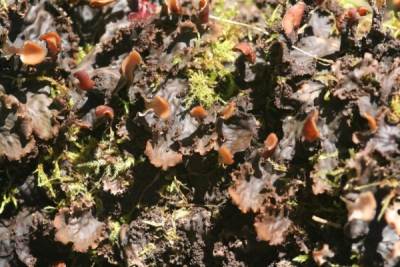
The pictures below were taken by Rob Bacon during the joint GNS-Bristol Naturalists meeting. They are of a variety of mosses, liverworts, fungi and lichen. Of the species shown the liverwort Nowellia curvifolia was a particularly good find.

Dicranum scoparium on Nowellia curvifolia

Thuidium tamariscinum and Polytrichum formosum

Reticularia lycoperdon

Scarlet Elf-cup (Sarcoscypha austriaca)

Scleropodium purum

Euryhnchium praelongum

Yellow Brain (Tremella mesenterica)

Thuidium tamariscinum

Isothecium myosuroides

Peltigera praetextata

Pellia epiphylla

Nowellia curvifolia

Mnium hornum

Frullania dilatata

Plagiochila asplenoides

Sightings – February 2008

Severn Hams (28 February, contributed by Mike Smart)

At Ashleworth on a morning with light frost and mist: the three Whoopers were still there with about 20 Mutes, all feeding near the Ham Road, on the best grass that escaped submersion in the recent floods and despite the bird scarers put out to deter them. The Wigeon were again behaving in text book fashion, coming out of the water to feed on the grass at the edge and coming almost up to the hedge, totally impervious to passing cars, though they didn’t like the vans and lorries. About 30 Snipe, one Curlew, about 28 Lapwings doing a bit of initial display flight; a pair of Stonechats, the first for some time.

Near Wainlodes, four Curlews all doing their bubbling display song, two Redshanks and two Green Sandpipers; also two Mute Swans prospecting for nesting sites.

Coombe Hill (27 February, contributed by Mike Smart)

The flooding has all gone, although there is still plenty of water in the scrapes and the Long Pool and a little surface water on some fields. There was a distinct feel of spring in the air.

250 Teal, 15 Shoveler, 6 Pintail, 3 Gadwall, but, most unusually, no Wigeon – they must all have be at Ashleworth. 40 Lapwings, flocking like passing migrants, but one male just coming into breeding plumage and giving a short display flight; 2 Dunlin on a wet spot with the Lapwings; 6 Snipe; 1 Curlew starting up on its bubbling song-flight; at least four male Reed Buntings just beginning their rudimentary song.

Severn Hams (24 February, contributed by Mike Smart and Les Brown)

The series of cold, frosty fine days with easterly winds ended in the middle of the week. During this period numbers of Shoveler at Ashleworth were unusually high (220 on the ice on 19 February) and Pintail were also present in good, if not exceptional numbers (350, also on the ice, on 19 February).

From about 21 February, the usual westerly depressions returned and duck numbers seem to decrease. On 23 February, there were very few ducks at Coombe Hill and only about 800 at Ashleworth. The Whooper Swans had roosted on the water on the Ashleworth reserve and flew out at about 7.30am with nearly 30 Mute Swans to graze; they have now moved to a third grass field in the area, immediately west of the reserve, but only visible if you climb the hill and look over the crest. About 20 Snipe at Ashleworth on damp fields, and 19 Curlew (no doubt migrants as they moved off to the north) at Coombe Hill.

At Walmore, no sign of Bewick’s Swans mid morning, just ten Mutes and two Shelducks. At Rodley, 38 Shelducks on an agriculturally improved grass field, plus the usual hybrid Paradise/ Common Shelduck.

Cheltenham (23 February, contributed by Robert Homan)

A Peregrine Falcon hunting over Cheltenham town centre at 8.30 this morning.

Severn Hams (16 February, contributed by Mike Smart and Les Brown)

The Severn has dropped considerably since last week, and most of the flood water has gone from the meadows, though there is a little surface water left.

At Ashleworth, the three Whoopers were again roosting and left at 7.25am to feed on a grass field near Tirley with 18 Mutes Swans, having been scared by the farmer from the field where they were previously feeding. Numbers of ducks have decreased to only about 700, but include an unusually high number of Shoveler (over 200), probably because the waters were partly iced over; at least 30 Snipe and a few Reed Buntings, some singing.

At Coombe Hill, the hides are now accessible: a total of only about 100 ducks at Coombe Hill, including 16 Shelducks. About 300 Lapwings, one Golden Plover and 20 Curlews, no doubt early migrants.

At Walmore, 16 Bewick’s Swans at 11.00am, all adults but none ringed. Also nine Shelducks and 34 Lapwings and good numbers of Teal (about 250) remaining on the ditches.

Severn Hams (9 February, contributed by Mike Smart and Les Brown)

Waters on the meadows are up a little bit again today, enough to make the Grundon Hide at Coombe Hill inaccessible again and to make the Ashleworth footpath at Dirty Lane impassable in wellingtons. As a result, water birds were very scattered round the edges of the water and difficult to count and observe. A gorgeous day nevertheless, with a light frost and early morning mist with the sun rising in a bright blue sky. Visibility was perfect with long vistas of the willows in winter.

The Bewick’s Swans and Egyptian Geese seem to have abandoned the maize field near Tirley, but the three Whoopers are still roosting at Ashleworth; they were there on the edge at first light, then spent 45 minutes steaming up and down the water, line ahead at some speed, whooping gently to one another before finally taking off and flying east towards Coombe Hill and the Leigh Meadows. However, they didn’t join the 18 Mute Swans which have taken up residence on a very bright greenfield of grass overlooking the reserve.

Duck numbers were slightly lower than last week; in particular the Pintail seem to have decreased, with only 110 at Ashleworth and 30 at Coombe Hill; they haven’t gone to Longdon Marsh where the floods have disappeared. Still about 2,000 ducks between the sites however. The first Redshank has joined the first Curlew at Coombe Hill. And spring must be coming because the Reed Buntings are much more in evidence, some actually singing (if you can call their minimalist performance of three notes a song).

Thrupp (8 February, per Roger Gaunt)

In a moth trapping session organised by Peter Hugo five species were recorded including a Dotted Chestnut. There is an illustration of this localised, but possibly increasing species on the UK Moths web site here.

Severn Hams (6 February, contributed by Mike Smart and Les Brown)

The Severn was dropping and water was running off the meadows yesterday, but it has risen again quite sharply today following heavy rain yesterday (and possibly influenced by high tides and the new moon), so water levels on the Hams have gone back up a little. Current conditions have provided the highest duck totals so far this winter and there must be some 3,500 ducks between Ashleworth and Coombe Hill, with good numbers of Pintail on the falling flood, as sometimes happens in February/March.

Ashleworth yesterday: 3 Whoopers at first light had clearly roosted; 17 Bewick’s came in early on, appearing to have roosted at Coombe Hill; also one apparently injured bird which had probably hit a power line, but had not broken its wing. Two Egyptian Geese on the usual maize field near Tirley. Over 1500 duck , including about 750 Wigeon, 400 Teal, 300 Pintail, mostly on the Hasfield side; 6 Snipe, 1 Jack Snipe, 130 Lapwings.

Wainlode yesterday: several hundred Rooks and Carrion Crows on newly open fields, presumably searching for invertebrates: at least 500 Fieldfares on one field, doing he same thing.

Coombe Hill this morning: The Grundon Hide is now just accessible with caution and wellingtons. 3 Black Swans and some Bewick’s Swans definitely roosting, flew off towards Ashleworth at first light. Over 1500 ducks including 1,250 Wigeon and 400 Teal, but not many Pintail; 730 Lapwings and the first Curlew of the spring. All the Lapwings must be early migrants on their way further north to breed, there have been very few all winter.

Ashleworth Ham this morning: on the maize field at 11.00: three Whoopers, 24 Bewick’s (an increase, apparently including yesterday’s injured bird) including two ringed birds. Both have been seen here in the last few days; the other 22 not ringed and no cygnets among them. The ducks were as yesterday, over 1,500 including at least 250 Pintail. At least one Egyptian Goose on the reserve.

Severn Hams (3 February (World Wetlands Day), contributed by Mike Smart)

The Severn level has dropped considerably. The Ham Road at Ashleworth/Hasfield and the Red Lion Road are now both open to traffic. However, the water is dropping more slowly on the meadows. At Coombe Hill, the towpath is now accessible with wellingtons, but the Grundon Hide is not going to be accessible for a couple of days yet. The water is still high on the reserve at Ashleworth and Dirty Lane is not passable.

The number of ducks at Ashleworth and Coombe Hill combined is probably the highest so far this winter: at Coombe Hill 750+ Wigeon, 200+ Teal, 110 Pintail, 60 Mallard, 25 Gadwall, 35 Shoveler, 12 Tufted and 7 Shelduck; there were two Egyptian Geese at first light, presumably the same ones seen later in the day at Great House Farm. At Ashleworth, several hundred more Wigeon and Teal and fair numbers of Pintail and Shoveler. It will be worth looking out for concentrations of Pintail as the floods drop in the next few days.

As already reported on the Gloster Birder website, a group of swans is feeding very close to the Ham Road. Interestingly, they are feeding on a very different type of field from those chosen earlier in the winter: not on high quality grass, but on a very wet nasty looking field; maize was grown there a couple of years ago, but it is not maize stubble as some grass is showing through. They are feeding by digging quite deeply into the muddy mess: I suspect it is maize which has been left as a game lure, but will find out more. As already reported, there were two Egyptian Geese, three Whoopers, two Mutes and twelve Bewick’s early on, but more Bewick’s arrived until there were at least sixteen, but no juveniles were seen.

Sudmeadow (1 February, contributed by Gordon Avery)

A Green Sandpiper and a pair of Stonechats by the plantation pond early this afternoon.

Skip to content